
What should a small clothing label post on Instagram to show fit and fabric?
Fit checks, size chart walk-throughs, try-ons and fabric close-ups answer the questions buyers actually have, which makes a small label's feed useful and not just pretty.
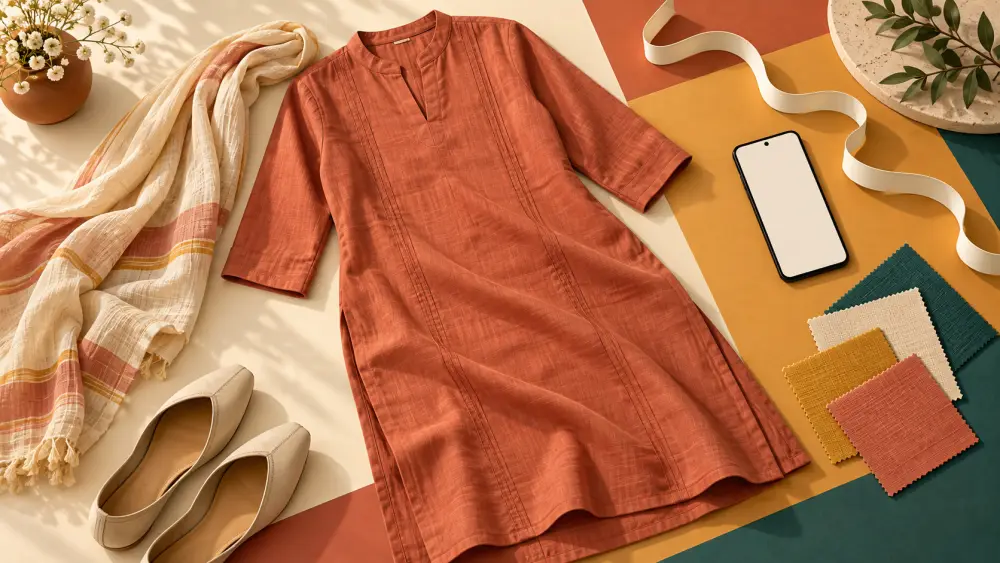
When people cannot try something on, they look for proof. Does it run small? Does the fabric cling? Will it suit my body? A clothing label's Instagram can answer those questions in a way a single flat photo cannot. Here are post ideas built around fit and fabric.
The fit check
Show one garment on a person and say their height and size. A short clip, turning around, raising arms, sitting down, tells viewers how it moves. Add a line such as "wearing size M, height 5 ft 4". Do this on different people if you can, so viewers with different builds can compare. Use only real details, not guesses.
A size chart walk-through
Make a simple post that explains your size chart and how to measure oneself. Show a tape measure on the bust, waist and hips, and explain garment measurements as separate from body measurements. This cuts down on wrong-size orders. Read how to measure a garment for a size chart and body measurements vs garment measurements explained for the details.
Fabric close-ups
Film the cloth in natural light. Pinch it, stretch it gently, hold it to the light and let people see the weave. Say what the fabric is according to your supplier and label, and mention how it feels. Be careful not to claim a fabric content you have not verified. See how to show fabric texture in photos and describing material and fabric honestly.
Try-on and styling
Show one piece styled in three ways, such as casual, work and festive. Include shoes, dupatta or accessories you do not sell, and say so. Show what to pair rather than only what you sell. A model is helpful but not essential, as how to photograph clothing without a model shows.
Before and after washing
If you have washed a sample and recorded how it looked afterwards, share it with the honest result. Say the care instruction you followed. If you have not tested it, do not post about it. Care instructions that you actually follow are worth sharing, and how to write care instructions for your products can help you write them.
Real measurements on a flat lay
Place the garment on a flat surface with a tape across it, showing length, chest and sleeve. A flat lay with measurements is a calm, useful post that people save. Add the numbers in the caption too.
Colour in daylight
Show the colour in daylight and indoors, and mention that screens vary. This helps avoid disappointed customers. See describing colour accurately online.
Behind the scenes
Show cutting, stitching, tagging and packing, with only what is true about who does the work and where. Share a little about why you design what you do. Customers connect with a person, not a logo.
Size and restock updates
Say which sizes are available or low and when you plan another batch, if you know. Do not claim scarcity that is not real, and do not promise restock dates you cannot keep.
What not to claim
Do not state that a certain format is favoured by the platform or will increase reach. Nobody outside the platform can promise that. Focus on being clear and consistent, and send people to your store through your bio, as described in Instagram is your billboard, not your shop.
Choose three of these a week and see which ones lead to real questions in your messages. Those questions are your best guide to what to post next.