
Instagram is your billboard, not your shop
Instagram is unmatched for getting noticed, but a billboard was never meant to also handle payment, delivery and order records.
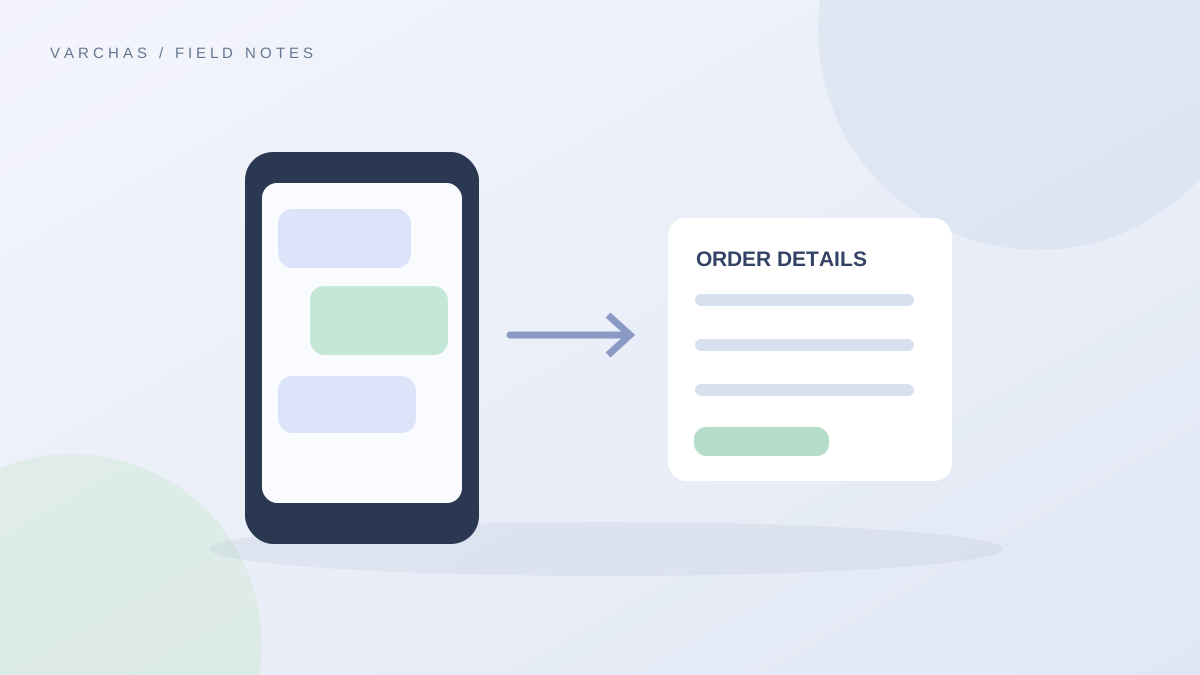
Instagram has earned its place as the starting point for almost every small Indian brand, and rightly so - nowhere else can a founder show their work, build an audience, and get discovered by strangers as easily or as cheaply. The confusion begins when a brand starts treating Instagram as the entire business, rather than the extremely effective advertisement it actually is.
What a billboard is good at
A billboard gets attention. It shows people something appealing and makes them curious enough to want more. Instagram does exactly this for a small brand - a well-shot photo, a good caption, a reel that catches someone mid-scroll, all pull a stranger's attention toward your product in a way few other channels can match, especially without a marketing budget.
What a billboard does not do is process a transaction. Nobody expects to hand over cash standing in front of a billboard, and nobody expects the billboard to remember they bought something last time. Instagram, structurally, is the same. It is extraordinary at the first job and was never built for the second.
Where this confusion causes real problems
When a brand treats Instagram as the shop itself - directing every interested customer into a DM to negotiate a sale - it inherits every limitation covered in why selling in Instagram DMs stops working. Orders get lost in conversation threads, payments are confirmed by screenshot, and repeat customers have no record beyond your memory of them. None of this is a flaw in Instagram - it is a mismatch between what the platform is for and what it is being asked to do.
The platform can also change under you
A billboard you own stays where you put it. Instagram is a platform you do not control - algorithm changes can reduce your reach overnight, account restrictions can happen over a misunderstanding, and features you rely on can be deprecated without warning. Building your entire sales process inside a platform you do not own means your business is only ever as stable as someone else's product decisions.
What the right division of labour looks like
The strongest small-brand setups use Instagram for exactly what it is good at, and something else for the transaction itself:
- Instagram for discovery, storytelling, and building an audience that recognises your brand.
- WhatsApp for warm, personal conversation with people who already know you.
- A proper store, on your own domain, for the actual order - product selection, payment, address, and a record that persists.
Each layer does the job it is suited for. None of them is asked to do the others' work.
- 1Catalogue
- 2Checkout
- 3Order record
- Fulfilment
Why this makes Instagram itself more effective
Counterintuitively, having a proper store to send people to often makes your Instagram content perform better, not worse. A clear "shop now" link that leads somewhere trustworthy converts more of your existing reach into actual sales, compared to a link-in-bio tool or a vague "DM to order" caption that adds friction right at the moment someone is interested. This is covered further in the hidden cost of a link-in-bio tool.
A useful way to think about it
Ask yourself whether you would expect a physical billboard on a highway to also handle your cash register, your customer records, and your delivery tracking. The answer is obviously no, and yet many small brands ask Instagram to do exactly that. Separating "where people discover you" from "where people actually buy from you" is one of the simplest, highest-leverage changes a growing brand can make.
Where to start
Keep building your Instagram presence exactly as you have been - it remains the best billboard available to a small brand. Alongside it, set up a proper store with your own domain and both UPI and Cash on Delivery, and simply point your Instagram bio and captions there instead of into a DM. Early access is a straightforward way to make that shift without losing any of the audience you have already built.