
Body measurements vs garment measurements in a size chart
Body measurements describe the person and garment measurements describe the clothing, and labelling which one your chart shows keeps buyers from picking the wrong size.
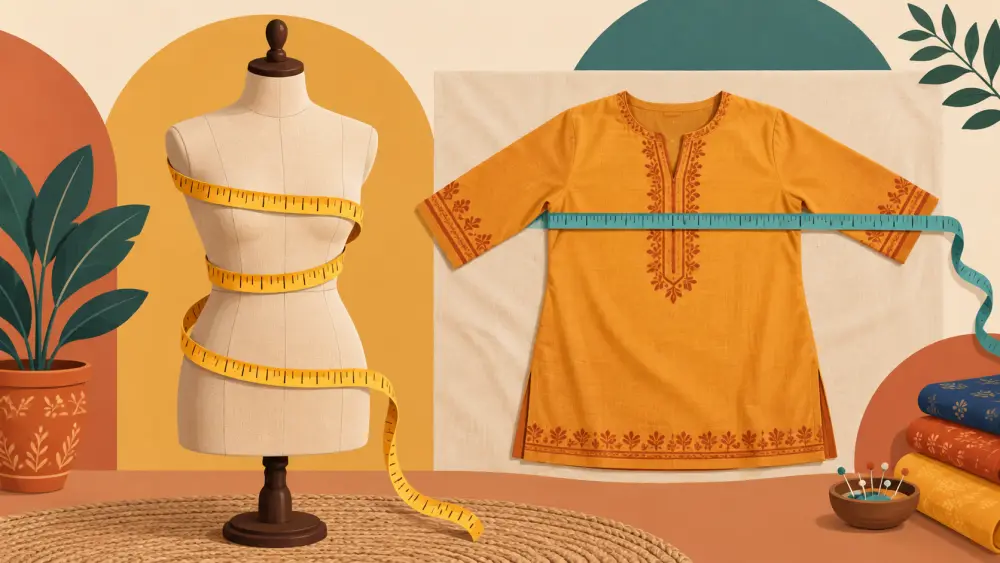
Two people look at the same size chart. One thinks the numbers describe her body. The other thinks they describe the garment. They order different sizes from the same line, and one of them is wrong. This confusion is one of the most common reasons clothing orders do not fit, and it is entirely avoidable. You only need to understand the difference and say which one you mean.
Two kinds of numbers
Body measurements are the size of the person: the chest, waist and hips of the one who will wear the clothes. Garment measurements are the size of the clothing itself, laid flat and measured with a tape.
The two differ because clothing is made with room to move, with fabric that stretches or hangs, and with a chosen fit: tight, regular or loose. A shirt with a garment chest of 104 cm is not meant for someone with a 104 cm chest, unless the fit is deliberately snug. In most cases the garment is larger than the body it fits, and the gap is called ease. (The numbers here are only an illustration.)
An example to see the gap
Say a tunic lies flat and measures 50 cm across the chest. Doubled, that is 100 cm around. A person with a body chest of 90 cm could wear it with 10 cm of room, which feels relaxed. A person with a body chest of 100 cm would find it very tight. If the chart just says "Chest 100", the buyer cannot tell which of these you mean. That is the whole problem.
Which one should you show?
There is no universal rule. Each has advantages:
- Garment measurements are exact and easy for a small seller to take, because you can measure what you hold. They let a buyer compare against a garment that already fits them.
- Body measurements are easier for buyers who do not own a comparable piece, but they depend on your guess about ease and fit, so they are less certain.
Many small sellers show garment measurements, and some show both in two clearly separate tables. Whatever you choose, be consistent across all your products and say so.
Label it in plain words
Put a clear heading above the chart, such as "Garment measurements (flat, in cm)" or "Body measurements this size is designed to fit". Do not leave it unlabelled. If you give both, use two separate headings and keep the numbers apart. Mixing them in one table is where the trouble starts.
Also say how the numbers were taken. For example, "chest is measured across the garment, below the armpit, and doubled" lets the buyer follow your method. Our post on how to measure a garment correctly for your size chart explains the method.
Explain fit in words
Add a line that describes the fit, like "Relaxed fit with extra room" or "Fitted, with little stretch". That gives context to the numbers. If the fabric stretches, say so, but do not give a stretch figure unless you have tested it. See describing material and fabric honestly.
Help buyers use the chart
Tell the buyer what to do with it. For garment measurements: "Lay a similar garment that fits you well on a flat surface and compare." For body measurements: "Measure yourself with a soft tape and choose the size whose range covers you; if between sizes, choose the larger for a looser fit." Keep instructions short and kind.
Do not promise results you cannot guarantee
You cannot promise that a certain chart will remove all sizing problems. Bodies, preferences and fabrics vary. Write what you know and help the buyer decide. If someone is unsure, invite them to message you with their measurements and your reply can be a custom suggestion. Treat these chats as useful feedback to improve your chart.