
Should you use the phone flash for product photography?
Direct flash creates glare and harsh shadows on most products. Here is why it goes wrong, and the few cases where it can still work.
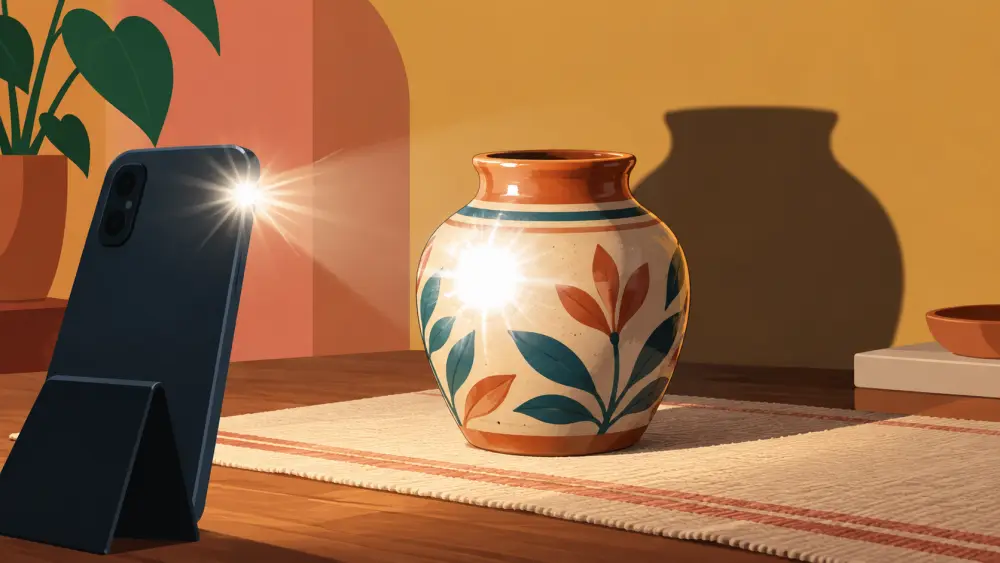
The short answer: for most product photos, leave the phone flash off. But that is not a law, and understanding why will help you decide for yourself.
What goes wrong with direct flash
The flash on a phone is a tiny light source right next to the lens, aimed straight at the product. That creates a few predictable problems.
- Glare and hot spots. Anything shiny, such as steel, glass, glossy packaging, polished jewellery or laminated labels, bounces the flash straight back at the camera as a bright white patch. The patch can hide the very detail you want to show.
- Flat, harsh lighting. Light from straight in front removes the soft shadows that show shape and texture. A cushion or a fabric can look strangely flat.
- Hard shadows behind the product. The product throws a sharp shadow on the wall or table behind it, which looks messy. The post on avoiding harsh shadows explains the fix.
- Colour changes. The flash can shift colours slightly, so a muted shade may look washed out. That works against describing colour accurately.
What to use instead
Soft, wide light looks better, and it is easier to get than you may think. A window gives broad soft light for free. Put the product beside it, and light from the side. A sheet of white chart paper opposite the window bounces light back into the shadows, as explained in using a reflector with white chart paper. If you must shoot after dark, a steady lamp placed to the side, with a thin white cloth in front to soften it, is far gentler than a flash. Keep the cloth well away from the bulb so it does not get too hot.
The step-by-step is in using window light for product photography.
When a flash can still be useful
Direct flash is not always wrong. There are a few situations where you might choose it, with eyes open:
- A quick reference shot for yourself. If you only need to record a plain, matte item for your own stock list or to share in a private WhatsApp chat, flash can be good enough.
- A dark corner where nothing else is available. A harsh but sharp photo may be better than a blurry dark one for an internal record, though it is not what you should put on your store.
- Deliberately raw styles. Some brands choose a flash look on purpose, usually for lifestyle shots with a person rather than for catalogue pictures. If you do that, do it deliberately and consistently.
Even then, test it. Take one photo with flash and one without, and compare them at full size before deciding.
A quick way to bounce it
If you have a separate flash or a steady light that you can aim, bouncing it off a white wall or ceiling gives softer results than pointing it at the product. Phone flashes cannot be aimed that way, so for a phone, window light is the practical choice.
The habit to keep
Before every shoot, check that the flash is switched off, since many phones turn it on automatically in low light. Look for the small lightning icon on the screen. Then take a test photo and look for shiny white patches and harsh edges. If you see them, move the product nearer the window or add a reflector, rather than reaching for the flash. For a wider list of camera habits, see best phone camera settings for product photos.