
What should a homemade food seller post on Instagram?
Kitchen process, ingredient sourcing, serving ideas and batch announcements give a home food feed plenty to share, as long as every claim reflects your own checks.
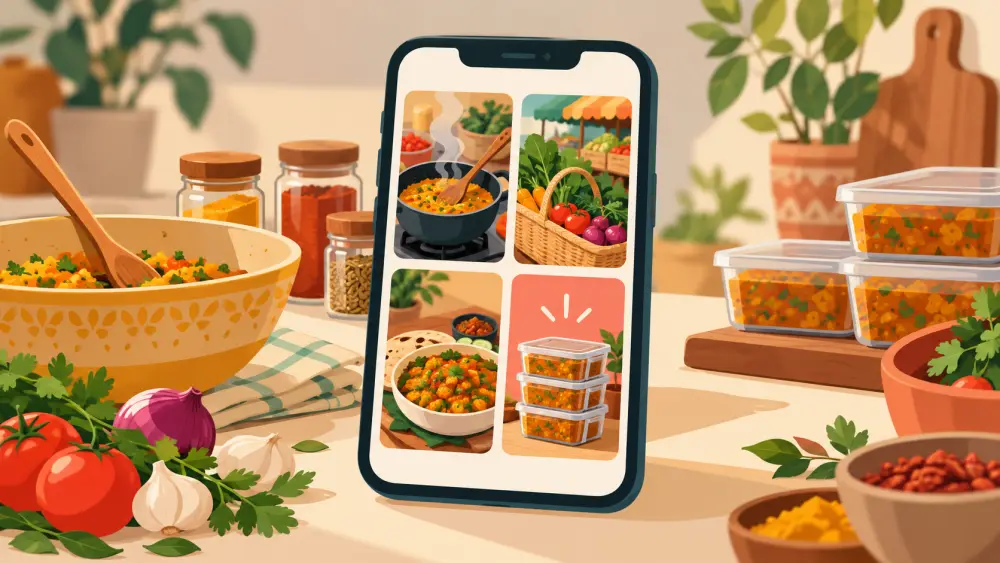
Food is one of the easiest things to talk about and one of the hardest to photograph well. People cannot taste through a screen, so your posts have to carry the smell, texture and warmth. If you cook at home and sell online, here is a set of ideas that tell your story honestly.
Kitchen process
Show the making. Roasting spices, stirring a pot, rolling dough, packing jars. Short clips with natural sound, such as sizzling or chopping, are enough. This helps buyers see that real hands are behind the food. Keep your kitchen visibly tidy and your hands clean on camera, because viewers notice. For help filming, see record a short product video with a phone.
Ingredient sourcing
Tell people where your ingredients come from, but only what is true. You might say which market you buy from, or which ingredients you pick yourself. Do not use words like organic, pure, natural or preservative-free unless you can back them up. Describe what you do know and what you do yourself.
Serving ideas
Show the product in use. A chutney with idlis, a pickle beside curd rice, a snack with evening tea. These help people imagine eating it and give them ideas. A simple plate in daylight is better than a heavily styled shot. Photography guidance is in how to photograph food products so they look fresh.
Batch announcements
Many home sellers cook in batches. Tell followers when a batch is being made, when orders open and how many you plan to make. Do not exaggerate scarcity, and do not claim a limited batch if it is not. Share when orders close, so you do not overcommit. The idea of drops is explained in what is a drop and why small brands love them.
The person behind the food
Introduce yourself and why you started. People like buying from someone whose story they know. Share a family recipe origin if it is true, in a few sentences. Keep it warm and specific rather than grand.
Packing and delivery
Show how you pack jars and boxes, label them and seal them. Mention how you ship, and what customers should do on arrival, such as storing in a cool place if that is your own advice. For specific products, see packing spices for courier safely.
Questions and answers
Use Stories or captions to answer common questions about spice level, quantity, ingredients and allergens. List the ingredients you actually use. Be careful with allergens, and if you are unsure, say so rather than guess.
Be careful with claims
- Do not state a shelf life unless you have tested your product and can explain how you know.
- Do not claim hygiene standards, licences or certifications unless you hold them. Check current food-business requirements with the relevant official source or an expert.
- Do not make health claims, such as that a food boosts immunity or helps a condition.
Link back to your store
Every post should make it easy to order. Put your store link in your bio and tell people where to find prices and ordering details. Read from Instagram bio to your first order for how that journey can work.
Rotate these ideas through the week. Good food content is simply honest, close-up and generous, and it should never promise more than your kitchen can deliver.