
How to pack spices so they reach the customer safely
Spices lose their value if the aroma leaks or the powder spills. A practical packing routine built around airtight sealing, for home and small-batch spice sellers.
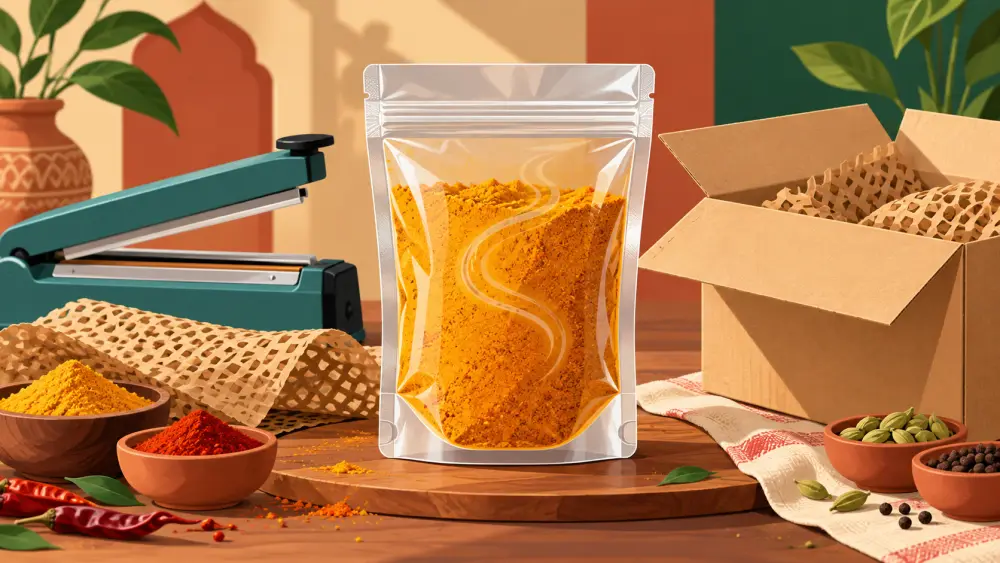
A customer who opens a parcel and smells chilli powder before they see the product is already unhappy. Spices are light and cheap to ship, but they fail in two very visible ways: powder escapes into the carton, and the aroma you promised on the listing is gone by the time it arrives. Both come down to how well you seal the pack. Here is a routine you can follow with ordinary materials.
Start with the inner pack, not the carton
The outer box matters less than what is directly around the spice. Your goal is a sealed inner pack that would survive being dropped on its own.
- Use a pouch or jar that closes airtight. Zip pouches with a thick seal, or screw-top jars with a liner, work better than folded paper or loose bags.
- Fill the pack properly. A half-empty pouch lets powder slosh and compress at one end. If your weight leaves a lot of air, choose a smaller pouch.
- Wipe the sealing edge clean before closing. A film of powder on the zip or rim is the most common reason a seal leaks.
Add a second barrier for powders
Fine powders like turmeric, chilli and coriander get into every gap. Put the sealed pouch inside a second plain bag, press the air out and seal that too. If one layer fails, the second keeps the mess off the other products in the carton. For whole spices such as pepper, cardamom or cloves, one good seal is usually enough because nothing can dust out.
Keep strong aromas apart
If one order has several spices, do not drop loose pouches together. Strong ones can colour the smell of milder ones when seals are imperfect. Give each product its own sealed pouch, and if the order includes anything that is not a spice, such as tea or a gift item, keep it in its own bag too.
Choose a carton that stops crushing
Pouches burst when squeezed. A firm box with a little give inside works better than a soft mailer. Fill empty space with crumpled paper so nothing can shift, and close the box so the lid does not bow in when pressed. Shake the packed carton gently once. If you hear or feel movement, add more filler.
Glass jars need extra care
Jars look premium but add risk. Wrap each one fully, keep them from touching each other or the carton wall, and leave filler between them. If you do not yet have a routine that keeps jars intact, start with pouches and add jars as a gift option later.
Label for the customer, not just the courier
Put the product name, net weight and pack date on the pouch itself so the customer can identify each pack later. Confirm current labelling requirements for packaged food with your local food authority or a consultant, since rules change and depend on how you sell.
Test your own pack before the first order
Pack one parcel as if it were an order and send it to a friend in another city. Ask them how it arrived, what it smelled like and whether anything leaked. One real trial teaches more than any checklist. If a seal failed, change the pouch before you take real orders.
Connect packing to the rest of your process
Good packing also lowers the number of complaints you handle, which pairs with a clear listing. See returns and RTO, the numbers nobody tells you for how disputes add up, and shipping across India for choosing how to send. If you are still setting up, the guide to starting a homemade food business online covers the wider picture.
Next step
Seal, double-bag, fill gaps, test once. If you want a store where each spice is listed with weight options and stock, the Founding Offer covers the first 10 stores with setup done together. Get in touch at /early-access.