
What is a Drop, and why small brands love them
How a limited Drop works on a Varchas store and why it suits brands that release collections in batches.
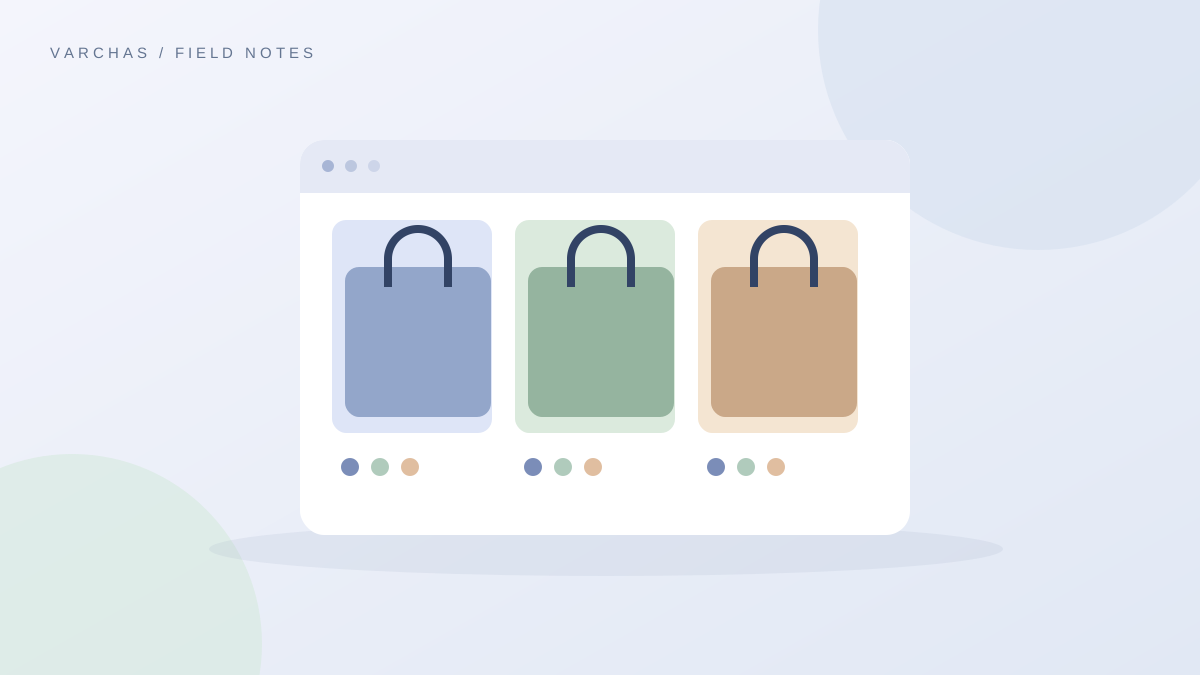
A lot of small brands, especially in fashion and accessories, do not restock the same product endlessly. They design a collection, produce a limited run, release it together, and move on to the next one once it sells out. If that sounds like how you already work on Instagram, announcing a "new drop" in your stories and taking orders through DMs, a Drop on your Varchas store is built for exactly that pattern.
What a Drop actually is
A Drop is a limited collection of products released together, and instead of being scattered across your general catalogue, it gets its own section on your store home. When a customer lands on your store during a Drop, they see it as a distinct moment, not just a few new items mixed into the regular product grid. This matters because a Drop is usually the thing you have built the most anticipation around, and it deserves to be seen that way.
- 01Prepare the collection
- 02Announce the date
- 03Open the Drop
- 04Review what sold
Why this beats announcing a drop over Instagram stories
Instagram stories disappear in 24 hours, and DMs during a drop tend to arrive faster than you can reply to them, especially if the collection is genuinely limited. Orders get missed, sizes get double-booked, and the whole thing turns into a scramble. With a Drop on your store, every product in it has proper stock tracking through its colourways and sizes, so two customers cannot both walk away thinking they bought the last piece in a size that was already sold.
How stock behaves during a Drop
Because your store handles stock the same way for a Drop as it does for any other product, once a size sells out, it reflects as sold out to the next customer immediately, rather than you finding out an hour later that you oversold. If a customer starts checkout on a Drop item but does not complete payment, that stock is reserved briefly and then released automatically if the payment does not come through, the same behaviour covered in this post on Cash on Delivery and Leads.
- 1Available
- 2Reserved at checkout
- 3Checkout expires
- Available again
Building anticipation without losing control
A Drop section on your store home gives you a place to point people to ahead of time, whether through your Instagram bio link, a story, or an email to your subscriber list. This works especially well alongside building an email list, since you can notify subscribers the moment a Drop goes live, rather than relying purely on whoever happens to see your story in time.
Not every brand needs Drops
If your brand mostly sells an ongoing catalogue that restocks regularly, Drops are not something you need to force into your store structure. They exist specifically for brands that work in limited, timed releases. There is no downside to having the option available even if you use it occasionally, for a festive collection or a one-off collaboration, rather than as your default way of selling.
Where Drops fit with the rest of your store
A Drop does not replace your regular catalogue, it sits alongside it. Customers can still browse your standard products at any time, and a Drop simply becomes an additional, prominent section for as long as it is active. Once it sells out or the release period ends, it stops being the centre of attention on your store home without you needing to manually rearrange anything.
Next step
If timed collections are already part of how your brand works, a Drop is worth setting up from day one of your store. The Founding Offer covers the first 10 stores, with setup done together. Get in touch at /early-access.