
Returns and complaints when selling handloom textiles online and how to reduce them
Colour variation and weave irregularity are often read as defects. Here is how to set expectations in the listing so fewer handloom pieces come back.
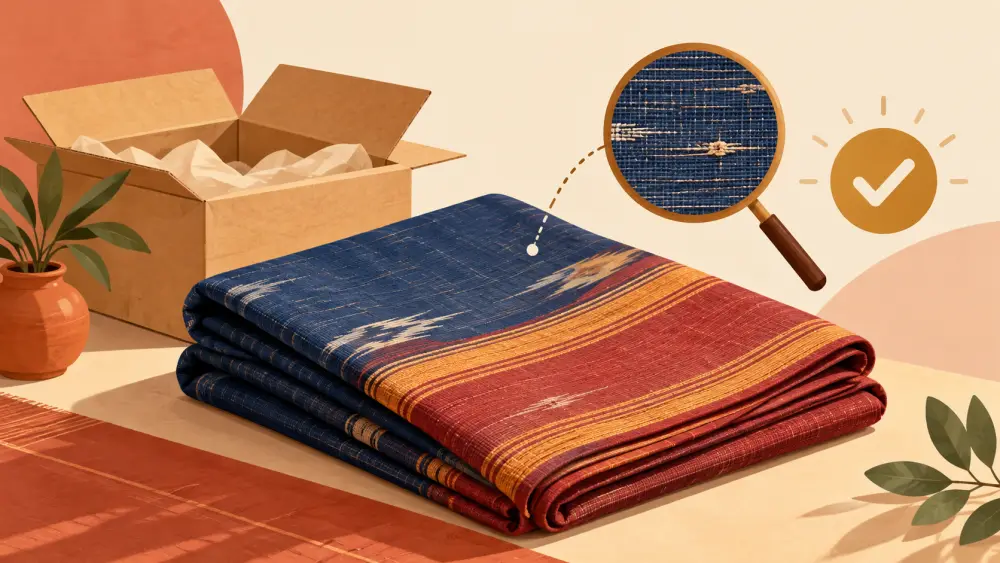
Handloom is valued because it is not machine-perfect. The slight unevenness in the weave, the small variation in dye, the occasional slub in the yarn are marks of hands at work. But a buyer who has only seen machine-made cloth may read those same marks as defects. For handloom sellers, the biggest return risk is not damage but a gap between what the buyer expected and what handmade cloth actually looks like.
Understand the two big triggers
The first is colour variation: the piece looks different from the screen, or one sari differs from the one in the photo. The second is weave irregularity: visible slubs, small knots, slightly uneven borders, changes in thread thickness. Both are normal in hand-woven cloth. Both lead to "this is damaged" messages when the listing does not prepare the buyer.
Explain handloom in plain words
Add a short paragraph to every listing that says what handloom means in practice. Something like: "This piece is woven by hand, so small irregularities in the weave and slight variations in colour are natural and are not defects." Say it kindly and without defensiveness. Back it with real photos. Our post on describing material and fabric honestly shows how to describe fibres without overclaiming. Do not use terms such as "pure" or name a certification unless you can document it.
Photograph the cloth as it is
Show the weave up close, the border detail and a slub if one is visible. Use daylight so colours stay close to real. Photograph the exact piece you will ship, not a sample from a previous batch, whenever you can. If pieces are one-of-a-kind, say so. See photographing sarees and drapes and showing fabric texture.
Be specific about colour
Screens vary, and natural dyes may shift between lots. Write the colour in words, mention that the screen may show it slightly differently and share a daylight photo. Describing colour accurately online has useful tips. If you sell by lot or batch, mention that a reorder may not match the first exactly.
List measurements and what is included
Give length and width in metres or centimetres, and say whether a blouse piece, fall or tassels are included. Missing a blouse piece is a common reason for complaints. Use bullets so nothing is missed. The post on what details to put in every product description can help.
Pack so the cloth arrives clean
Stains, creases and damp smells cause genuine returns. Wrap in tissue, cloth and a sealed bag as described in packing handloom.
State a calm, clear policy
Put on the listing and your policy page:
- Which problems you will fix: wrong item, a real tear or stain, missing component.
- Which are natural to handloom and not grounds for return.
- The time window and the proof you need, usually photos.
- Whether you offer exchange or credit as an alternative to refund.
Avoid pasting legal wording from other sites; if you need to know what applies to you, consult a professional. Where the buyer has a genuine complaint, resolve it promptly and politely, and a partial refund can be fair for a minor flaw you missed; see issuing a partial refund.
Learn from patterns
Keep a short log: piece, complaint, cause. If several buyers say a certain colour looks different, update the photos or the description. If slubs bother buyers in one weave, say so in the listing. Returns and RTO describes how returns affect margins.
Checklist
- Handloom note in every listing.
- Close-up weave photos.
- Colour described in words.
- Included items listed.
- Policy distinguishing defects from natural variation.
Tell the story of the weave before the buyer sees it, and irregularity becomes a feature rather than a fault.