
How to pack handloom textiles so they reach the customer safely
Practical packing steps for handloom sellers, focused on a fold-and-wrap routine that protects the fabric, avoids creases and keeps it dry.
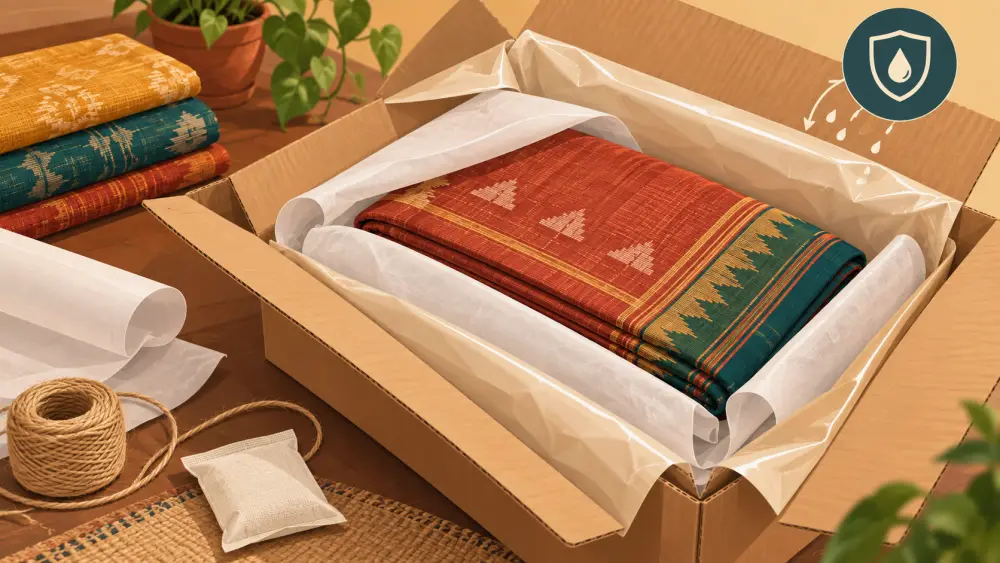
Handloom textiles are tough in the hand but vulnerable on the road. Zari can snag, pale colours pick up stains, folds leave sharp creases and damp air can leave a musty smell. Because a sari or a stole is often a gift, the way it arrives is part of what the customer is buying. A good packing routine costs little and protects both the fabric and your reputation.
Check the piece first
Lay the textile flat under good light and look for loose threads, stains and snags. Trim stray threads gently without pulling. Make sure the fabric is completely dry and has aired out, because packing a piece that is even slightly damp will lead to odour. If you iron before packing, check the fabric's care needs first, and avoid ironing over delicate zari.
Fold along natural lines
For a sari, fold in half lengthwise, then in pleats to a flat rectangle so the border sits neatly on one side. Fold stoles, dupattas and fabric lengths in the same way, with the border or special feature on the outside where it will not be creased in the middle. Vary the fold lines slightly from time to time, because fabric left in one fold for weeks can hold that crease. Use acid-free tissue between folds for delicate or zari-rich pieces, so metallic thread does not rub against the fabric.
Wrap in layers
- First layer: soft tissue or muslin around the folded piece.
- Second layer: a clean cotton cloth or paper wrap, which stops transfer of dust and dye.
- Third layer: a clear poly bag, sealed, as a barrier against rain and humidity.
Do not use newspaper as a wrap: print can rub off on pale fabric. Keep dark and light pieces in separate bags in case colour bleeds.
Separate pieces in a multi-item order
If an order has several textiles, wrap each piece separately, and then bundle them. It stops colour transfer and makes it easy for the customer to check each item. Slip a small card in each bag stating what it is.
Choose the outer layer
A sturdy poly mailer works for a single folded piece. For an order of several textiles or for valuable pieces, a corrugated box gives protection against pressure and shape loss. Make sure the box fits the folded stack closely; empty space lets pieces slide and crumple. Label the outside clearly and write the address and pincode twice, once on the label and once on a slip inside.
Keep it dry
Water is the real enemy. Seal the inner bag firmly. During the rainy season, double-bag or use a mailer with a waterproof lining. Do not store packed parcels on the floor. If you use silica sachets, keep them away from direct contact with the cloth.
Include a care and authenticity card
Tell the buyer how to care for the piece: dry clean or gentle hand wash, avoid direct sun for drying, store folded with tissue. Say only what you know about the fibre and the dye. A short note about the weave and region adds charm, but avoid unverified claims about origin or certification. Our post on writing care instructions shows a good format.
Photograph before sealing
Take a photo of each wrapped piece and the packed box. If the customer later reports a stain or a tear, you will have a record of its condition on departure. Cancellations, refunds and restocking explains how to settle genuine problems, and shipping across India covers delivery planning.
Checklist
- Piece inspected and aired.
- Folded with tissue at delicate areas.
- Three wrapping layers with a sealed outer bag.
- Pieces separated in multi-item orders.
- Address twice, care card inside.
- Photo taken.
Treat the parcel as part of the gift, and the textile will feel like one when it is unwrapped.