
Returns and complaints when selling resin art online, and how to reduce them
Bubbles, yellowing and colour that looks different from the photo are the usual resin complaints. Setting expectations in the listing prevents many of them.
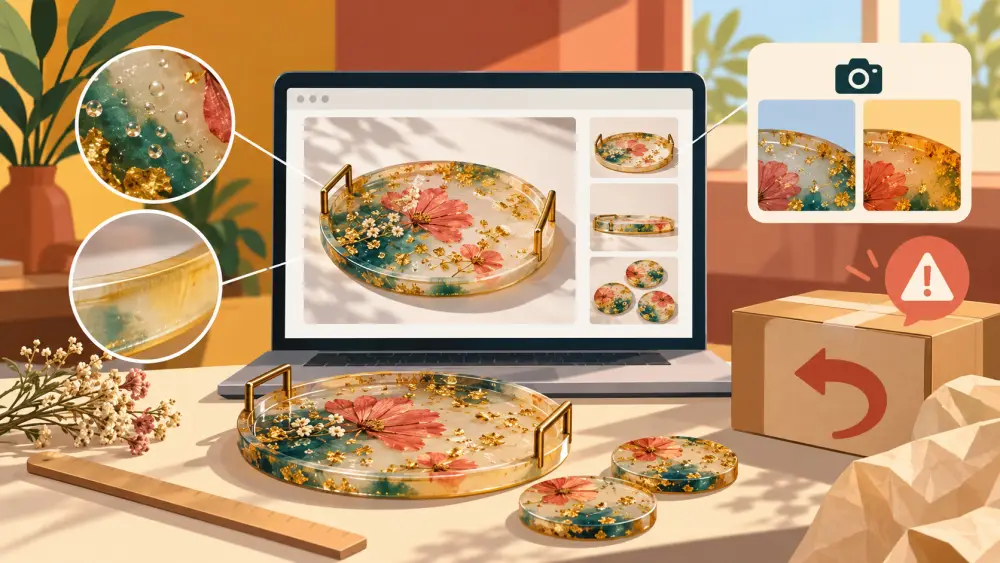
Resin art is handmade, and handmade pieces are never identical. That is a strength when the buyer expects it and a source of complaints when they do not. Three issues come up again and again: small bubbles, colour that differs from the photo, and worry about yellowing over time. Each can be softened by what you write and show before the sale.
Bubbles and imperfections
Resin can trap tiny air bubbles, and even careful makers sometimes see them. Decide what your standard is and state it honestly. If a bubble is a flaw, fix or discount the piece. If tiny marks are a natural part of hand-poured work, say so in one line: "Each piece is hand-poured, so very small bubbles or variations may occur."
Show a close-up photo of the actual piece, not a stock image, so there are no surprises. A buyer who has seen the surface in detail rarely complains about it later. For help with close-ups see how to photograph resin art for your online store.
Colour difference from the photo
Screens vary, and resin colour shifts with light through it. Describe the colours in words, not only photos: "deep teal with gold flakes" tells more than "blue". Mention if the piece looks different in daylight and in room light. Describing colour accurately online goes through simple ways to do it.
If you sell one-of-a-kind pieces, say that the buyer receives the exact piece in the photos. If you sell a style made to order, say the finished piece will be similar, not identical, to the sample.
Yellowing and ageing
Customers worry about yellowing, and you should not promise what you cannot guarantee. Do not write "never yellows". Tell them what you actually know: which resin you use if you are sure, and how to care for it. Advise keeping it away from long direct sun and heat, and wiping with a soft cloth. This is care guidance, not a guarantee, and it sets the right expectation. How to write care instructions for your products can help.
Damage in transit
Resin scratches and chips during delivery. Pack carefully, and write your damage policy on the page: what photos you need and how quickly the customer must report. Your packing is part of your return prevention; see packing resin art for courier safely.
Make-to-order and custom work
For custom orders, agree colours, size and finish in writing, ideally by sharing a photo or sketch and getting a clear yes. Say whether custom pieces are returnable; many sellers do not accept returns on custom items. Be fair and visible about it before payment.
Write your policy in plain words
Place a short policy on the product page: what you will fix, what you will replace, what you will refund, and what you will not. Keep it simple and consistent. Do not copy legal language you do not understand; if you need to check rules that apply to online sales, ask a professional.
Handling a complaint
Reply quickly and politely, ask for clear photos, and offer a solution that matches the problem. A small partial refund can end a minor dispute; see issuing a partial refund for missing items for how that works in practice in a Varchas store. Keep your tone calm even when the customer is not.
The short version
- Show real close-ups
- Describe colour in words
- Be honest about handmade variation
- Give care guidance, not lifetime promises
- Pack well
- Put your policy on the product page
Fewer surprises mean fewer complaints.