
How to photograph terracotta pieces for your online store
A shot plan for sellers of terracotta pots, planters and decor, showing earthy texture in daylight with a clear scale reference.
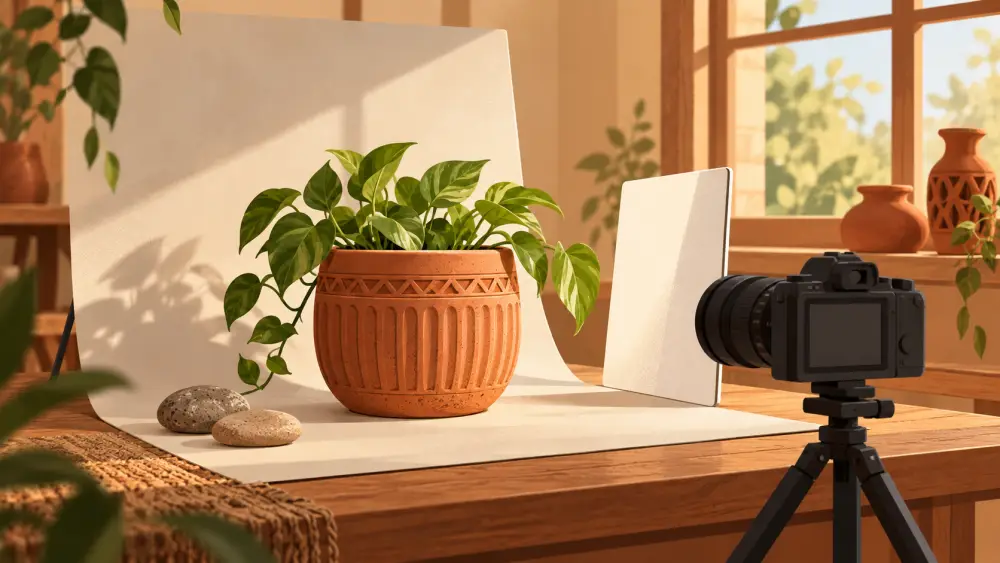
Terracotta sells on texture and warmth: the matte clay, the hand-turned edges, the colour that sits between orange and brown. It is also easy to photograph badly, because the colour turns muddy indoors and the matte surface hides its own shape. A few simple choices fix both problems.
Shoot in daylight
Terracotta looks best in natural light. Put the piece near a window or in open shade outdoors, in the morning or late afternoon when light is soft. Direct midday sun burns out the highlights and washes out the clay colour. Tube lights and yellow bulbs push the clay toward brown or orange, so switch them off. Our post on window light for product photography covers the setup, and product photos on dull or rainy days helps when the weather does not cooperate.
The core shot list
- A clean front view on a plain background.
- A three-quarter angle that shows the shape and the depth.
- A close-up of the clay surface, so the texture and any hand marks are visible.
- A top-down shot that shows the opening and, if you sell planters, the drainage hole.
- A scale shot, with a hand holding the piece or something familiar beside it.
- A styled shot: a plant in the pot on a balcony or shelf.
Scale matters more than you think
Terracotta pieces range from tiny diyas to garden-sized urns, and photos offer no hint of size. Place a hand on the pot, or stand a ruler next to it, or put it beside a common object. Then write the height and the opening diameter in centimetres in the description. See photographing products for scale and weight and dimensions.
Keep the background natural
A plain white or pale background makes clay glow. A rough wall, stone or a wooden stool suits a styled shot, but make sure the background is not so busy that it competes. If you use green plants as props, specify that plants are not included. How to choose props gives more advice.
Show the handmade look honestly
Terracotta varies. Colour shifts between firings, surfaces have small marks and glazes can pool. Do not hide this. A close-up of a natural mark, with a line saying such variation is part of handmade clay, builds trust and prevents complaints. If you use a glaze or paint, show it up close. Do not claim a particular firing temperature or process unless you know it for certain.
Show any cracks or flaws you sell
If you sell seconds or pieces with visible imperfections, photograph those imperfections clearly and say so. A buyer who is told beforehand will not feel cheated.
Colour accuracy
Terracotta can drift toward pink or yellow depending on your phone. Compare the photo to the real piece beside your screen and adjust white balance until they match. Fixing white balance and describing colour accurately both help.
Edit lightly
Crop evenly, brighten a little and keep the texture. Avoid heavy sharpening, which makes clay look gritty, and avoid heavy filters.
Checklist
- Daylight, not bulbs.
- Front, angle, top-down and texture close-up.
- A scale photo with measurements in the description.
- Colour matched to the real piece.
- Natural variation explained.
Honest daylight pictures with a scale cue make terracotta feel earthy and real, which is exactly why people buy it.