
What to do when a parcel is damaged in transit
A customer sends a photo of a crushed box. Here are the steps in order, proof, customer message, courier complaint and the replacement decision, so you act calmly and keep the relationship intact.
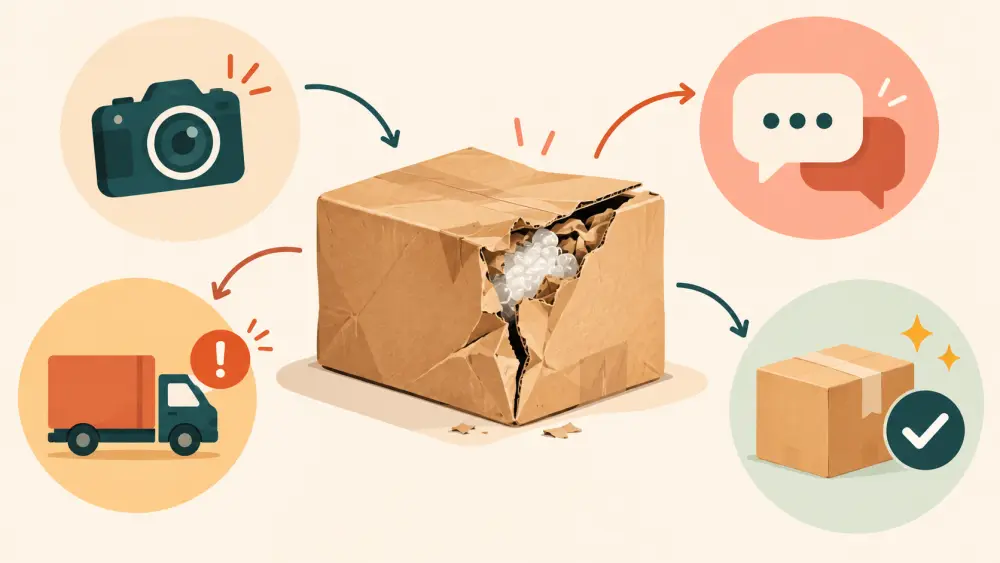
The message nobody wants
You open WhatsApp and there is a photo. The box is crushed, the item inside is broken, and the customer is understandably upset. Your first feeling may be panic or irritation. Your job in the next hour is to turn that into a clear sequence of steps.
I will not state any claim timelines or amounts here, because they depend on the courier and your agreement. The sequence below is what to do regardless.
Step one, collect proof
Ask the customer for clear evidence, politely and early.
- Photos of the outer box from every side, including the label.
- Photos of the damaged item and any inner packing.
- A short video of the opening, if they made one.
- Their order number and the date they received it.
Explain why you ask: "So that I can raise this properly with the courier." Most customers are happy to help once they know you are on their side. Keep every file together in one folder named after the order.
Step two, reply to the customer first
Do not wait until you have solved the courier problem. Reply quickly and kindly. Apologise for the experience, thank them for the photos, and say what happens next. Avoid promising a refund or replacement until you have decided. A structure for this message is in how to tell a customer their parcel arrived damaged.
Step three, raise it with the courier
Open a complaint with the courier or the platform you booked through, and attach your evidence. Include your own packing photos or video from dispatch, the invoice and the tracking details. The full process is covered in how to raise a damage claim with a courier. Note the complaint number somewhere safe. You cannot be sure of a result, so do not make your promise to the customer depend on it.
Step four, decide on the customer outcome
This is the decision you control. Options include sending a replacement, offering a refund, or in some cases a partial refund if the damage is small and the customer wants to keep the item. Think about what is fair and what you can afford. If the item is cheap and the relationship valuable, replacing quickly is often the sensible route. Read replace or refund a damaged order, which comes first for a way to think it through. If you decide on a refund, processing a full refund via Cashfree explains how that works for prepaid orders.
Step five, update your records and stock
Mark the order as damaged in your notes, and update stock if you send a replacement. A replacement means two units are out of your inventory, so record both.
Step six, learn from it
After the case closes, look at how the parcel was packed. Was there enough cushioning? Was the box the right size? Could a different packing method help? The costs involved are shown in the cost of a damaged-in-transit parcel. If the same product keeps arriving broken, improve the packing before you ship more.
Keep your calm and keep records
Damaged parcels are an unavoidable part of shipping. What separates a steady seller from a stressed one is a routine. Prove it, reply, claim it, decide, record, improve. Follow those six steps every time and the next damaged parcel will feel like a task, not a crisis.