
How to tell a customer their parcel arrived damaged
Sometimes you learn about damage before the customer does, from a courier note or a photo. Here is a sympathetic message structure with clear next steps and no promise you have not yet decided to make.
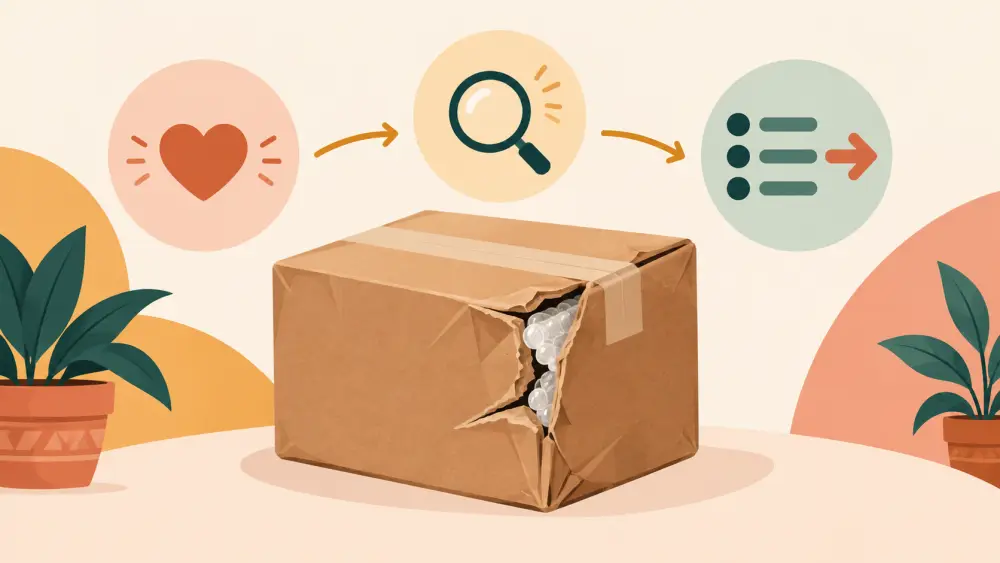
When you are the one with the bad news
Most of the time the customer tells you about the damage. But sometimes it goes the other way. A courier sends a note that the box was crushed, a delivery photo shows a torn parcel, or the customer sends only a short, angry message. In each case, how you write the next message shapes how the customer feels about your brand.
The goal is to be honest, kind and clear. Not defensive and not vague.
The five parts of a good message
- Acknowledge. Say what happened in plain words and that you are sorry. Do not hide behind phrases like "an issue has occurred".
- Take responsibility for the solution. You do not need to take blame for the courier, but you do take charge of fixing things. "We will sort this out" is a calm sentence.
- Ask for what you need. If you need photos or a video, say exactly which and why. Make it easy.
- Give the next step and a time. Say what you will do and when you will reply.
- Thank them. For patience, and for the photos.
An example you can adapt
"Hi [Name], I am so sorry, it looks like your parcel was damaged on its way to you. That is not the experience we wanted for you. To sort this out quickly, could you please send me a photo of the outer box from all sides and of the item? A short video of you opening it helps too, if you have one. I will check with the courier and come back to you today by [time] with what we can do. Thank you for your patience."
Notice what is missing. It does not promise a refund or replacement yet. It promises a response. That is honest, because you may still be deciding.
Why not promise a refund immediately
It is tempting to say "Do not worry, full refund!" to calm the situation. But if you promise before you know the details, you may box yourself in. Maybe a replacement would suit the customer better. Maybe the damage is minor. Give yourself room to decide, and tell the customer when they will hear. For ways to choose, read replace or refund a damaged order, which comes first.
Things to avoid
- Blaming the customer, for example "you must have dropped it".
- Blaming the courier in a way that sounds like an excuse.
- Long messages with many questions.
- Silence for a day or more.
- Asking for proof in a tone that sounds like suspicion.
Follow through
Once you have your answer, tell the customer promptly, with the specific outcome and timing. If you offer a replacement, say when it will ship. If a refund, say how and when, using processing a full refund via Cashfree as a guide for prepaid orders.
Keep a template
Save the message as a note on your phone and edit the name and details each time. Having words ready means you reply fast and calmly, even on a bad day.
Learn afterwards
When the case is closed, look at how the parcel was packed and whether the same product has been damaged before. What to do when a parcel is damaged in transit covers the full sequence from proof to prevention.
A caring message does not erase the damage, but it often keeps the customer, and that is the point.