
How to raise a damage claim with a courier in general terms
A damage claim works best when it is organised. Gather photos, the invoice and your packing video, then file with a clear description. Here is a general walk-through, with no promises about outcomes.
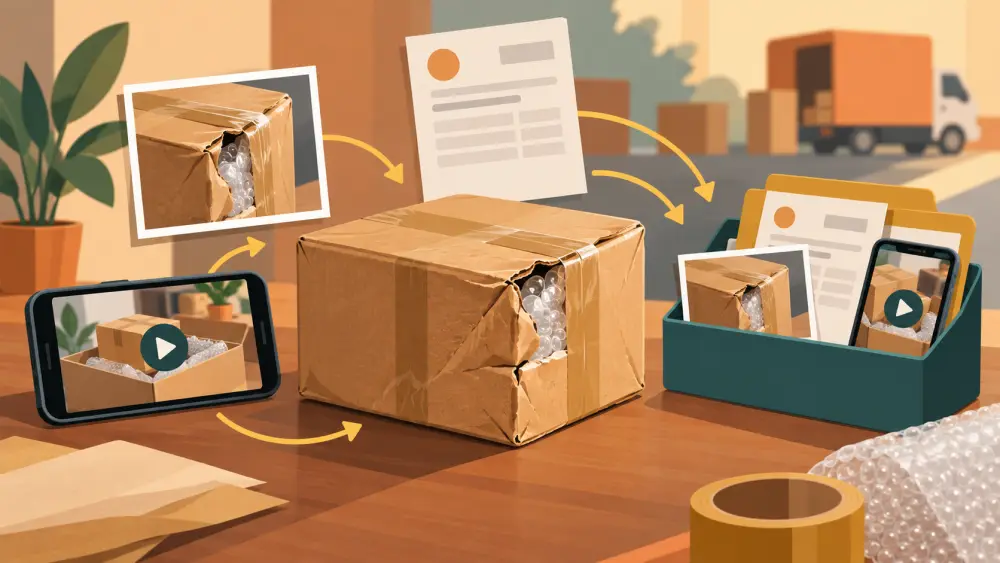
A claim is a file, not a complaint
When a courier damages a parcel, many sellers send an angry message and wait. A calmer approach is to treat the claim as a small file you assemble, so that whoever reads it can understand the case in a minute. This post describes the general approach. Each courier has its own process and terms, so read yours before you file.
I cannot tell you that a claim will be approved, or name any time limits, because both depend on the service and the agreement. Do not assume anything about them until you have read the actual terms.
Step one, gather what you need
Collect these before you open the claim.
- Customer photos of the outer box from all sides, including the label.
- Photos of the damaged item and inner packing.
- Your own packing photos or video showing the item in good condition and how you packed it.
- A copy of the invoice showing the value of the item.
- The tracking number and delivery status.
- Any chat messages with the customer that describe the problem.
Put them in one folder, named by order number. If you can, add a short note describing what happened in two or three sentences.
Step two, write a clear description
Keep your description factual and brief. Include:
- The order number and tracking number.
- The date shipped and the date delivered.
- A plain description of the damage, for example "outer box crushed on one side, ceramic item broken into three pieces".
- The value of the item and what you are asking for, such as compensation for the item value.
Avoid emotional language or accusations. A calm, specific description is easier for anyone to process.
Step three, file through the right channel
Use the channel your courier or booking platform provides. That might be a dashboard, an email address or a helpdesk form. Attach your files and keep the confirmation. Save the claim number and a screenshot of the submission.
If you booked through an aggregator, raise it there, because they may handle the claim for you. Check the process in the service you actually use.
Step four, follow up politely
Note the date you filed. If you do not hear back in a reasonable period, send a short, courteous follow-up that quotes your claim number. Keep a log of every message. Escalation steps, if any, are described by the courier, so check there.
Step five, keep the customer separate
Do not make the customer wait for the courier to decide. Your relationship with the buyer is yours to handle, and a claim is a separate process. If you decide to replace or refund first, that is your choice, as discussed in replace or refund a damaged order, which comes first.
Prepare before shipping, not after
The strongest claims come from sellers who documented the packing before dispatch. A quick video of the sealed box, with the item visible just before closing, is worth the thirty seconds. See what evidence to keep for damaged or lost parcel claims for a full list.
Read the terms yourself
Look at the courier's own conditions on declared value, packing requirements and exclusions. Some items may have special rules. If anything is unclear, ask them in writing.
If the claim fails
Sometimes a claim is rejected or only partly paid. Treat the cost as part of doing business, and improve packing for next time. The cost of a damaged-in-transit parcel helps you plan for that reality.