
Replace or refund a damaged order, which comes first?
When a parcel arrives damaged, you can look after the customer first and chase the courier separately. This guide explains how to choose between a replacement and a refund and why the two tracks stay apart.
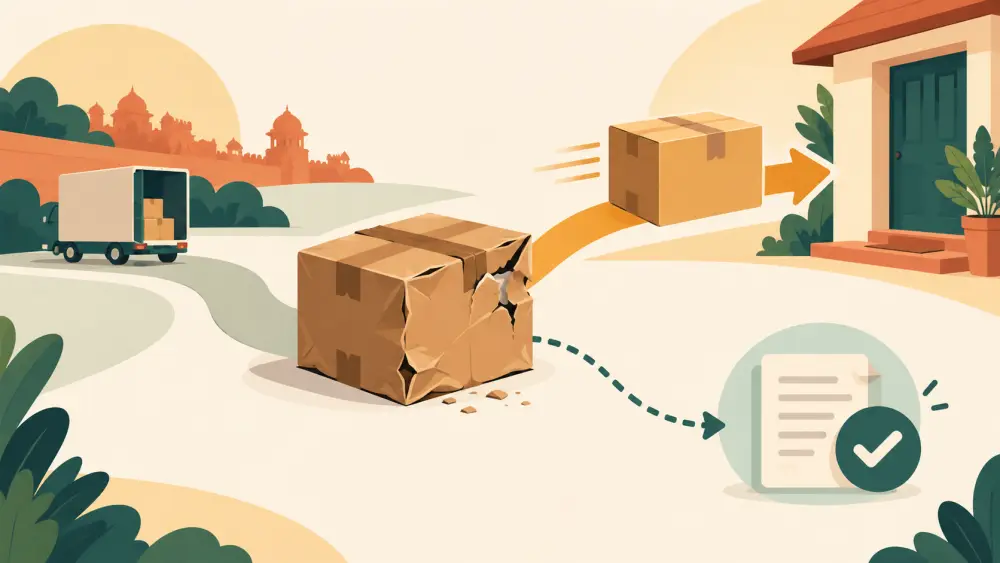
Two problems, not one
A damaged parcel creates two separate problems. One is with your customer, who is waiting for a working product. The other is with the courier, who handled the parcel badly. It is easy to blend them into one long argument. Treat them separately and both become easier.
The customer did not choose the courier. You did. So in most cases it feels right to make the customer whole first, then pursue the courier on your own time. This is a way of thinking, not a statement about what any rule requires. I am not stating legal obligations, and you should check the consumer rules that apply to you.
Replacement first, when it makes sense
A replacement is often the best answer when:
- The customer still wants the product.
- You have stock, or can make or source another unit quickly.
- The product is not too expensive to send again.
- You want to keep the customer, because they are likely to buy again.
Ship the replacement with better packing, and consider a short note inside apologising. Tell the customer how long it will take, so they do not feel forgotten. Remember that you now have two units out of stock, and the claim only covers the first, if it succeeds at all.
Refund first, when it makes sense
A refund suits cases where:
- The product is out of stock or cannot be made again soon.
- The customer no longer wants it after the experience.
- Sending again is risky, for example a very fragile item to a difficult location.
- The customer simply asks for a refund.
If the customer paid online, refund through your payment system. Processing a full refund via Cashfree explains the steps for prepaid orders, and can you refund a COD order online covers the cash case. If the damage is small and the customer is happy to keep the item, a partial refund can be fair, as in issuing a partial refund for missing items.
Ask the customer, kindly
You do not have to guess. Offer a choice: "I am so sorry. I can send a fresh piece right away or refund you. Which would you prefer?" Giving the choice makes the customer feel respected, and it often reveals what they actually want.
Do you need the damaged item back?
Sometimes you do, for the claim or for inspection. Sometimes the courier does not need it, and returning it costs more than it is worth. Decide this early and tell the customer clearly. If you do not want it back, say so, so they are not left wondering.
Pursue the claim in parallel
While the customer is being looked after, file the claim, as explained in how to raise a damage claim with a courier. Do not wait for the result before you act. You might recover the cost, or you might not, and your customer should not be waiting on that.
Count the cost honestly
Whichever path you choose, there is a cost, in stock, shipping and your time. The cost of a damaged-in-transit parcel shows how to add it up so you can decide how much prevention is worth.
The principle
Look after the person first, then the paperwork. Customers remember how you handled the problem more than the problem itself, and a quick, fair response is often what turns an upset buyer into a loyal one.