
Returns and complaints when selling leather goods online and how to reduce them
Most leather complaints are about scuffs, smell and colour not matching the screen. You can prevent many of them by telling buyers the truth in the listing.
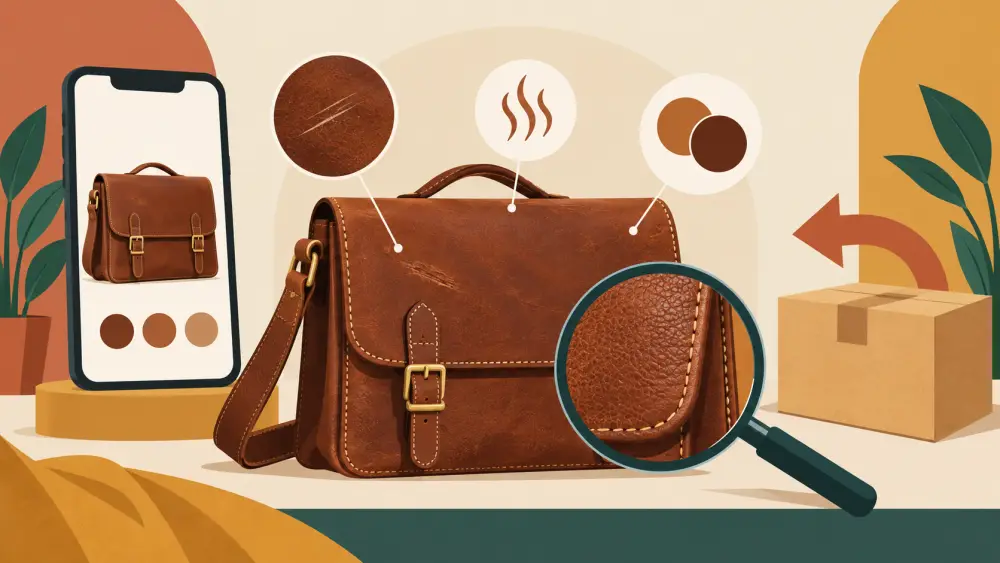
Leather is a natural material, and natural materials surprise people who expected something uniform. The complaints a small leather seller gets are usually not about bad quality. They are about expectations the listing never set. The fix lives in your photos and words, before the order arrives.
Scuffs and marks
Real leather has variation. A healed scar, a slightly different pore pattern, a darker patch at a fold. A buyer who sees a perfect studio render in the photos and then holds a piece with natural marks may call it damaged.
What helps:
- Show one honest close-up of the grain, as in photographing leather goods.
- Add one sentence to the description saying natural variation in grain and tone is normal and no two pieces are identical.
- Before packing, check each piece in good light and keep a photo of its condition.
If a piece has a real defect, such as a loose stitch or a deep scratch, fix it or set it aside. Do not send it and hope.
Smell
New leather smells, and some people love it while others find it strong, especially if the finish uses a tanning process that leaves a chemical note. A buyer opening a sealed poly bag may notice the smell more.
Say in the listing that new leather has a natural smell that fades with airing. Add a line on the care card suggesting that the item be kept open in a ventilated spot for a day or two. Do not claim the smell is absent unless you are certain.
Colour not matching the screen
Dark brown can look black and tan can look orange, depending on phone screens and light. Use daylight when shooting, avoid heavy filters, and compare your photo to the real item before upload. Name the colour in words and add a short note on how the shade changes. Our post on describing colour accurately has useful phrasing.
Break-in and wear
Stiffness and creasing in early use are normal, and leather often softens over time. Colour can deepen with handling. A customer who does not know this might think the product is faulty. Include a short, friendly note about this on the listing and card.
Size and capacity
Many returns happen because a bag was smaller or larger than the buyer imagined. Give exact length, width and depth in centimetres, include a scale photo with a hand, and state what fits, for instance whether a phone or a standard bottle goes in. See how to write a weight and dimensions section.
Set a clear return policy
Write down what you will accept, what you will not, and how long the buyer has to tell you. Be specific. For example, you may accept returns for manufacturing faults and wrong items, and not for natural marks that were described. Keep your wording fair and plain. Confirm anything with legal angles with a professional, since I cannot tell you what applies to your situation.
Handle complaints calmly
Ask for a clear photo, reply the same day, and offer an option. Sometimes a small partial refund keeps both the customer and the product, which can be cheaper than taking it back. Our guide to issuing a partial refund explains the mechanics.
Make a habit of learning
After each complaint, note what the customer misunderstood and update the listing. Over a few weeks, the same line keeps appearing, and that line belongs in your product page. Leather returns shrink when buyers know what they are buying.