
Returns and complaints when selling hand embroidery pieces online, and how to reduce them
Handwork gets undervalued and compared with machine finish. Here is how to set expectations in the listing so fewer buyers are surprised.
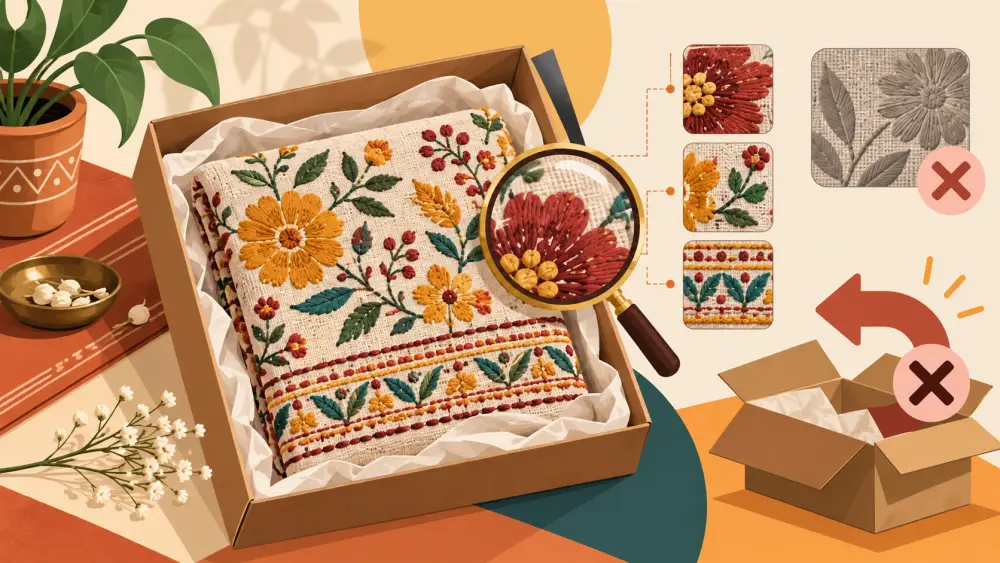
The hardest complaint to answer in embroidery is not damage; it is disappointment. A customer who is used to machine embroidery sees small irregularities in your piece and wonders if it is faulty. Another thinks the price is too high for "just thread". Most of these conversations can be avoided by teaching the buyer, before they pay, what handwork looks like.
Say clearly that it is handmade
Put it near the top of the description, not at the bottom. "Embroidered entirely by hand, stitch by stitch" sets the frame. Then explain what that means: slight variations in stitch length, tiny differences between two pieces of the same design, a texture that machines do not produce. A short paragraph is enough; the point is that the buyer reads it before paying.
How to write descriptions for handmade products has good ways to say this without sounding defensive.
Explain what went into it
If a piece took many hours, say so in your own words, but only if it is true. Do not invent a number; if you have tracked your time, you can give an honest approximate. Describe the stitches used, the thread type and the fabric. This helps buyers see the value without you having to argue about price. If you want to think about pricing itself, see pricing your products when you are just starting.
Show a macro photo
A close-up shows stitching texture and makes the handwork visible. Buyers who have seen the thread detail in the listing are less likely to say the piece looks "uneven" on arrival. See how to photograph hand embroidery pieces for your online store for which shots to take.
Be exact about size and fabric
Size surprises cause many returns. Give the finished dimensions of the embroidered area and of the hoop or frame, if there is one. State the fabric and whether the piece is sold hooped, framed or loose. Add a photo with a hand or common object for scale.
Colour and thread
Thread shades change on screen. Name the colours in words and mention that tones may vary slightly with the thread lot. This is true for most handwork and removes a common argument. Look at describing colour accurately online for wording.
Personalised pieces need extra care
For name or date embroidery, confirm spelling and design in writing before you start, and keep that chat. Say whether personalised pieces can be changed or returned. Most sellers cannot resell a name, so many do not accept returns on personalised work; whatever your policy, put it on the page before the buyer pays.
Handle complaints calmly
When someone says a piece looks imperfect, ask for a clear photo and compare it with your listing. If it is a real flaw such as a loose thread or a stain, fix or replace it. If it is the normal look of handwork, explain kindly, show the listing text and offer help with care. You can use a partial refund as a goodwill gesture when it makes sense; see issuing a partial refund for missing items for how that process works on Varchas.
Pack so it arrives clean
Many complaints are about creases or stains from transit, which are preventable. See packing hand embroidery pieces for courier safely.
Put your policy in simple words
Write what you will repair, what you will replace and what is not returnable, in plain language on the product page. Keep it consistent for every customer. For anything about consumer rules, confirm with a professional rather than guessing.
Summary
- Lead with "handmade" and explain what it means
- Macro photo of stitches
- Exact size and fabric
- Colour in words
- Written confirmation for personalised work
- Careful packing
- A clear, calm response when something is wrong
You cannot stop every complaint, but you can stop the ones that come from not knowing what handwork looks like.