
Returns and complaints when selling DIY craft kits online, and how to reduce them
Most craft kit complaints come from missing pieces and unclear instructions. Here is how to set expectations in the listing so fewer of them reach you.
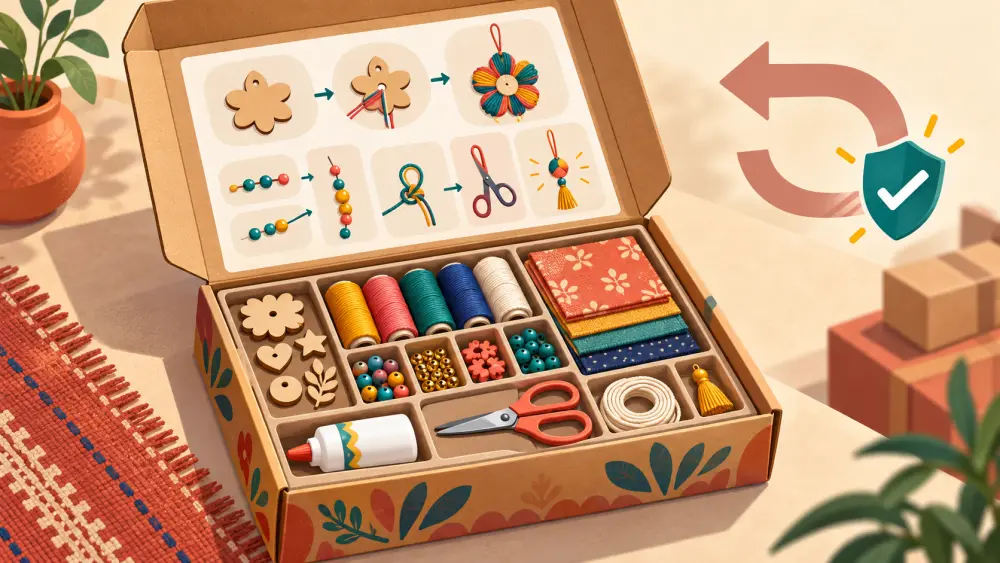
A DIY craft kit is a promise that everything needed is in the box and that a beginner can finish it. When a customer opens the box and cannot find the paintbrush, or gets stuck on step four, the complaint lands on you. Most of these disputes are not about the kit being bad. They are about what the customer expected versus what they found.
Start with what is in the box
The single most useful thing in a kit listing is a plain contents list. Write every item with its quantity: "6 wooden tiles, 1 brush, 4 paint pots, 1 instruction sheet". If something is not included, say so in the same list: "Water cup and newspaper not included". A customer who sees "not included" before paying will not call it missing afterwards.
Add a photo of every item laid out flat, with nothing hiding behind anything else. This one image does more to prevent "pieces missing" messages than any policy text, because the customer can count against it. If you are unsure how to lay it out, which angles to shoot for every product covers the basic set.
Be honest about difficulty and time
Unclear instructions usually mean unclear promises. Decide who the kit is for and say it. "Suitable for beginners, about two hours, needs an adult for the glue gun" tells the buyer what they are signing up for. If a younger child will need help, write that. Do not claim "easy" for a kit that has fiddly steps.
Say what the finished piece looks like and roughly how big it is. A customer who expected a wall hanging and received a coaster-sized piece will feel misled even though nothing was wrong with the kit. Use a size line and a photo with a familiar object for scale, as described in how to photograph products for scale.
Make the instructions part of the sale
Put a short version of the steps in the product description, so the buyer can see the kit is doable before paying. Then include a printed sheet in the box with numbered steps and a photo of each stage if you can. Add your WhatsApp number or email on that sheet. A stuck customer who can message you for help is far less likely to ask for a refund.
Pack and check before sending
Many missing-piece complaints are real packing slips. Keep a tick-list per kit and count items before sealing. Small parts like beads or pins go in a labelled zip pouch so they cannot drift to the bottom. Photograph the packed kit before you close the box; if a dispute comes, you have a record.
Decide your policy in advance
Write down what you will do when something is wrong. For a missing part, sending the part is usually cheaper than a full refund. For damage on arrival, ask for a photo of the parcel and the contents. Varchas lets you handle partial refunds for missing items and cancellations and restocking, so you can pick the response that fits the problem instead of an all-or-nothing refund.
State your policy in plain words on the product page, not only in the terms. Customers read the description; they rarely read the terms.
Do not promise results
Avoid lines like "guaranteed beautiful result" or "ready in 30 minutes". Your customer's skill and patience are not under your control. Describe the kit, the steps and the typical finish, and let the photos speak. See avoiding exaggerated claims in product descriptions for more on this.