
Who is responsible when a courier damages your parcel?
Seller, customer and courier all have a part in a delivery. This post explains the relationships in plain terms and tells you where to check the rules instead of guessing legal answers.
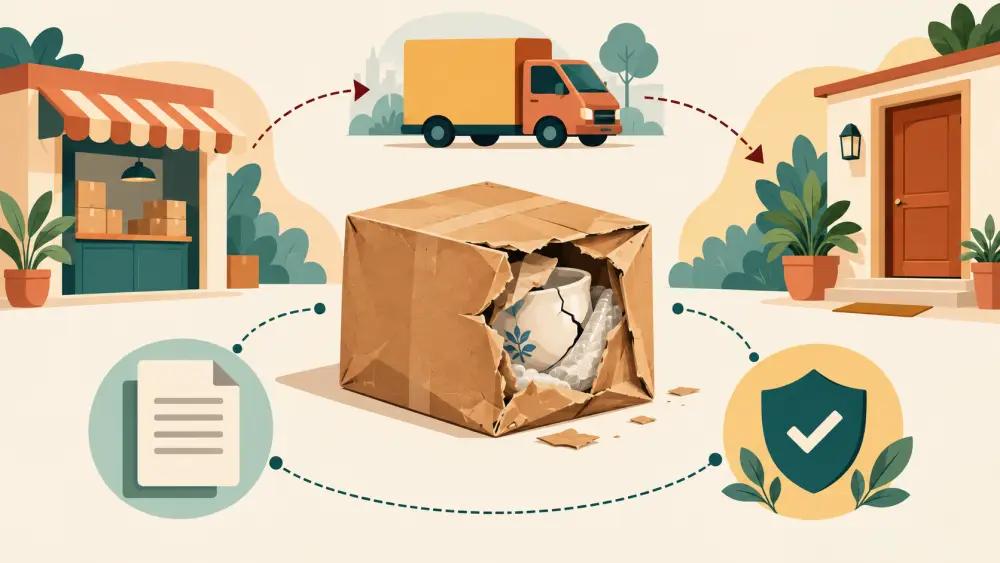
Three parties, two relationships
When a parcel is damaged, many sellers ask the same question. Whose fault is it, and who pays? To think clearly, picture the three parties.
- You, the seller. You sold a product and arranged for it to be delivered.
- The customer. They paid, or agreed to pay, for a product to be delivered to them.
- The courier. They agreed with you, not with the customer, to carry the parcel.
There are really two relationships. One is between you and the customer, where you promised a product. The other is between you and the courier, where they promised to carry it. The customer usually does not deal with the courier at all.
What this means in practice
Because the customer's relationship is with you, they will naturally look to you when something arrives broken. From their side, you sold it, so you fix it. That is why many sellers choose to look after the customer first and pursue the courier separately, as discussed in replace or refund a damaged order, which comes first.
Your relationship with the courier is governed by what you agreed when you booked, including any terms about packing, declared value and claims. That is where your right to ask the courier for compensation, if any, comes from.
I cannot give you a legal conclusion
Who is legally responsible in a particular case depends on the facts, the terms you accepted, and the consumer rules that apply to you. I am not able to give you a legal conclusion, and nobody should rely on a blog post for one. What I can suggest is where to look.
- Read the courier's terms and conditions, especially sections on liability, packing and claims.
- Read the terms of any platform or aggregator you booked through.
- Check the consumer rules and your own store policy pages, and if the matter is serious, ask a lawyer or a CA.
- Keep your own policy clear and visible, so customers know what to expect from you.
How to protect yourself practically
Whatever the legal position, some habits protect you.
- Pack well. Many courier terms depend on proper packing, so poor packing can weaken your position.
- Record your packing with a short video before dispatch.
- Keep the invoice, tracking and booking records.
- Declare value honestly when booking, if the service asks for it.
- Raise problems promptly, with clear evidence. See how to raise a damage claim with a courier and what evidence to keep.
Communicate it to customers
A sentence in your shipping policy can prevent confusion. For example, you might state that if a parcel arrives damaged, the customer should send photos within a certain period you choose, and you will arrange a replacement or refund after reviewing them. Set a period that is fair and that you can keep. Do not copy numbers from elsewhere, and confirm that your wording is acceptable with someone qualified.
Think of it as cost of doing business
Even in cases where a courier is clearly at fault, you may not recover everything. Plan for some loss. The numbers in the cost of a damaged-in-transit parcel show why packing and records are worth the effort.
Bottom line
You carry the customer relationship, the courier carries the parcel, and the paperwork connects them. Treat the customer fairly, document everything, read the terms, and get qualified advice for the legal questions.