
What evidence to keep for damaged or lost parcel claims
Good records make a stressful claim much easier. Here is a practical list of photos, videos, invoices, tracking records and chat logs to keep, and a simple way to store them.
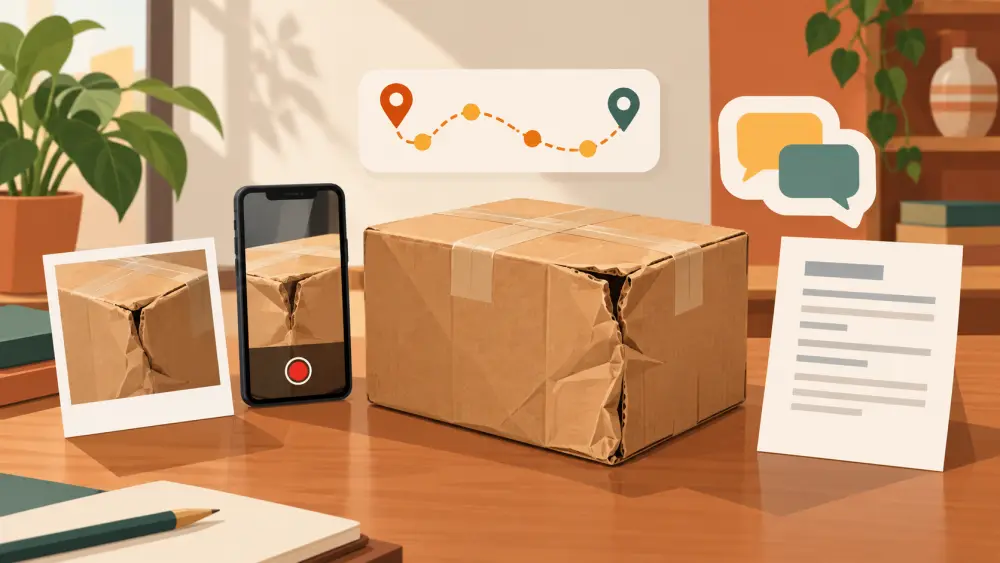
Evidence is a habit, not a rescue
When a parcel goes wrong, you suddenly need proof. The sellers who find that easy are the ones who collected it before anything happened. It costs little to build the habit, and it saves a lot of scrambling later.
No amount of evidence guarantees a payout, and I will not suggest otherwise. What evidence does is make your case clear, so that nobody has to guess what happened.
At packing time
These records are made before the parcel leaves you.
- A photo of the item. Take a clear photo of the product on its own, in good condition.
- A packing video. Film a short clip showing the item, the cushioning and the box being sealed, ending with the label. Thirty seconds is enough.
- Weight and size. Note the weight and box dimensions used for the shipment.
- The shipping label. Photograph it before you stick it, or keep the generated copy.
At dispatch
- Invoice or bill. Keep a copy showing the item description and value.
- Tracking number and booking confirmation. Save the booking page or the message you received.
- Pickup proof. If you get a pickup receipt or message, keep it.
During transit
- Tracking history. Screenshot the status page, especially if it shows a long stall, a wrong location or a failed attempt. Pages can change, so save them as they are.
- Messages with the courier. Keep any call notes and emails.
On arrival, if there is a problem
- Customer photos. The outer box from every side, the label, the damage to the item and the inner packing.
- Customer video. An opening video is the best evidence, if the customer made one.
- Delivery details. The date and the status shown as delivered.
- Chat logs. Save the conversation where the customer reports the issue, with dates and times visible.
For lost parcels
- Tracking screenshots showing the last known status.
- Any message from the courier about the shipment.
- Your complaint number and every follow-up message.
- The customer's confirmation that they have not received anything.
Storing it neatly
Make a folder for each order, named with the order number, and drop files inside as they arrive. If you are short on phone space, use a free cloud folder and upload weekly. File names with the order number and a word, for example "1042-packing-video", help you find things quickly.
Keep records for as long as a claim might reasonably still be open, and for as long as your own accounts require. If you are unsure how long to retain financial records, ask your CA.
A simple weekly check
Once a week, glance at your shipments and confirm each has a packing video and an invoice copy. It takes minutes, and it turns scattered files into reliable evidence.
How it fits together
Evidence supports a claim, and the claim process is described in how to raise a damage claim with a courier. The general steps for the first hour are in what to do when a parcel is damaged in transit, and the loss case is in what to do when a parcel is lost in transit.
Your future self will thank you for every video you recorded on a calm day.