
"What is a reverse pickup? (and when sellers need one)"
A reverse pickup is when a courier collects an item from your customer and brings it back to you, which sellers use for returns and exchanges they have agreed to.
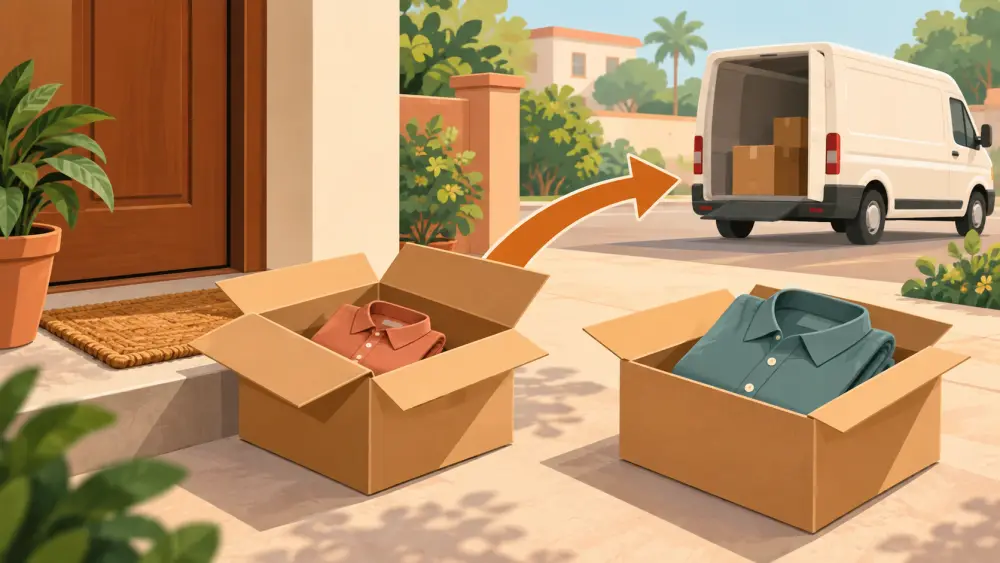
Most shipping talk is about parcels going out. A reverse pickup is the opposite journey, where the courier visits your customer, collects the item and carries it back to you. It sounds like extra work, and it is, so it is worth understanding before you promise it in a policy.
The meaning in plain words
In a normal shipment, the courier collects from your address and delivers to the customer. In a reverse pickup, the pickup address is the customer's home and the delivery address is yours. The customer does not need to find a courier office or post anything. The courier comes to them.
Whether a reverse pickup is available, which pincodes it covers and what it costs depends on your courier or aggregator. I cannot tell you any of that, so check their own terms before you offer it to customers. You may find it is available for some areas and not for others.
A size-exchange example
Take a boutique that sells kurtis. Kavya buys a medium and finds it tight. She messages the store on WhatsApp for a large.
The seller has a policy that allows one size exchange if the garment is unworn with tags. The steps could be.
- Kavya sends two photos of the kurti with the tag and the fit issue.
- The seller approves the exchange and confirms the large is in stock, and holds it.
- A reverse pickup is arranged from Kavya's address, back to the seller.
- When the medium arrives and is checked, the large goes out.
Some sellers dispatch the new size only after the return reaches them. Others send it first for loyal customers. That is a business choice about risk and cash, and neither is right for everyone. Handling size exchange requests for clothing covers the thinking.
When a seller needs one
You may need a reverse pickup when.
- A customer is entitled to a return or exchange under your policy and cannot easily send the parcel back.
- An item arrived damaged or wrong, and you want it back for inspection or for a courier claim.
- A high-value item should be tracked on its way back, not sent through an untracked postal cover.
You may not need one for tiny low-value items. Sometimes it is cheaper to refund and let the customer keep a Rs 99 item than to pay for a pickup. Work the numbers using cost of a returned order, step by step.
Who pays
This is a policy decision, not a fixed rule. You could cover the pickup when the error is yours, and ask the customer to bear it when they change their mind. Whatever you pick, write it down before the sale. Who pays return shipping, a policy decision discusses the options.
Protect yourself on the way back
- Ask for photos of the item and its condition before the pickup.
- Tell the customer to pack it in the original box with tags attached.
- Note the pickup AWB and share it with the customer so they know what to expect.
- When the parcel arrives, open it on camera and compare it with the photos. Inspecting returned parcels for damage and tampering shows what to look for.
A reverse pickup is a convenience for your customer and a cost for you. Offer it where it builds trust and the numbers allow, and say clearly when it is not available.