
How to inspect a returned parcel before restocking
Before a returned item goes back on your shelf, a calm checklist and an opening video protect you and the next customer. Here is a step-by-step inspection routine for small sellers.
Why inspection matters
A returned parcel is not automatically good stock or bad stock. Until you look carefully, you do not know. Restocking an item that is damaged, used or tampered with means you may send it to the next customer, who then returns it too, and your reputation takes the hit.
A short, repeatable inspection avoids that. It also builds a record you can rely on if there is a disagreement about what came back.
Build the opening-video habit
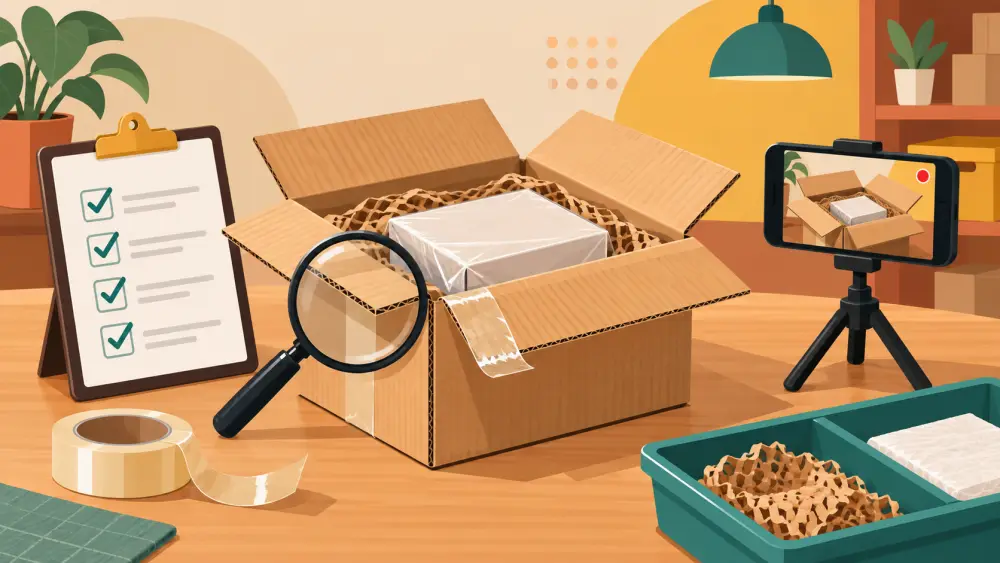
Set up your phone so you can film the box on a table, with the light on and your hands visible. Start recording before you touch the parcel.
- Show all sides of the closed box, including the label and any tape or seal.
- Show the weight on a scale if you have one, then cut it open slowly.
- Keep filming as you take out every item, ending with the empty box.
You do not need editing. A clear, unbroken video is enough. This habit also helps with damage claims, as described in how to raise a damage claim with a courier.
The checklist
Use the same list for every return.
- Outer box. Is it crushed, wet, torn or resealed? Note how it looks compared with how you packed it.
- Inner packing. Are your own wraps, inserts and fillers still there? Missing filler can mean the parcel was opened.
- The item itself. Is it the same product, size and colour you sent? Check any label or batch code you use.
- Completeness. Are all parts, accessories, gifts and printed cards present?
- Condition. Look for scratches, stains, odours, loose threads, broken parts, signs of use or washing.
- Seals and packaging. For consumables and hygiene items, is the inner seal intact? If not, do not resell.
- Invoice and slips. Note whether the paperwork came back with it.
Write a short note against each item: fine, minor issue, or not sellable.
Reading the signs fairly
Do not jump to conclusions. A crushed box may be courier handling, not customer misuse. A missing item may have been packed wrong on your side. A used product may have been tried honestly. I will not say a return is always the customer's fault, because it often is not, and you should not assume it.
Record what you see, not what you suspect. If something looks wrong, photograph it from a few angles and keep it aside until you have thought it through.
Decide what to do
- Good condition and intact seals: clean, repack and restock.
- Minor cosmetic issue: repair or sell as a discounted item, labelled honestly so the buyer knows.
- Damaged, opened consumable or hygiene item: do not resell. Photograph it and set it aside.
Update your stock count after each decision, so the shelf and your records match. The wider routine is in what to do when an RTO parcel reaches you.
Learn from each inspection
If many returns show the same damage, your packing may need work. Packing guides for your category, such as packing spices for courier safely, can show easy fixes. If the pattern is wrong items or missing parts, look at your own packing checks.
Keep the evidence
Save your opening videos and photos with the order number in the file name. Keep them for as long as you reasonably might need them. This is the simplest insurance a small seller can build.