
Returns and complaints when selling spices online and how to reduce them
Most spice disputes are about taste and freshness, which are hard to prove either way. Setting expectations in the listing prevents many of them before the order is placed.
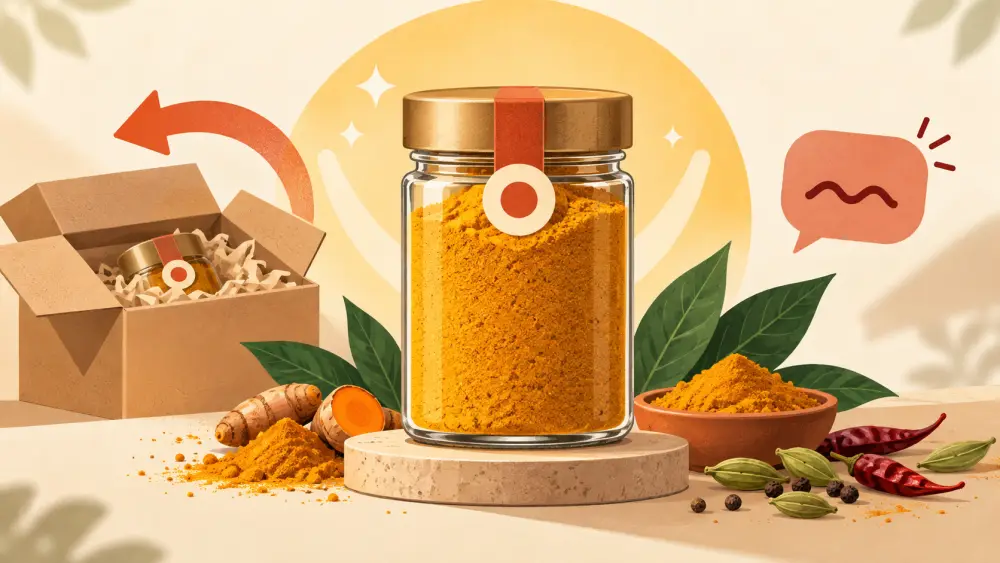
Selling spices has a built-in problem. Taste is personal and freshness cannot be seen through a pouch. A customer who says "this is not as strong as what my mother uses" is making a comparison you cannot win in an argument. The better approach is to reduce the room for that complaint by being specific before they buy. Here is how.
Why spice complaints are different
With clothes, a return usually means size or colour. With spices, the complaint is often a feeling: not spicy enough, not fragrant, tastes flat. You cannot prove or disprove it, and a refund for a half-used pack is a loss on something you cannot resell. So the goal is less about handling the dispute and more about making sure the customer knows what they are getting.
Say what the spice is, in plain terms
Write the details a cook actually uses to judge a spice:
- The exact name and form: whole, coarse or fine powder.
- Where it comes from or how it is made, only if it is true, for example whether you grind in small batches.
- The heat level in words. "Medium heat, adds colour more than fire" tells a buyer more than "premium quality".
- How much to use. Say a cook who normally uses one teaspoon of a shop-bought blend may need a bit more or less of yours.
Stay away from claims you cannot back up. The post on avoiding exaggerated claims in product descriptions explains why "the best in India" invites trouble.
Be honest about freshness
Freshness complaints often come from storage, not from your product. Give the pack date or batch note, and say how long the spice keeps at its best if stored properly. Add simple storage guidance: airtight, away from sunlight, dry spoon. See how to write care instructions for a format that works for any product. Do not state a shelf life you have not verified yourself.
Offer a small size first
Many "I did not like it" complaints come from a large first order. If you offer a small trial pack, a customer who dislikes the taste loses little and you lose little. Store the sizes as variants so each has its own price and stock. The post on product variants explains the setup.
Show the product honestly
A photo with a bright, saturated colour that does not match the real powder sets up a complaint. Shoot in plain daylight and show a spoonful so the buyer sees the real colour and texture. The guide to photographing food products covers lighting.
Decide your policy before the first complaint
Write down what you will do for three situations and keep it short:
- The pack arrived leaking or damaged: ask for a photo and replace or refund.
- The wrong item was sent: replace it and own the mistake.
- The customer simply did not like the taste: decide whether you will offer anything, such as a discount on the next order, and say so in your policy page.
Having this decided stops you from improvising under stress. Check the rules that apply to you with a professional, since they depend on how and where you sell.
Respond quickly and kindly
A quick, polite reply with a clear next step settles most disputes. Customers are rarely looking for a fight; they want to feel heard. Keep a record of what you promised so you can follow through. See cancellations, refunds and restocking for how to handle the stock side.
Next step
Describe the spice precisely, offer a trial size, state storage, and settle your policy early. If you want a store where each pack size is a variant with its own stock, the Founding Offer covers the first 10 stores with setup done together. Get in touch at /early-access.