
How can a Reel show product size using everyday objects?
Centimetres mean little on a phone screen. A hand, a pen or a water bottle in the frame lets viewers feel the size, which cuts down on wrong orders.
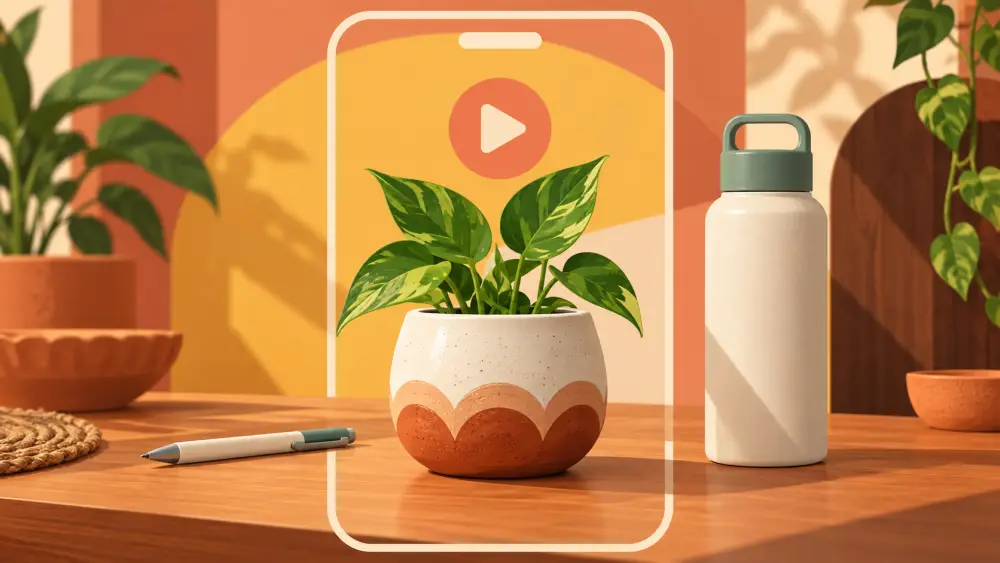
Size is one of the top reasons a buyer hesitates and one of the top reasons parcels come back. A number such as "12 x 8 cm" is accurate, but most people cannot picture it. A familiar object next to the product turns the number into a feeling.
Why everyday objects work
You do not need to teach anyone to read a ruler. If the product sits next to a pen, a phone, or a steel tumbler, the viewer already knows the size of those things. Their brain does the comparison without any effort.
The best reference objects are ones almost everybody owns and that have a fairly standard size. A few that work well:
- A hand, with fingers visible, for small products such as earrings, soaps or lip balms.
- A pen or pencil, for anything long and thin, like bookmarks or incense sticks.
- A water bottle, for mid-sized items such as jars, bags and boxes.
- A phone, held flat, for flat items like notebooks, cards, prints or pouches.
- A door frame or a chair, for big pieces such as decor or furniture.
Pick one or two. Too many objects make the frame messy.
How to shoot it
Keep the product and the reference at the same distance from the camera, side by side. If one is closer, it looks bigger, and the comparison is false. Place both on a table and film from straight above, or straight on, not at a slanted angle.
A short sequence works well:
- Show the product alone for a second.
- Place the reference object next to it.
- Hold a tape or ruler across the product to show the real number.
- Say the measurement out loud and show it as text.
This order lets the viewer feel the size first, then see the proof. For more ways to shoot this still, how to photograph products for scale is worth a read.
Only claim what you measured
Take the measurement yourself with a tape, and write it down before you film. Measure the same way you list it in the store, such as length by width by height, or diameter and depth. If you quote a supplier's number, check it against the physical product first.
If the product varies a little, because it is handmade, say "approximately" and give a range from your own samples. Do not invent a number or round it up to look larger. A buyer who receives something smaller than what they imagined will feel misled, even if your figure was technically near.
Add the weight if it matters
For bags, jars and decor, weight tells as much as size. Place the product on a small kitchen scale and show the reading, if you own one. If you do not, skip it instead of guessing. How to write a product weight and dimensions section shows how to present both in the listing.
Use it in other places
The clip works on Instagram, but it works even better on the product page, next to the dimensions. Take a screenshot of the best frame and use it as a photo too. Putting your reels on your store explains how videos can sit beside the details.
Pick your most-asked-about product today. Find a pen or bottle on your desk, line them up, and film it in one take. It is a ten-minute job that saves many chats.