
Organising a small packing station at home
You do not need a warehouse to pack well. A single table, a few labelled containers and a clear left-to-right flow can turn a corner of your home into a reliable packing station.
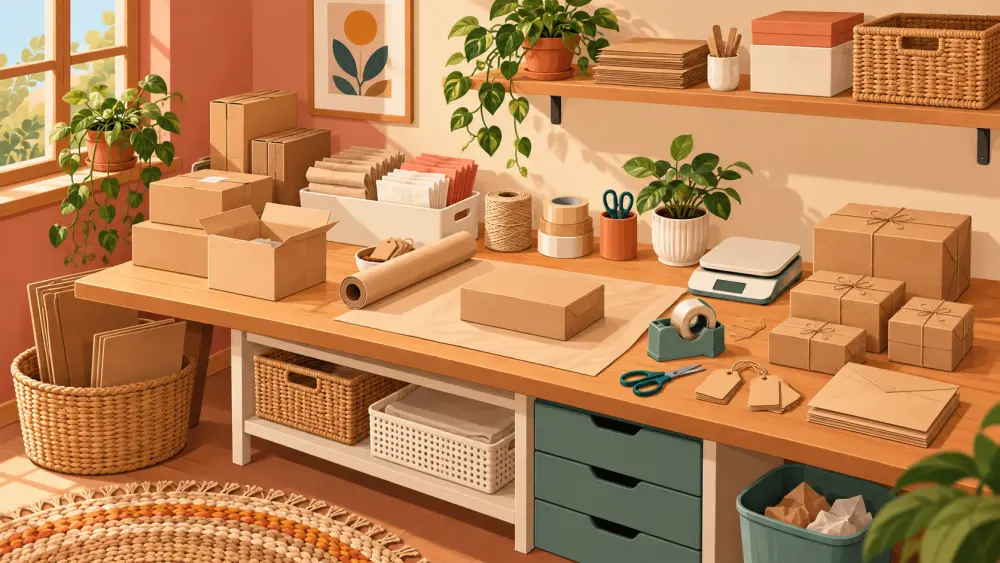
Many home sellers pack on the bed, on the dining table, or on the floor between other things. It works until the day you cannot find the tape, the label printer is buried or a parcel is damaged because you were squeezing it into a bag. A small, dedicated packing station fixes all of that, and it does not need much space.
Pick one spot and keep it
Choose a table or shelf that you can set up the same way every time. Ideally it should be near good light and near a power socket, because you may use a label printer or want to charge your phone. If the space has to be shared with the family, pick one that can be cleared quickly and put back the same way. Consistency matters more than size.
Think in a flow, not a pile
Imagine a line that runs from left to right, or from one side of the table to the other.
- Incoming: where picked items and the order list arrive.
- Packing area: a clear surface where you box and cushion.
- Sealing and labelling: tape, scissors, label sheets or printer.
- Outgoing: a tray or box for finished parcels.
When the flow is clear, you never have to ask where to put something, and finished parcels do not mix with those still waiting. This is the same idea behind Building a daily dispatch routine as a solo seller, but applied to your furniture.
Supplies you will reach for most
Keep the everyday items within an arm's length.
- Boxes and mailers in the sizes you use, flattened and stacked.
- Cushioning material, such as paper, wrap or similar, in a bin.
- Tape and a dispenser.
- Scissors and a cutter.
- Labels, pens and a marker.
- Thank-you notes or inserts, if you use them.
- A small tray for stray items like extra tags.
Store the slow-moving extras, such as large boxes you use rarely, elsewhere. A cluttered table slows every parcel.
Label the containers
Use simple labels on bins and shelves. If you can see what lives where, anyone helping you, such as a family member, can step in without asking. Keep similar sizes together so you do not grab the wrong one.
Protect your products and yourself
Keep the station clean and dry, away from damp walls and direct sun that may affect your stock or packaging. Set the working height so you are not hunched over for long stretches. If you use a blade, store it safely, out of reach of children.
Keep a reference nearby
Put a short list where you can see it. It might hold your packing steps, the weight limits of your usual boxes, or care notes for fragile products. If you have a checklist, stick it at eye level. Pick, pack, hand over, a simple checklist for home sellers is a good base.
Reset after each session
End every session by clearing the surface and returning supplies to their places. Five minutes of tidying means that tomorrow starts with a ready station, not a search. Count your remaining stock of boxes and tape each week so you reorder before running out.
Improve it gradually
Do not wait for a perfect setup. Start with a table and a box of supplies, then fix whatever annoys you most. Maybe you need a shelf, or a better lamp, or a second tray. Each small change adds up. For packing products that need special care, see the category guides, such as Packing handloom for courier safely, and read Batching orders to save time when packing once the station is ready.