
Batching orders to save time when packing
Packing orders in groups instead of one by one cuts the walking, searching and switching. Here is how to group by product or box size and use a simple pick list.
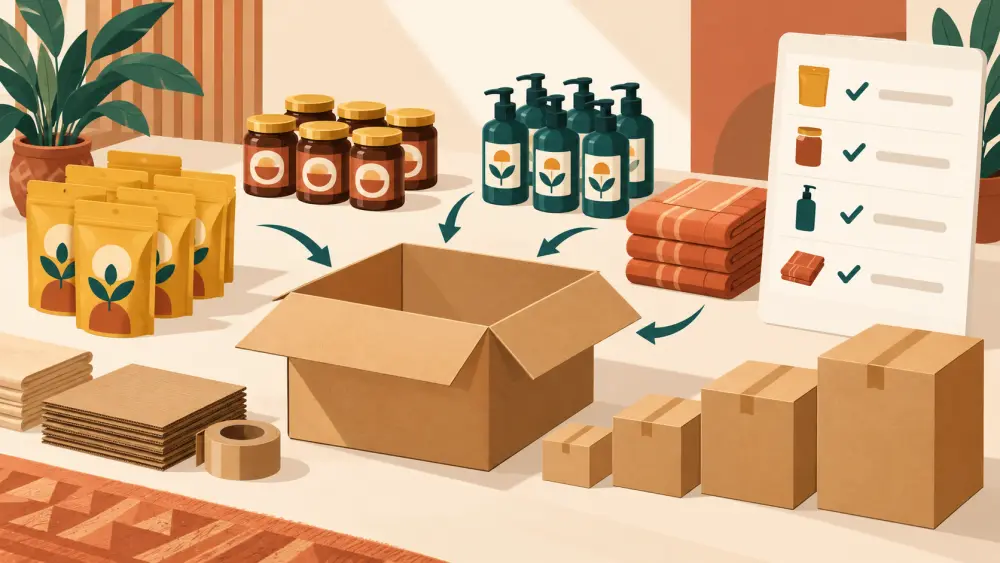
If you pack each order from start to finish, you walk to the shelf, find the items, box them, label and tape, then start over for the next order. That works for one or two parcels. As orders grow, the repeated walking and switching start to eat your day. Batching groups similar work together so you do the same motion several times in a row.
I will not put a number on the time saved, because it depends on your layout and your products. Try it for a week and judge by how your day feels.
What batching means
Instead of finishing one order at a time, you split the work into stages and do each stage for several orders at once.
- Pick: collect all the items for a group of orders.
- Pack: box and cushion them.
- Label: attach labels and check details.
- Hand over: gather and count.
The stages stay the same. What changes is that each is done for a group.
Choose a grouping
There are a few sensible ways to group, depending on what you sell.
- By product: if many orders contain the same item, pick all units of it in one trip.
- By box size or packaging type: prepare all the small mailers first, then the larger boxes, so your tape, filler and labels stay within reach.
- By delivery area or courier: if you use more than one service, gather each service's parcels separately for handover.
- By urgency: pack orders with a promised date or special note first.
Start with one grouping. Adding several at once makes the system harder to follow.
Use a pick list
A pick list is the paper or phone note that tells you what to collect. Make it simple.
- List each product once, with the total quantity needed across the batch.
- Add the order numbers that each unit belongs to, so you can check it later.
- Walk your shelves in a fixed order, matching how you store things.
If your storage follows your list order, you will make one pass and avoid backtracking. Consider keeping similar items near each other. If your items have variants, check the sizes and colours twice, since a batch can hide a mistake across many parcels. How to track stock per variant in your catalogue helps keep the counts honest.
Sort picked items by order
After you pick, set the items out in groups, one group per order, before boxing. This is the step where mistakes are caught. Compare each group against the order details, then pack. Do not skip this to save time, because swapping items between orders is a classic batching error.
Pick a batch size you can finish
A very large batch can drag on until you are tired and careless. Choose a size you can complete in one sitting, perhaps tied to a courier pickup or a cut-off. Finish the batch fully, including labels and records, before taking the next. See Setting a daily cut-off time for same-day dispatch.
When not to batch
If an order has a custom detail, a fragile item or a special note, pack it on its own. Batching suits plain repeat work, not exceptions.
Keep what works
Note what slows you down, such as hunting for tape or a missing label roll, and fix it. A well-set work area makes batching smoother, which is the focus of Organising a small packing station at home. For the wider daily flow, read Building a daily dispatch routine as a solo seller.