
What should a small t-shirt brand post on Instagram?
A t-shirt is a small canvas for an idea. Design stories, print close-ups, fit shots and sketch-to-shirt reels show the thinking behind each piece.
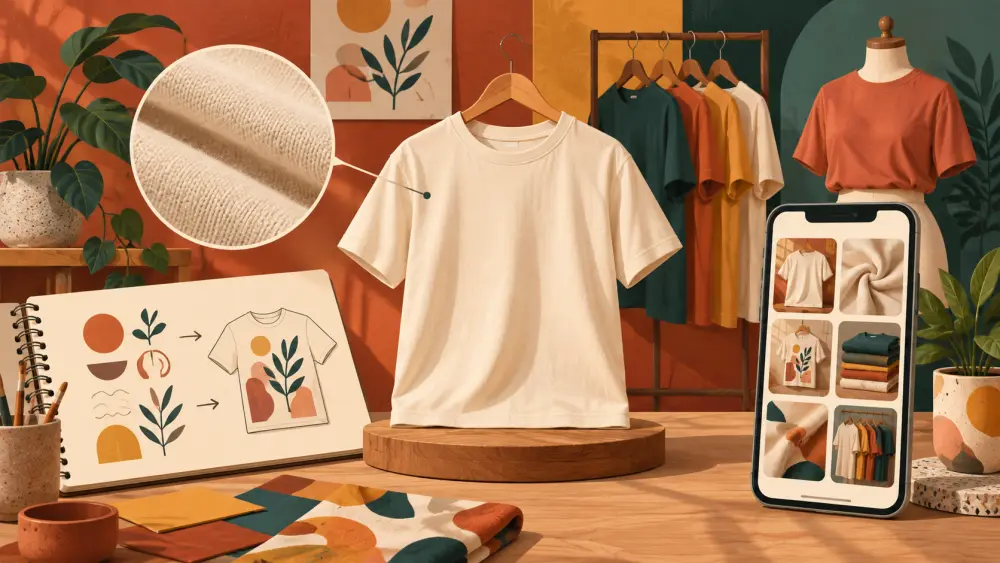
The market is full of plain tees with slogans. What a small brand can offer is a point of view. Your Instagram should show where each design came from, how the shirt is made and what it looks like on a real person.
Design-story posts
Every shirt in your range started as an idea. Write that idea down in three lines for each design: what sparked it, what you wanted it to say, and what you changed along the way. Post it with a photo of the shirt and, if you have it, an early sketch.
Keep the story true and specific. A line like "the doodle began on the back of a bus ticket" is far better than a generic claim about passion. If a design was made with a friend or an illustrator, credit them by name, with their agreement.
Be clear about originality. Say a design is original only if you made it or paid for it and hold the right to use it. Do not use cartoon characters, film lines, band logos or sports team marks unless you have a licence, and do not claim a design is licensed when it is not. If a design is inspired by something, say "inspired by" and be careful that it is genuinely different.
Print close-ups
Buyers cannot feel print online, so show it. Get close to the print under window light. Show the edges, the texture, and what the print looks like after stretching the fabric slightly. If it is screen print, DTG, embroidery or a heat transfer, say which. Call it by its real name.
Show the fabric too. How to show fabric texture in photos gives lighting tricks. Describe the fabric with the label information, such as the cotton percentage and weight, if your supplier has given it, and use describing material and fabric honestly as a guide to wording.
Fit shots
Fit decides whether a shirt gets bought or returned. Show the same shirt on different people with their height and the size worn. Show the shirt from front, side and back. Mention if it is oversized by design, since many buyers expect a regular fit.
Add your size chart in a post people can save. How to make a size chart for your clothing store explains how to measure a shirt laid flat, and the same method works for tees.
Sketch-to-shirt reels
A sketch-to-shirt reel is a short video that shows a drawing turning into a printed shirt. Start with the pencil sketch, show the digital version, the print being made or sent out, and the folded shirt at the end.
You can skip the printing step if a partner does it, but you should say so. Be honest about who does what. The reel works because it shows a process that is normally invisible. Keep it short, with one beat per step and a closing shot of the shirt being worn.
A sustainable posting plan
You do not need new designs each week. Each design can give you four posts: the story, the print close-up, a fit shot and a styling idea. That means a small range gives you a month of content.
Lead to the store
Make sure each post ends in a product page listing fabric, fit, sizes and care. If you are still deciding how to begin, how to start selling t-shirts online in India is a good first read.
Pick your favourite design and write its three-line story today. Photograph the shirt in daylight and you already have your first post.