
What can a kidswear brand post on Instagram while respecting kids' privacy?
You can show kidswear well without showing children's faces carelessly. Flat lays, size guides and consented parent photos make a strong, safe feed.
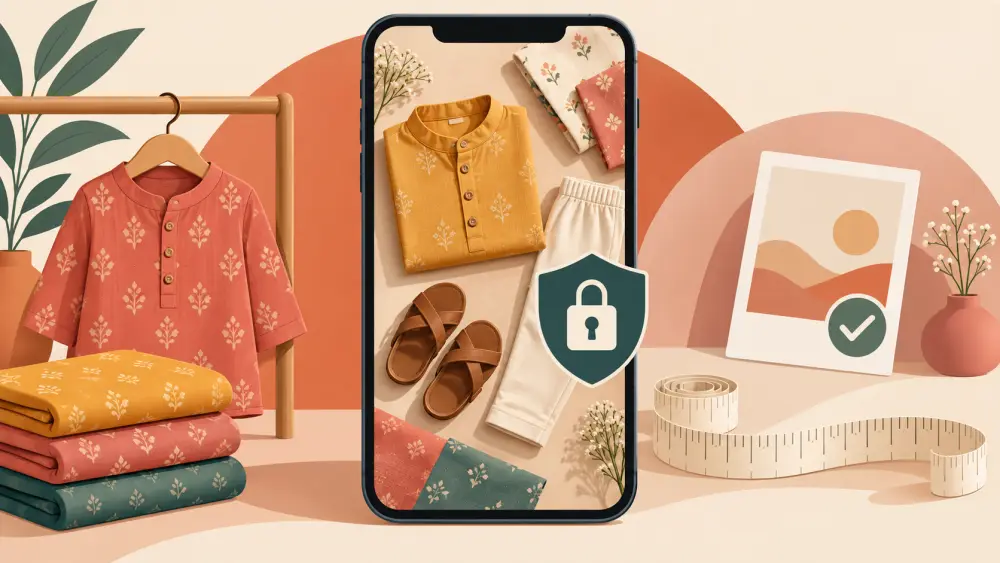
Kidswear has a particular problem. The best proof that a dress fits is a child wearing it, but a child cannot decide whether their photo goes on the internet. The good news is that you can build a rich Instagram feed while keeping children's privacy as the first rule.
Start with flat lays
A flat lay is a garment laid out neatly from above, with no child needed. It shows colour, print, buttons, and neckline clearly. Use a plain surface, soft window light and a few simple props such as a toy or a small hanger.
To make a flat lay carry more information:
- Lay two sizes side by side so the difference is visible.
- Place a ruler or a tape along the chest and length.
- Show the inside label and any care tag.
If you want a deeper walkthrough, how to do a flat lay product photo covers the setup step by step.
Size guide posts
Parents mostly worry about size, because kids grow quickly and measurements vary. A size guide post can be a single image with a simple chart, and a caption that tells people how to measure at home.
Explain the difference between age labels and actual measurements. Say that kids of the same age can be different heights, so you recommend measuring chest, length and, where relevant, height. Your own size chart should be based on garments you have measured, and the post on how to measure a garment for a size chart shows how.
Mention if you suggest sizing up for growth, and make clear that is advice, not a promise of fit.
Parent-submitted content, with consent
Customer photos are powerful, since other parents trust them more than studio shots. But handle them with care.
- Ask the parent in writing, such as over WhatsApp, and keep that message.
- Tell them exactly where you will post it, for example your feed or your story.
- Offer to crop out the face or post a back view if they prefer.
- Credit them only if they ask for it.
- Take it down quickly if they change their mind.
Do not repost a child's photo from a public account just because it was tagged to you. A tag is not permission. And never post a child's full name, school, or location. If a parent shares a mealtime photo with a school uniform in view, crop it.
Honest wording about fabric
Parents ask about skin. Describe fabric using what you actually know from the supplier's label, such as "cotton blend" with the composition, rather than saying clothes are skin-safe or certified. Certifications are specific and need paperwork. If you do not have the document, do not claim it. The post on describing material and fabric honestly gives practical wording.
Behind-the-scenes content
Show your stitching, how you check each piece, how you fold and pack, and how you pick prints. Show a hanger rail instead of a runway. A sketch-to-garment video is nice because it shows craft, and no child appears at all.
You can also use a mannequin, a small doll or a teddy sitting inside a dress to give a sense of scale without involving a child.
Keep the shop in the loop
Each post should lead to a product page with sizes, measurements and care in plain text. For setup basics, see how to start selling kids clothing online in India.
Start with one flat lay of your best seller, plus a size guide post this week. Both are privacy-safe, and both answer the questions parents ask first.