
What to do when a customer refuses COD at the door
A refusal at the door stings, but it also teaches you something. Here is how to note the reason, learn from it and handle the returning parcel calmly.
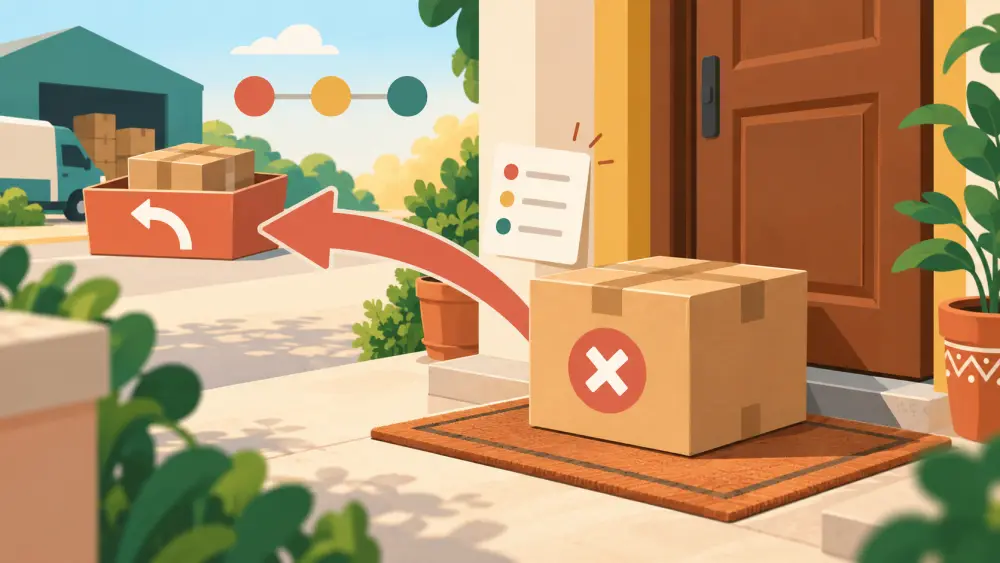
First, breathe
A parcel you packed carefully is on its way back to you because the customer said no at the door. It feels personal, and it costs money. But reacting angrily rarely helps. A calm response lets you recover what you can and learn something for the next order.
Step one, find out what happened
If the courier or your tracking page gives a reason, read it. Often it is a short note such as "customer refused" or "not available". Then, if appropriate, send the customer a gentle message. Do not blame. Ask.
A sample: "Hi [Name], we saw that your parcel could not be delivered today. Is there anything we can help with, such as a different time or a change in the address? We would like to make this right."
If the customer replies, you might learn that they were away, that the amount was a surprise, that they changed their mind, or that the product was not what they expected. Each answer points to a different fix. If they do not reply, that is also information, and you should not chase endlessly.
Step two, write down the reason
Keep a simple record for every refused order: order number, product, city, the reason you learned, and what you think you could change. Even a basic spreadsheet is enough. After ten or twenty entries you will see patterns you could not see from memory. See how to track RTO reasons so you can fix your process.
Step three, review your own process
Ask yourself honest questions.
- Did I confirm this order before shipping?
- Did the customer know the amount to pay?
- Was the address and phone checked?
- Did my photos or description set a wrong expectation?
- Was the delay between order and delivery long enough for excitement to fade?
Sometimes the answer is that nothing could have been done. Sometimes you find a gap in your routine that you can close. Both are useful to know. Habits that help are in how to confirm a COD order before you ship it.
Step four, handle the returning parcel
When the parcel comes back, treat it as stock you must verify, not as an automatic loss. Inspect it carefully before restocking, as covered in how to inspect a returned parcel and what to do when an RTO parcel reaches you. I am not stating what any courier charges you for a return or what its policy is. Check the terms of the service you use, and keep the tracking proof.
Step five, decide about this customer
Should you accept a COD order from the same person again? You decide, and you may reasonably prefer prepaid or an advance next time. Keep your rule about the behaviour, a refused parcel, rather than judgement about the person. Say so kindly: "For your next order we will ask for payment online, since the last parcel could not be delivered." That is fair and clear.
What not to do
- Do not argue with the customer or send hostile messages.
- Do not post their details publicly.
- Do not assume dishonesty. Plans change, and people are sometimes simply unavailable.
Count the cost, then prevent it
Work out what each refusal costs you using the cost of one refused COD order. When the number is clear, you can decide how much effort prevention deserves. A refusal is painful, but a seller who records and reviews each one gets steadily better at avoiding the next.