
How to plan the festive season if you sell wooden toys
A lead-time checklist for wooden toy sellers around birthdays and school-term gifts, from making stock to gift packing and cut-off dates.
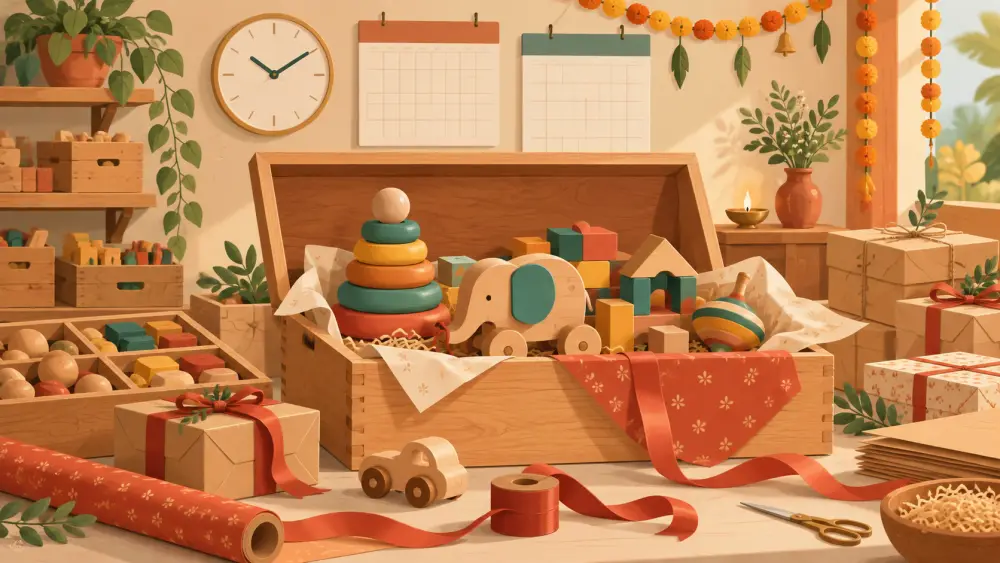
Wooden toys are slow products. Wood must be cut, sanded, finished and dried, and each step takes time you cannot rush. That makes planning more important for you than for sellers of quick-turnaround goods. The calendar for toys is also wider than a single festival: birthdays happen all year, and gifting often lines up with school terms and family functions. Here is a lead-time plan you can adapt.
Start with your own order history
Look back at the months you sold the most and the toys that moved. If you are new, use enquiries and what customers asked for in chat. We do not suggest guessing demand from numbers you read somewhere. Your own records are the best guide, and a short list of bestsellers is a safer bet than a full catalogue.
Eight to ten weeks before: production planning
- Decide which toys to make more of, and which to leave out.
- Count the hours each toy takes, including drying time for paint or oil.
- Order raw wood, paint, hardware and packaging early. Suppliers may be slower around busy times.
- Photograph any new designs while you have time. Photographing wooden toys gives a shot list.
Five to seven weeks before: build stock
Start making ready-to-ship toys in batches. Finish and dry completely before packing. Keep a small buffer of each bestseller so you do not run out in the busiest weeks. If a toy is made to order, publish the making time clearly so buyers do not assume next-day dispatch.
Three to four weeks before: tell people
Announce what you will have, the last date for orders and the personalisation options, such as names engraved on a puzzle. If you plan a bundle or gift set, create it now. A pre-wrapped birthday box with a toy and a card is easier to sell than a single toy and an empty promise. Our festive calendar post gives an overview of timing for small brands.
Two weeks before: gift packing
- Buy gift boxes, tissue, ribbon and cards in bulk.
- Test your packing on a few toys using the steps in packing wooden toys.
- Write a small care and play note to include.
- Prepare WhatsApp reply templates for questions about delivery, gift messages and personalisation.
The final fortnight
- Stop accepting personalised orders once you reach your capacity. Say so clearly.
- Dispatch early in the week to avoid weekend delays.
- Do not promise delivery dates; give estimated windows only if the courier gives them, and say they are estimates.
- Check stock for each variant. If you sell colours or sets, our post on product variants explains how to list them so inventory stays accurate.
School-term gifting
Parents often shop for teachers, classmates and returning students when a term begins. Small, easy-to-ship items such as puzzles, stacking sets or pencil holders make good additions. Do not assume what will sell; test a small batch first and listen to what customers ask.
After the rush
Write down what ran out, what sat unsold, how many hours you really worked and what you would change. Thank customers and ask for photos of the toy in use. Use those photos with permission in your store.
Checklist
- Raw material ordered early.
- Stock batch finished and dried.
- Personalisation cut-off announced.
- Gift packaging prepared.
- Reply templates saved.
- One rest day booked.
For a toy maker, patience is the plan. Start early, keep it simple and honest about timing, and the gifting season will feel manageable.