
How to pack wooden toys so they reach the customer safely
Practical packing steps for wooden toy sellers, covering sharp edges, loose parts and the protective wrap that stops chips and scratches.
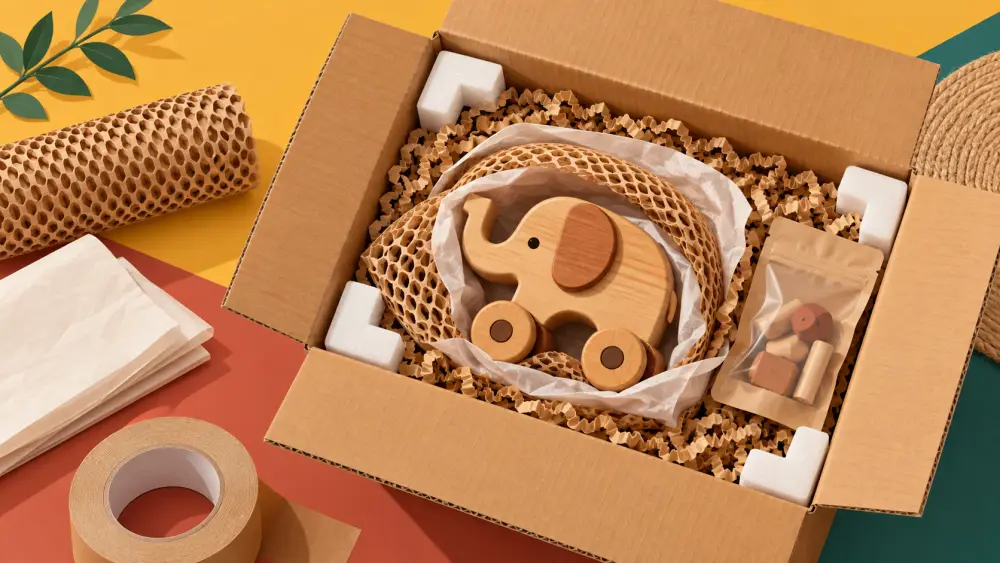
Wooden toys feel sturdy, which tempts sellers to pack them lightly. But a painted surface can chip, a thin peg can snap and a loose wheel can vanish in a carton. Packing is also a chance to show care, since a parent opening the box is judging the toy and you at the same moment.
Inspect before you pack
Run your fingers over every toy. Check for splinters, rough edges and loose pegs. A toy that is not right should not leave your workshop. After the last sanding or coating, give it enough time to dry fully, because wrapped, slightly tacky paint can stick to paper and tear off.
Wrap each toy separately
Bundling several toys loose in a box means they knock together. Wrap each one on its own:
- A soft layer first, such as tissue or thin foam, to protect paint.
- Then a layer of bubble wrap or corrugated sleeve around corners and protrusions.
- Tape the wrap closed so it does not unfurl in transit. Avoid sticking tape directly on painted surfaces.
Pay extra attention to the parts that stick out: handles, wheels, horns on animals, the top of a stacking tower.
Deal with loose parts
Sets with many pieces, such as blocks, puzzles or shape sorters, arrive best if pieces cannot wander.
- Put small parts in a labelled cloth or paper pouch, and tie or seal it. Avoid plastic bags that can split.
- Add a count to the pouch so the customer can check it.
- Place the pouch in the box where it will not be crushed by heavier pieces.
If a toy has parts that need assembly, include simple instructions on a card.
Cover sharp edges and corners
Even well-sanded toys can chip at the corners when dropped. Use corner protectors made from folded cardboard, or fit the toy in a foam cut-out. For long items like pull-along toys, support the length so the box does not bend it.
Choose a sturdy outer box
The box should leave around two fingers of space on all sides for cushioning, and the toy should not touch the walls. Fill voids with crumpled paper or air pillows so nothing can slide. Close the box and shake it gently: if you hear movement, add more filler. Tape all seams.
Keep it dry
Wood and paint react to moisture. Put the wrapped toy in a thin sealed bag before it goes in the carton, particularly during the rainy season. Silica sachets are an option if you already have them, but they are not essential.
Add a short care card
Tell the buyer how to clean the toy: wipe with a dry or slightly damp cloth, keep away from direct sun and standing water, and check for wear over time. The post on writing care instructions gives a simple pattern. Mention that parents should supervise play. This is general good practice and not a safety certification, so avoid promising more than that.
Record and review
Take a picture of the packed box and the contents. If a package arrives damaged, you can compare. Note which toys tend to chip and add extra wrap. Our shipping across India guide and the post on cancellations, refunds and restocking will help when a parcel does go wrong.
Quick checklist
- Toy checked and fully dry.
- Each item wrapped on its own.
- Loose parts in a labelled pouch.
- Corners protected.
- Box shaken and silent.
- Care card tucked in.
Wrap toys as if a child will open the parcel with excited hands, because one will.