
How to plan the festive season if you sell handloom textiles
A lead-time checklist for handloom sellers around wedding and festival wardrobes, from weaver timelines and photos to packing and order cut-offs.
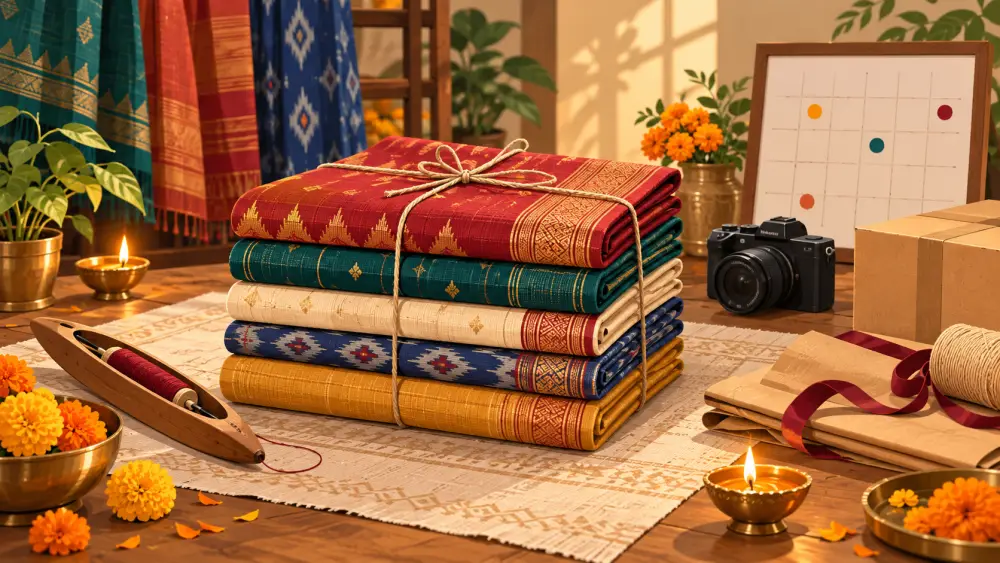
Handloom has the longest lead time of almost any product a small seller carries. A sari can take days or weeks on the loom, dyes need time and finishing takes more. When buyers plan wedding and festival wardrobes, they plan ahead, and so must you. The seasons are not about discounts alone: they are about whether you have the right pieces, photographed well and ready to ship when buyers go looking.
Start with weaver timelines
Speak to your weavers or suppliers early and ask for honest timelines for each piece, with some buffer. Delays in yarn, dyeing or finishing are common. If you buy ready stock, check what is already available and what must be woven fresh. Never promise a buyer a delivery date you have not confirmed with the source. We do not suggest demand figures from elsewhere; use your own order history and customer questions to decide what to stock.
Three months before: decide the range
Pick a manageable selection: a few sarees, a few stoles or dupattas, perhaps fabric lengths or small accessories for gifting. Decide on colours with your own customers' preferences in mind. A wedding wardrobe buyer may want matching sets or coordinated pieces; a festival buyer may want gifts at a lower price. Make a plan that fits your capacity.
Two months before: photos and listings
Photograph each piece in daylight with the weave, border and drape visible. Our guide to photographing sarees and drapes gives a shot list, and showing fabric texture helps with close-ups. Write the listing with fibre, length, width, included items and care. Handloom return risks explains what to say about colour variation and weave. Add each piece to your store with accurate stock, especially if a piece is one-of-a-kind.
Six weeks before: packaging and process
- Buy tissue, cotton wraps, poly bags, mailers and boxes in bulk.
- Test your fold-and-wrap routine; packing handloom lists the steps.
- Print care cards and packing slips.
- Prepare reply templates for common questions: colour, blouse piece, delivery time, gift wrapping.
Four weeks before: announce
Tell your customers what is coming, how to order and the last date for orders to arrive in time. Be honest: say that courier timings can shift in busy weeks and that you will share estimates, not guarantees. Wedding buyers often ask for a specific date, so be clear about what you can and cannot promise. See festive season selling for small brands for a calendar of messages.
Two weeks before
Review stock every day. Mark one-of-a-kind pieces as sold the moment they are. Confirm any custom orders in writing, with the agreed colour, length and date. Pack in batches with a checklist. Keep your shipping process simple, and read shipping across India if you serve distant pincodes.
Gifting and add-ons
Many festival buyers want to give something small. A stole, a fabric pouch or a runner can be a better gift than a full sari. Keep these items packed attractively, with a note about how the weaver and region matter, but avoid unverified claims about origin or certification.
After the season
Record what sold, what did not, what pieces had colour complaints and which took longest to arrive. Ask satisfied buyers for photos of the piece in use. Thank your weavers and share what you learned with them, because next season's plan begins with their feedback.
Checklist
- Weaver timelines confirmed.
- Range chosen and photographed.
- Listings with honest handloom notes.
- Packaging bought and tested.
- Cut-off dates announced.
- Stock updated daily.
Handloom rewards patience. Plan around the loom, speak honestly about time, and the season will reward the care you put in.