
How to explain refund timing to customers honestly
Customers do not mind waiting as much as they mind not knowing. Here is how to describe each step of a refund, and which part is in your hands, without promising dates you do not control.
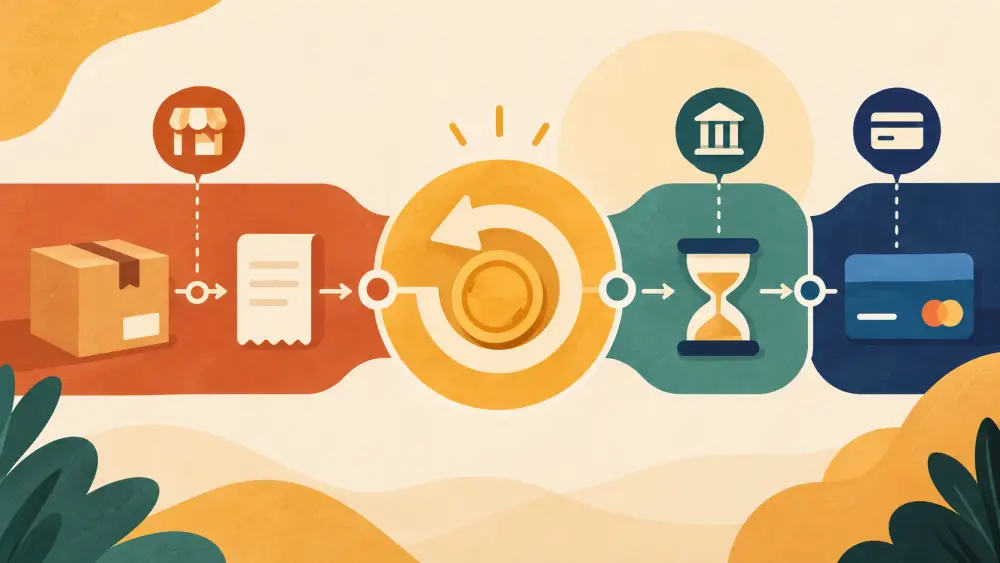
"When will I get my money back?" is a question that arrives within minutes of a refund being agreed. If you answer with a single number of days, you are guessing at a part of the process that you do not control. A better answer breaks the refund into steps and says who owns each one.
Why a single date is risky
A refund is not one event. It passes through your decision, your action, the payment provider and the customer's bank or UPI app. You control the first two. You do not control the last two. If you promise "within three days" and the money takes longer, the customer concludes that you are lying, even though you were only repeating a hope.
Break it into steps
Describe the path in the order it happens.
- We receive and check the returned item, if the refund depends on it.
- We approve the refund and tell you.
- We start the refund from our side.
- The payment provider processes it.
- Your bank or UPI app credits the amount.
For each step, add one plain line: who does it and whether you can see it. Steps one to three are yours. Steps four and five are not.
Give your own part a firm commitment
You can set a promise only for the work you do. For example, "We will review the returned parcel on the day it arrives or the next working day, and start your refund as soon as it is approved." That is a promise you can keep. Choose wording that fits your actual pace, and do not copy somebody else's.
Be honest about the part you cannot control
Say it directly: "After we start the refund, the time it takes to show up in your account depends on the payment provider and your bank. We cannot speed that up, but if it has not appeared after a reasonable wait, send us a message and we will help trace it." That sentence admits the limit and still offers support.
Avoid quoting a specific number of days for banks or gateways. Those vary, and you cannot verify them for each customer.
Tell people what to expect from each payment mode
Online payments and cash on delivery behave differently. For an online payment, the refund usually goes back to the original method. For COD there is no original payment to reverse, so you need another way to pay the customer back, which should be agreed and written down. Read Can you refund a COD order online? so you know the options before a customer asks.
Send a confirmation at each point
A short message at the moment you start the refund removes a lot of worry. "Your refund has been started from our side today. You can expect it in your account once your bank processes it. If you do not see it after some time, write to us." Keep a copy of the transaction reference if you have one, so you can help when asked. For the mechanics of a full refund through the payment gateway, see Processing a full refund via Cashfree.
Partial refunds need extra clarity
If you are refunding only part of the order, explain the amount and why. Issuing a partial refund for missing items covers that situation.
Put the outline on your policy page
A clean timeline section on the refund policy reduces repeated questions. Use the five steps above in your own words, with no promises beyond your own part. Update it if your process changes.
Customers rarely stay angry about a wait they were warned about. They stay angry about silence and surprises.