
Upselling vs cross-selling, what is the difference?
Upselling offers a bigger or better version of what the customer is already looking at, while cross-selling suggests a related item that goes with it.
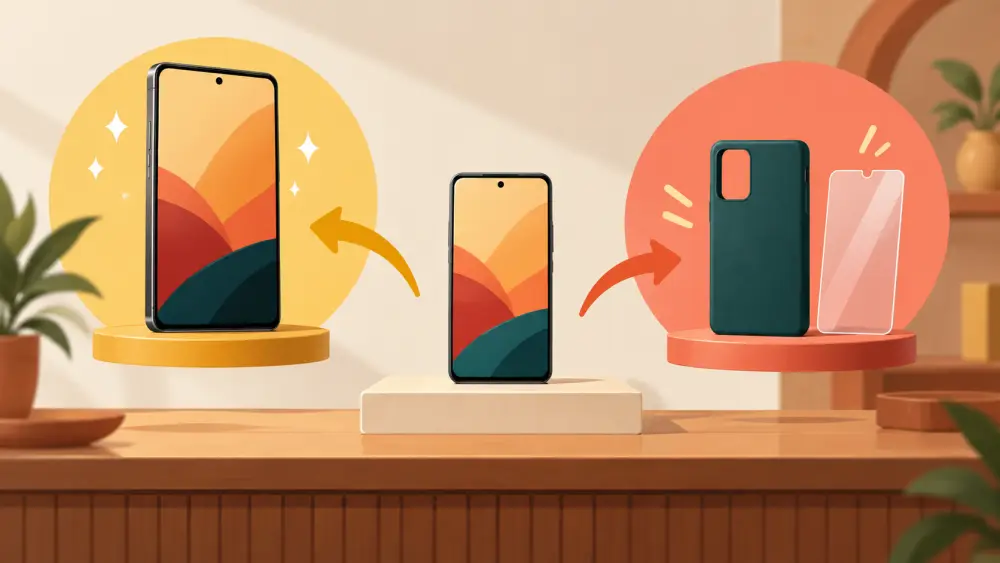
Two ideas, one goal
Both upselling and cross-selling are ways of helping a customer buy something more useful than the single item they came for. They sound similar, but the move is different.
Upselling means offering a better or bigger version of the same thing. Cross-selling means offering a different product that goes along with it.
A phone case example
Imagine a customer is looking at a basic Rs 299 phone case.
- An upsell: "This one is Rs 449 and has a raised edge that protects the camera." Same type of product, a step up in quality.
- A cross-sell: "Many people add a tempered screen guard at Rs 199 to go with the case." A different product, same phone.
In the upsell, the customer picks one case or the other. In the cross-sell, they keep the case and add the guard on top.
If the customer takes the Rs 449 case and also the guard, the basket grows from Rs 299 to Rs 648. Every rupee of that extra Rs 349 came from the customer finding something that actually suited them, not from pressure.
Why the difference matters
When you treat them as separate moves, you can plan each:
- Upsell works best when the better version has a clear, visible reason to cost more: thicker material, a larger size, a longer warranty you really give, a better finish.
- Cross-sell works best when the second item obviously completes the first: the screen guard for the case, a holder for the candle, a hair oil for the comb.
Pushing an unrelated item, or a pricier option with no real difference, feels pushy and costs trust.
How to do it politely
Your Instagram DMs and WhatsApp chats are where most small sellers do this. A natural reply sounds like help, not a pitch. Our post on recommending complementary products politely has wording you can borrow.
- Ask first. "Is this for daily use or a gift?" lets you suggest the version that fits.
- Offer one option, not five. A single clear suggestion is easier to say yes or no to.
- Be honest when the cheaper one is enough. A customer who feels you looked out for them returns.
- Put the suggestion after they have decided on the main item, not before.
Check the margin
An add-on that earns you little but adds an extra parcel weight can still lose money once shipping is counted. Work out the margin on the combined basket, not on each item alone. Our post on product mix and which item to push helps you decide which items deserve the spotlight.
Where to show it in your store
Descriptions are a good place for a gentle cross-sell. A line such as "Pairs well with our brass candle holder" with a link to that product costs you nothing and answers a question the customer might have had. For upsells, show the larger size or the better version clearly on the same product page, using variants where it makes sense. Read product variants, colourways and sizes for how to set that up.
Do not promise that either approach will lift your sales. Try one suggestion for a few weeks, watch what customers actually say and buy, and keep what feels natural.