
What is RTO? (and why it matters for your store)
RTO means return to origin, a parcel that comes back to you undelivered, and it can quietly eat the profit from several good orders; here is a clear example and what helps.
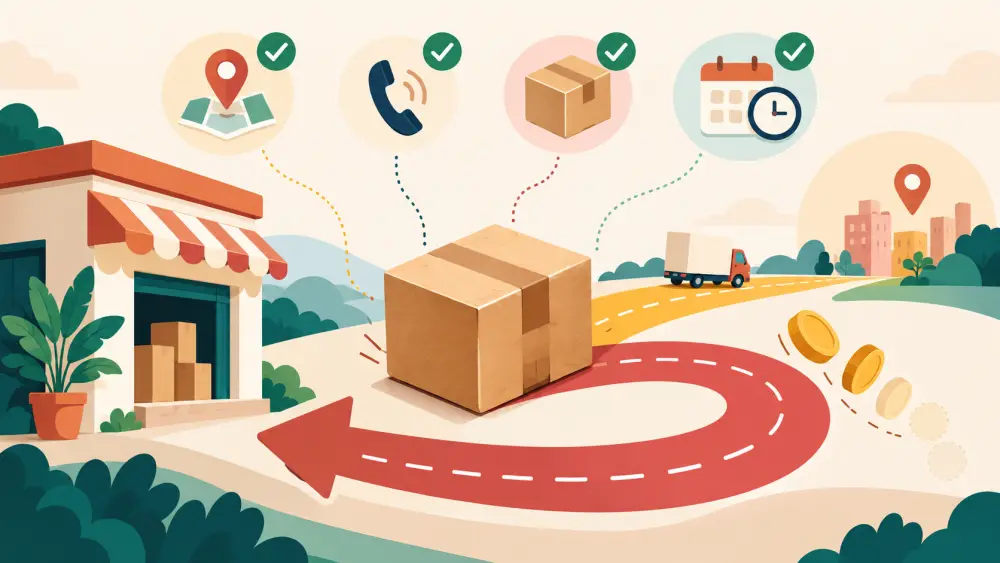
If you ship in India, you will hear the word RTO quickly. It sounds like jargon, but the idea is simple, and it affects your money more than most things you can control.
The meaning
RTO stands for return to origin. It means a parcel you sent was not delivered and came back to you, the seller. The courier tried, or tried to try, and in the end the parcel was returned to your pickup address.
It is different from a customer return. A return is when a customer received the order and sent it back. An RTO is when the customer never took delivery at all.
Why parcels come back
Typical reasons include:
- The customer refused the parcel at the door, common with cash on delivery.
- Nobody was home or the phone was not answered.
- The address or pincode was wrong or incomplete.
- The area was not covered by the courier.
- The customer changed their mind after ordering.
Why COD orders fail and how to prevent it goes deeper into the most common cause.
An example with numbers
Take a Rs 500 order. Say it is cash on delivery and the product costs you Rs 200 to make or buy. Your courier charge to send it is Rs 70, and packing material is Rs 30. These are illustrative numbers, not real rates.
If the order is delivered, you collect Rs 500 and, ignoring other costs, you are left with Rs 200 after product, shipping and packing. A good order.
If it becomes an RTO, you collect nothing. You have already paid Rs 70 to ship it out, and there may be a charge to bring it back as well, depending on your courier terms. The Rs 30 packaging is likely wasted. The product returns to you but you must check, repack and restock it, and sometimes it is damaged or unsellable. So a failed order does not just earn zero. It costs you money.
To cover a loss like that, you might need more than one successful order. You can work out the exact number for your own case with cost of one refused COD order.
Why it matters for your store
Because the loss comes on top of no sale, RTOs can cancel out profits from your good orders. If you do not track them, your sales may look healthy while your bank balance does not. Also, your stock is tied up while the parcel travels back and forth, and you cannot sell it to someone else.
Simple ways to reduce it
- Confirm COD orders by call or message before shipping. See confirming COD orders before you ship.
- Verify the address and pincode before dispatch. How to verify a customer address before dispatch shows how.
- Encourage prepaid payment by UPI at checkout.
- Ask for a small advance on high-risk or high-value COD orders, as in when to ask for a part payment on COD.
- Set honest delivery expectations so people are available.
- Keep a record of why each RTO happened. Patterns will show up, as explained in tracking RTO reasons to fix your process.
How to track it
Each month, count orders shipped and orders returned to origin. Divide the second by the first to get your own rate. Do not worry about anyone else's number, only yours and whether it is going up or down.
RTO is not a sign you have failed. It is a normal cost of shipping to India's many addresses. Knowing what it is, and measuring it, is how you start keeping it small.