
Why COD orders fail and how to prevent it
Cash on delivery orders fail for a handful of repeatable reasons, from unreachable phones to a sudden change of mind. Here is each reason with a calm, practical step you can take.
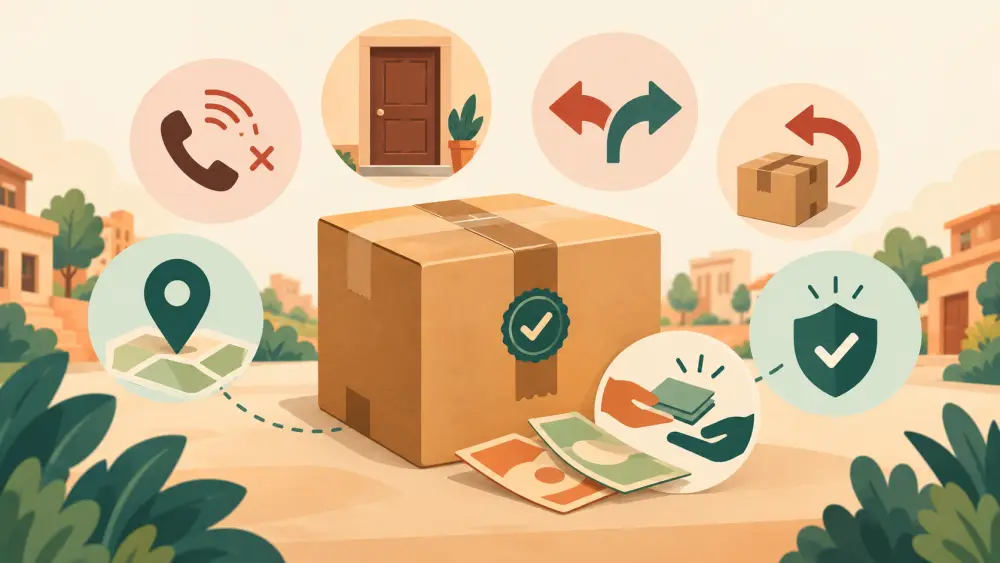
COD is popular, and fragile
Many Indian customers like paying when the parcel arrives. It feels safe, especially when they have not bought from you before. For you, though, a COD order is a promise that can break at the last step. Looking at why they fail is the first step to protecting yourself.
I will not quote any failure rate here, because it varies widely by product, price and customer. What you can do is learn the reasons and watch for them in your own orders.
The common reasons
- The customer cannot be reached. The phone is switched off, the number was mistyped, or they simply do not pick up unknown numbers.
- Nobody is home at the time of delivery. The customer expected the parcel later, or on another day.
- Change of mind. The order was placed on impulse, a cheaper option appeared, or the excitement faded by the time the parcel arrived.
- Cash is not ready. The customer ordered for a payday that has not come yet, or forgot they must pay at the door.
- Address problems. An incomplete address leads to failed attempts, which can end in a return.
- Order placed by someone else. A family member or friend ordered, and the person at home does not want it.
- Unclear expectations. The product looked different from what the customer imagined, so they refuse at the door.
What you can do about each one
Match the step to the cause.
For unreachable phones, send a short message after the order and try one call before dispatch. A number that never connects is a clear sign to hold the parcel.
For nobody home, ask the customer for a good delivery time and a second contact number, and tell them roughly when the parcel will arrive.
For change of mind, a friendly confirmation message gives the customer a chance to cancel before you ship, which costs you nothing. Compare that with a refusal at the door, as worked out in the cost of one refused COD order.
For cash not ready, remind the customer of the exact amount in your confirmation message so there is no surprise.
For address problems, ask for landmarks and a working number. Apartments, villages and rural addresses need extra detail.
For expectation gaps, honest photos and descriptions help, especially for colour, size and material.
Do not punish honest buyers
It is tempting to become suspicious of every COD buyer. Resist that. Most people who order COD are simply careful with online payments. Put your effort into process, confirmation, clear details, honest descriptions, rather than into assuming bad intent.
Track what you learn
After a few weeks, note each failed COD order and the reason. If three of five failures were unreachable phones, you know where to focus. A simple sheet is enough, as described in how to track RTO reasons so you can fix your process.
Think about the economics too
If failures cost you more than the margin on good orders, you have a pricing and policy problem, not only an operations problem. See break-even RTO rate for COD to check how much failure your margins can absorb, and cash on delivery without the chaos for a wider view of running COD sensibly.
In short
COD orders fail for ordinary human reasons. Confirm before you ship, collect clear details, set expectations on amount and timing, and keep a record. You will not remove every failure, but you will catch many while the parcel is still on your table.