
What is RTO and why does it hurt small sellers?
RTO means return to origin, a parcel that travels all the way back to you undelivered. This guide explains where the cost comes from, even when you never see a clear bill for it.
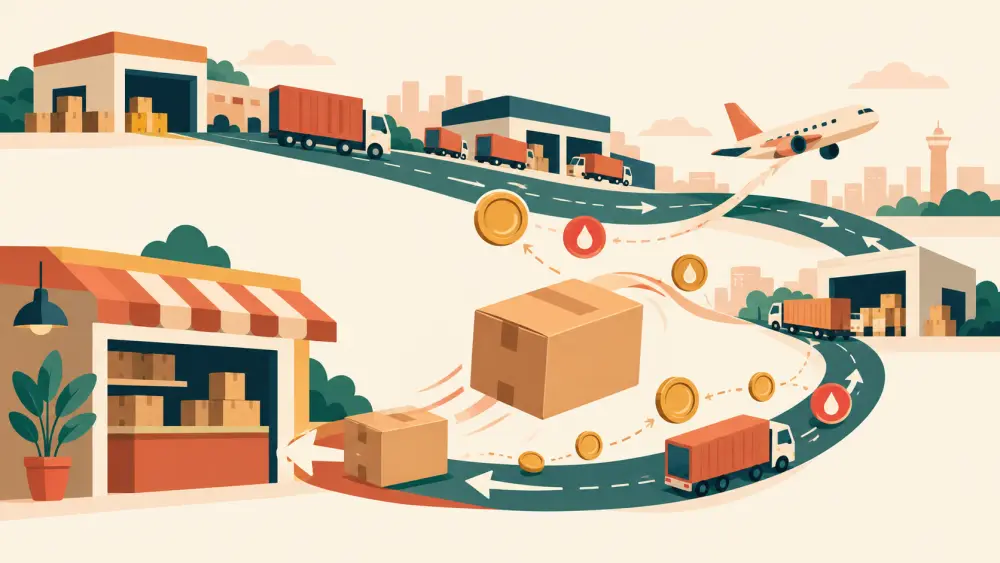
The plain meaning
RTO stands for return to origin. A parcel leaves your table, goes out for delivery, and for some reason does not get delivered. Instead of reaching the customer, it comes back to you. That is an RTO.
You will hear the word constantly in seller groups. It is worth understanding properly, because it is one of the quieter reasons a store that looks busy still makes little money.
Why parcels become RTO
Without going into numbers, the usual causes are the customer not answering the phone, a wrong or incomplete address, the customer changing their mind, nobody being home, or the customer refusing to pay on delivery. Some are your process, some are the customer's situation, and some are simply bad luck.
Where the money goes
The painful part is that an RTO often costs you twice, and sometimes more.
- Outbound shipping. You paid, or your budget absorbed, the cost of sending the parcel out. That money is spent whether or not delivery happens.
- Return shipping. Depending on how you book, the return leg may also cost you. Check this with whichever courier or tool you use, and read the terms yourself instead of assuming.
- Packaging. The box, tape and filler may be damaged or unusable when the parcel comes back.
- Payment fees. If the customer had paid online and then you refund, check whether any fee on the transaction is returned to you or stays with the payment provider.
- Your time. You handled the order, packed it, and now you must inspect, restock and update records.
For the full arithmetic with a sample order, see the cost of a returned order, step by step and the cost of one refused COD order.
The hidden cost, stock sitting in transit
Money is not the only loss. While the parcel is travelling, that unit of stock is locked away. If you have only three pieces left and one is somewhere on a truck, your store may show less availability than you really have, and another customer might want it. For a handmade or limited item, a week of missing stock can mean a lost sale.
Add the chance that the item comes back damaged and cannot be sold again, and one failed delivery can wipe out the profit of several good ones. The calculation in how many good orders one return wipes out puts this into simple terms.
Why it hits small sellers harder
A large brand spreads these costs over huge volumes and negotiates courier terms. A small seller has thin margins and a small cash cushion. One bad week of returns can eat the money you meant to use for restocking. Because you probably do packing, customer calls and bookkeeping yourself, the time cost is also yours.
What you can do about it
You cannot remove RTO completely, and it would be a mistake to promise yourself that. But you can reduce the avoidable part.
- Confirm orders before shipping, especially cash on delivery.
- Check addresses and phone numbers while the customer is still engaged.
- Describe the product honestly so there are fewer surprises.
- Keep a simple record of why each return happened, so you can fix patterns.
The posts cash on delivery without the chaos and returns and RTO, the numbers nobody tells you are good next reads.
The takeaway
RTO is not a mysterious courier problem. It is a chain of small costs, outbound, return, packaging, time and locked stock. Once you see each piece, you can price for it, prevent part of it, and stop being surprised by it.