
What is made-to-order? (and why it matters for your store)
Made-to-order means you start making the product only after someone buys it, so the lead time you show decides whether customers trust the wait.
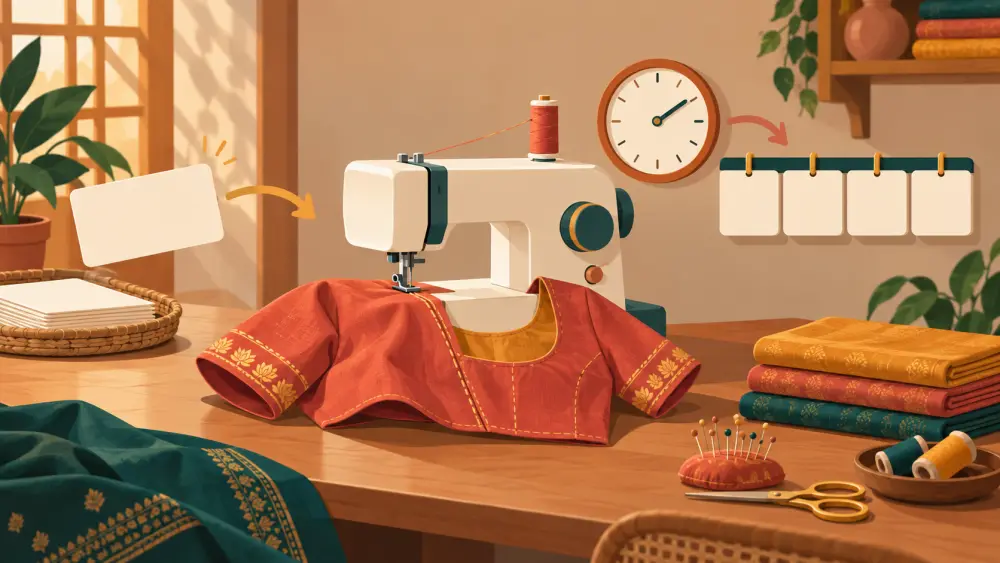
Made-to-order means a product does not exist until a customer asks for it. You cut, stitch, pour, paint or assemble it after the order arrives. Tailors have always worked this way. Many small online brands do too: custom candles, hand-painted nameplates, embroidered kurtas, personalised journals.
The tailor example
Take a tailor who sells stitched blouses online. A customer picks a fabric, shares her measurements and pays. The tailor then cuts the cloth, stitches it, finishes the hooks and presses it. Nothing sits on a shelf waiting. The blouse is the customer's from the first cut.
For the customer, this means a wait. For the seller, it means the lead time is part of the product. Say the blouse takes five working days to stitch and then travels to the customer. The shopper needs to see both numbers before paying: "Stitching: 5 working days. Delivery after dispatch: depends on your pincode." If they only see the second one, they will count from the day they ordered and be disappointed on day six.
Why sellers choose it
- You do not tie money up in finished stock that may not sell.
- Customers can have a say in size, colour or text.
- You avoid pile-ups of unsold pieces in sizes nobody wanted.
I will not claim it is cheaper overall. You still buy materials, and one-off work can take more of your time per piece than a repeated batch. Count your own hours when you price it, as covered in pricing your own labour per item.
The lead time is the product
Show it where the decision happens, which is the product page, near the price. A few habits help:
- State working days for making, separately from delivery.
- Add a buffer. If it usually takes four days, say five or six.
- Mention your busiest periods. Orders pile up before festivals, and you will be slower then. A festive season calendar for small brands helps you plan for that.
- Update the customer when you start making and when it is ready, even in one line.
Take extra care with details
Made-to-order goes wrong when the instruction was unclear. A misspelled name on a plaque or a wrong measurement cannot be sold to someone else. So:
- Ask for the details in writing and repeat them back before you start.
- For clothing, use clear guidance on measuring, like how to measure a garment for a size chart.
- Decide how changes are handled, and until what stage.
Returns need their own rule
Because the item was made for one person, your normal return policy may not fit. Decide what you will do for a genuine fault versus a change of mind, and write it down before the first order. Return policy for custom and made-to-order items covers how to think about it.
On Varchas
Stock in the admin is tracked per size and colour, and I did not find a built-in made-to-order or lead-time field in the code. So put your making time in the product description in plain words, and keep customer measurements in the order chat or note. If you take custom requests over WhatsApp, you can record them as an offline WhatsApp order.
Next step
Pick one product you could sell made-to-order and write its lead time in one honest sentence. If you flinch at the number, that is a sign to add a buffer.