
Packing sweets and snacks so they do not crush or go stale
Use rigid boxes, inner trays and sealed pouches so delicate sweets and crisp snacks keep their shape and texture, without relying on any storage claims.
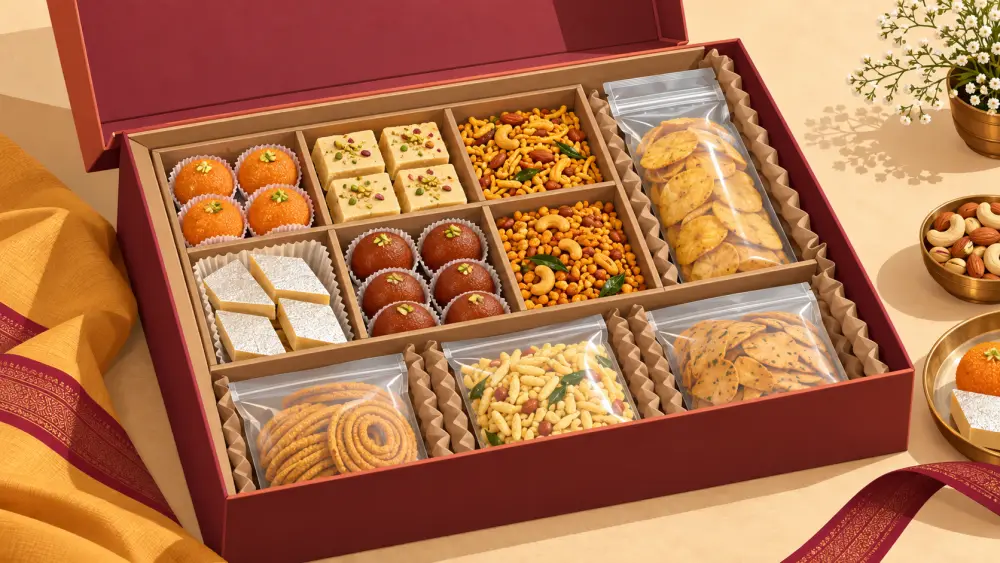
A box of mithai that arrives as crumbs, or a packet of crisp snacks that has gone soft, disappoints even a loyal customer. The two problems have different causes. Crushing is a matter of structure. Going stale is mostly about air and moisture. Good packing deals with both.
Fighting the crush
Soft or brittle sweets and snacks break under pressure from other parcels, from the weight of the box on top and from knocks. The answer is a rigid shell and no movement inside.
- Use a rigid box for fragile sweets. A sturdy cardboard or a firm tin keeps its shape when pressed.
- Avoid pouches alone for brittle items, since a pouch has no shape of its own.
- Fit the box to the content. A box that is much larger than the sweets lets them slide and break.
- Place the rigid box inside a corrugated outer box so it does not take hits directly.
Use inner trays and dividers
Sweets that touch each other can stick, deform or break.
- A paper or plastic tray with a compartment for each piece keeps pieces apart.
- Layers should have a sheet of butter paper or a thin liner between them, so they do not stick.
- For sweets with decoration, such as silver leaf or nuts on top, avoid pressing a lid down on them. Leave a little headroom.
- Fill small gaps with soft paper strips so the pieces stay in place without being squeezed.
Fighting the stale
Crisp snacks go limp when air and moisture reach them. Keeping the air out is what matters.
- Pack snacks in sealed pouches or airtight containers, and check every seal.
- Expel extra air from a pouch before sealing, if it does not crush the snack. A pouch with a little cushion of air can actually protect brittle snacks, so find a balance for your product.
- Keep the content dry. Do not pack right after frying or cooking. Let items cool completely, or steam trapped in the pack will soften them.
- Do not put wet and dry items in the same pouch.
This post does not state how long any item stays fresh. That depends on your recipe and process, and rules on labelling and shelf life come from official sources, so refer to the guidance of FSSAI where you need it.
Add the outer layers
A pouch inside a box inside an outer box may feel excessive, but it gives each layer a job. The pouch protects from air. The box protects from crushing. The outer box protects from the courier. Add cushioning between the inner box and the outer box on all sides, and tape seams well. A gentle shake should produce no sound.
Think about the season
Heat and humidity change how snacks behave in transit. In very humid weather, give extra care to sealing. In hot weather, be careful with sweets that soften or melt. Do not promise specific behaviour in heat, but pay attention when you see complaints and adjust.
Test with your own product
Ship a test parcel to a friend in another city and ask them to describe what they got, with photos. It is the cheapest way to find out if your box survives a real journey.
Related reading
For related packing advice, see packing-traditional-sweets-for-courier-safely and packing-homemade-food-for-courier. If you sell snacks and want to get the rest of the business set up, how-to-start-selling-snacks-online-in-india is a good guide. Whatever you choose, the aim is a parcel that looks as good opened as it did when you packed it.