
How to pack homemade food items for courier delivery
Use clean sealed containers, control leaks with liners, and put everything in a sturdy outer box, and check food safety rules with official FSSAI sources.
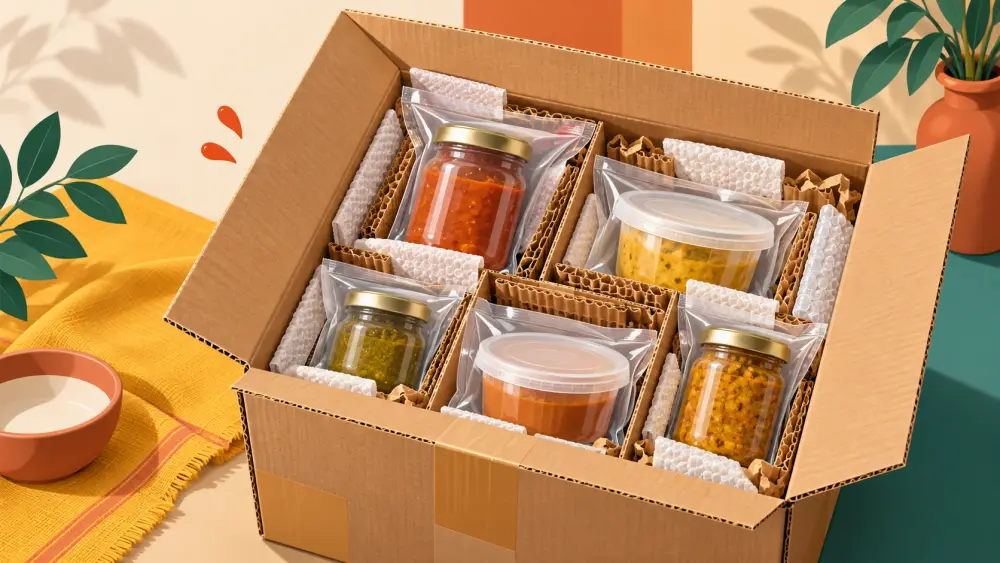
Selling homemade food means your packing does more than protect the item. It also represents your kitchen. A leaking or crushed parcel tells the customer something about how you work before they taste anything. This guide focuses on the physical side: containers, leak control and the outer box.
A note on rules first
Packing is one part of selling food. How long a product stays good, how it should be labelled and whether you need a licence are separate questions with official answers. This post does not give those rules. Check the current guidance on the official FSSAI website or ask a professional, and follow it for your product type.
Start with the container
Choose a container that suits the food and can be sealed well.
- Use clean, dry, food-grade containers. Wash and dry them fully before filling. Moisture left inside can spoil food.
- Pick a rigid container for items that crumble, and a pouch for items that do not need protection from crushing.
- Leave a small amount of space at the top for liquid items, so the lid is not pushed against the content.
- Make sure the lid closes cleanly. Wipe the rim before closing, since food on the rim stops a lid from sealing.
Seal in two steps
A single lid is the first line. Add a second.
- Put a layer of cling film or foil over the opening before the lid goes on, where it suits the product.
- Fix the lid with tape or a band so it cannot twist open.
- For pouches, check the seal and add a second line of sealing if you can.
Do not claim the seal is leakproof. Say you pack carefully, and keep your own testing honest.
Control leaks
Any food with oil, sauce or moisture can leak. Plan for it.
- Place each container in a zip bag or a small plastic bag, and knot or seal it.
- Put an absorbent layer, like a few folded paper towels, in the bag so a small leak does not spread.
- Pack upright, with the lid facing up, and mark the box so it is kept that way.
- Keep wet and dry items in separate bags in the same box.
A sturdy outer box
Use a corrugated box strong enough to hold its shape if other parcels press on it. Line the bottom with cushioning, set the containers in, and fill all gaps with crumpled paper. Containers should not slide or touch each other. If the box can be shaken without any sound, it is ready.
Test before you ship
Try a trial run. Pack one parcel exactly as you will for customers, turn it on its side, shake it, press the box, then open it. If anything moved, leaked or crushed, adjust the packing. Test with the same product, since a thick sauce behaves differently from a dry mix.
Add the details customers need
Include a label or a card with the product name, your shop name and your contact. If the product needs special handling, such as keeping it away from sunlight, mention it in the product page and on the card, but do not state storage periods unless the official rules and your own checks support them.
Where to go next
For product specific advice, see packing-pickles-and-oils-to-avoid-leaks and packing-sweets-and-snacks-to-avoid-crushing. For the business side of selling food, how-to-start-selling-homemade-food-online-in-india lays out the steps in order.