
How to pack traditional sweets so they reach the customer safely
Practical packing steps for mithai sellers, centred on leak-proof boxes and sweets that do not stick together or crumble in transit.
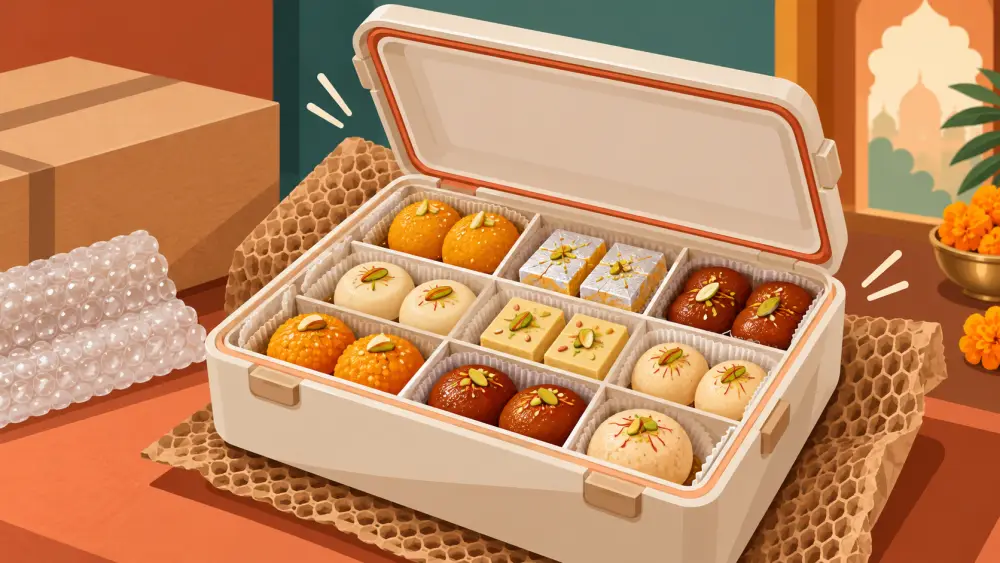
Sweets are generous products with awkward habits. Ghee seeps, syrup leaks, pieces stick to each other and soft sweets lose shape. A good packing routine solves these problems before the parcel leaves your kitchen. None of it needs expensive material, but all of it needs a bit of discipline.
Match the sweet to the journey
Dry, firm sweets such as certain laddus, chikkis and some barfis travel more easily. Syrup-soaked or very soft sweets are harder, and milk-based items spoil faster. If you are starting out, ship the firm items first and keep soft sweets for local delivery. State your choice on the listing so customers know.
Cool and set completely
Never pack warm sweets. Steam turns into moisture inside the box, which makes pieces soggy and invites spoilage. Let the batch cool fully and set on a rack, then wipe off surface oil with a clean tissue before packing.
Separate the pieces
The most common complaint is sweets stuck together or broken on opening. Use:
- Butter paper or parchment between layers.
- Individual paper cups for soft or round pieces.
- A snug fit in the box so nothing rattles.
Pack so that the box is full but not crushing. Gaps let pieces slide. Crushing flattens them.
Prevent leaks
Ghee and syrup find every gap. Line the inner box with parchment or a food-grade liner, and place sweets in a sealed container or tin before putting them in the outer carton. For items with syrup, use a container with a tight lid and put the container inside a sealed food-grade bag. Test your pack at home: tilt it, turn it upside down and look for seepage before you ship a real order.
Strong outer carton
Place the inner container inside a corrugated carton with a little cushioning around it. A heavy tin needs its own wrap so it does not dent the carton. Seal all seams with tape, and label which side is up.
Say what is inside
Print the item name, weight, packing date and storage advice on a label or card. Do not invent shelf-life numbers; use only what you have tested for your own recipe, climate and packaging. If you are unsure, suggest the customer finish the sweets within a few days and store them as you advise. Our post on care instructions covers writing clear storage notes.
Plan around timing
Sweets do not like long journeys in warm weather. Ship early in the week so a parcel does not sit in a depot over a weekend, and pick delivery options that suit the destination. Shipping across India helps you think about distance and delays. Never promise a delivery date that the courier controls.
Keep a record
Photograph each packed box before closing it. If a customer reports damage, you can compare the photo with their picture and decide fairly. Pair this with a clear refund process; cancellations, refunds and restocking is a good starting point.
Pre-dispatch checklist
- Sweets cooled and wiped dry.
- Layers separated with paper.
- Inner container sealed and tested.
- Outer carton snug and taped.
- Label with date and storage note.
- Photo taken.
Packing sweets is partly chemistry and partly manners. Let them cool, keep them apart, seal against leaks and tell the customer how to enjoy them. That is how a small seller earns repeat orders.