
How to stop pickles and oils from leaking in transit
Double seal the jar, wrap it in a liner bag with absorbent paper and pack it upright in a firm box, which cuts the chance of an oily mess without promising zero leaks.
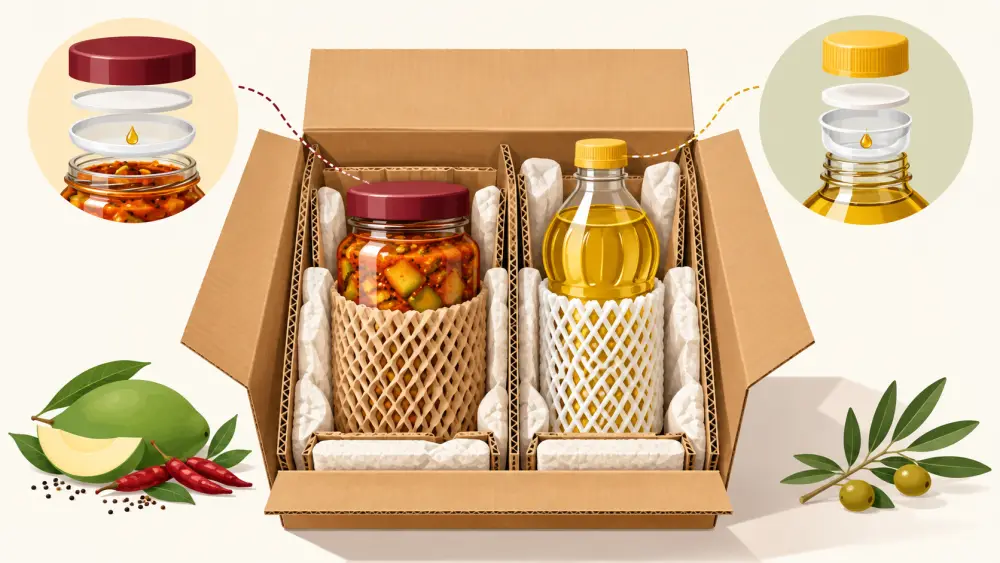
Nothing ruins a parcel like oil. One loose lid and the customer receives a greasy box, stained packaging and a pickle that is less than it should be. Oil is thin and finds every gap, so leak control is about stacking small protections rather than trusting one.
Why pickles and oils leak
Most leaks start in one of three places.
- The lid, which loosens when the parcel is shaken or when contents expand slightly.
- The neck of the jar or bottle, where food residue stops the lid from seating.
- The container itself, if it is thin or cracked.
Fix those three and most of the problem goes away.
Step one, prepare the jar
- Fill the jar with a little space at the top. A jar filled to the brim pushes liquid into the lid threads.
- Wipe the neck and the lid threads clean and dry. Oil on the threads stops a lid from gripping.
- Use a container with a good lid, ideally one with an inner liner or a screw cap that clicks. Check each lid before use.
Step two, seal twice
- Put a layer of cling film, foil or a food-safe seal over the mouth before the lid goes on, if it suits the product.
- Close the lid firmly.
- Wrap tape around the join between the lid and the jar so it cannot turn.
- For bottles with a pour spout, add a small cap or seal under the outer cap.
Each step covers for the failure of the one before it. No sealing method is leakproof, so do not describe yours that way in your listing or messages.
Step three, a liner bag with absorbent paper
Place the sealed jar in a plastic bag, then add a few folded sheets of paper or a thin absorbent pad inside the bag. Close the bag tightly with a knot or tape. If the jar leaks, the paper soaks it up and the bag holds the rest, so the box stays clean.
A second bag over the first is worth doing for large or very oily jars.
Step four, upright and snug
- Place the bagged jar upright in the box with the lid facing up.
- Surround it with cushioning on all sides. Jars that can move will bump each other and loosen lids.
- If you send several jars, keep them separate, with cardboard or paper between them.
- Mark the box with arrows showing the right way up, though do not count on it being followed.
A sturdy outer box
Oils and pickles are heavy, and a soft mailer will not do. Use a strong corrugated box that does not bend under pressure. Seal all seams with good tape. Heavy jars can also break through the bottom of a weak box, so reinforce it if needed.
Test before you scale up
Pack a jar the way you will for customers, tip the sealed box on its side for a day, and see if anything seeps. Try a rough shake as well. Repeat the test with a different lid or tape if it fails.
Keep related costs in view
Good leak control uses extra materials, which belong in your cost. See packaging-cost-per-order-breakdown. For the wider business, how-to-start-selling-pickles-online-in-india covers the steps from product to first order, and packing-homemade-food-for-courier covers the general principles for food parcels.