
How to pack footwear so boxes arrive intact
Why shoe boxes should never ship alone, how to stuff and protect the shoes, and a simple way to seal the outer carton so the pair arrives looking new.
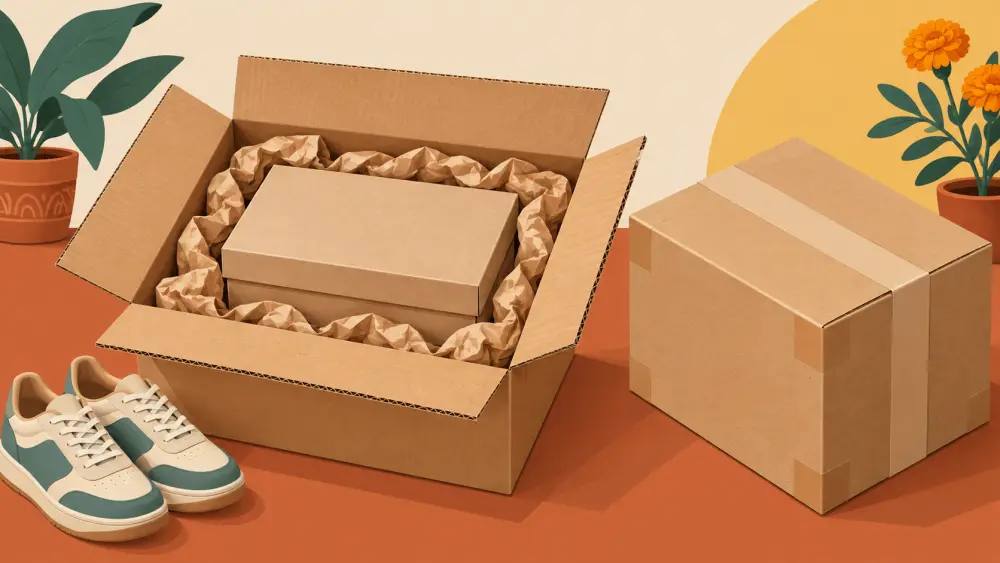
A shoe box is a retail box, not a shipping box. It is designed to sit on a shelf, not to survive being stacked, thrown and squeezed in a van. Many footwear complaints come from crushed boxes and scuffed shoes simply because the shoe box was used as the outer pack.
Treat the shoe box as part of the product
Customers care about the box, especially for gifts. Keep it clean and undamaged by putting it inside a stronger outer pack. Do not stick labels or tape straight onto the shoe box.
Prepare the shoes
- Clean the pair and check for marks or loose stitching.
- Stuff each shoe with tissue or soft paper so it keeps its shape and does not collapse under pressure.
- For boots or high tops, fill the shaft too.
- Wrap each shoe in tissue or a soft bag, so shoes do not scuff each other.
- Place the pair side by side, or heel to toe, depending on what keeps them most stable in the box.
If a shoe has a delicate finish such as patent leather or metal buckles, put a layer of soft cloth over it. Hard soles and heels should face away from uppers so they cannot scratch.
Fill the gaps inside the shoe box
Empty space lets shoes slide around. Fit the lid and shake gently. If shoes move, add folded tissue or a thin cardboard divider until they stay put. Avoid pressing so hard that the lid bulges.
Choose an outer carton
Use a corrugated carton or a heavy-duty mailer that fits the shoe box with a little room for cushioning. Do not let the shoe box rub against the sides.
- Put a flat sheet of cardboard under and over the shoe box if the outer carton is thin.
- Add paper fillers along the sides so the box cannot shift.
- If you ship more than one pair, give each pair its own shoe box and place them in a single outer carton with cardboard between them.
You do not need to search for an official box size rule. Choose the size that holds your shoe box with a small cushion, and keep a short list of the cartons that suit each shoe type.
Seal it properly
Tape along all seams, running the tape over both ends of each flap. A single line of tape across the middle can split when the box is knocked. If you use a mailer, press the adhesive strip down along the entire length and check no corners are lifting.
Place your shipping label on a flat area of the outer pack, not across a seam. Put a second copy of the address inside the carton in case the outside is damaged.
Include a small note
Slip an order slip on top of the shoe box inside the carton. A short line about sizing exchanges or care helps too. If you accept exchanges, make the process clear in your note, and see exchange vs refund cost comparison before you decide which to offer.
Record the pack
Take a photo of the pair in the box and one of the sealed carton. Sizing disputes and damage claims both become easier to talk through when you have pictures. If you need to understand how the cost of damage adds up, read the cost of a damaged-in-transit parcel.
Weigh the carton
Footwear cartons are bulky. Their size can affect how much you pay to ship. Learn how courier charges can depend on size in volumetric weight, a worked example, and plan your cartons accordingly.
For a look at the selling side, how to start selling footwear online in India is a good companion.