
Parcel insurance for small sellers, when is it worth considering?
Insurance adds cost to every shipment, so it should earn its place. This guide shows how to weigh item value against cover, in general terms, before you decide on any particular product.
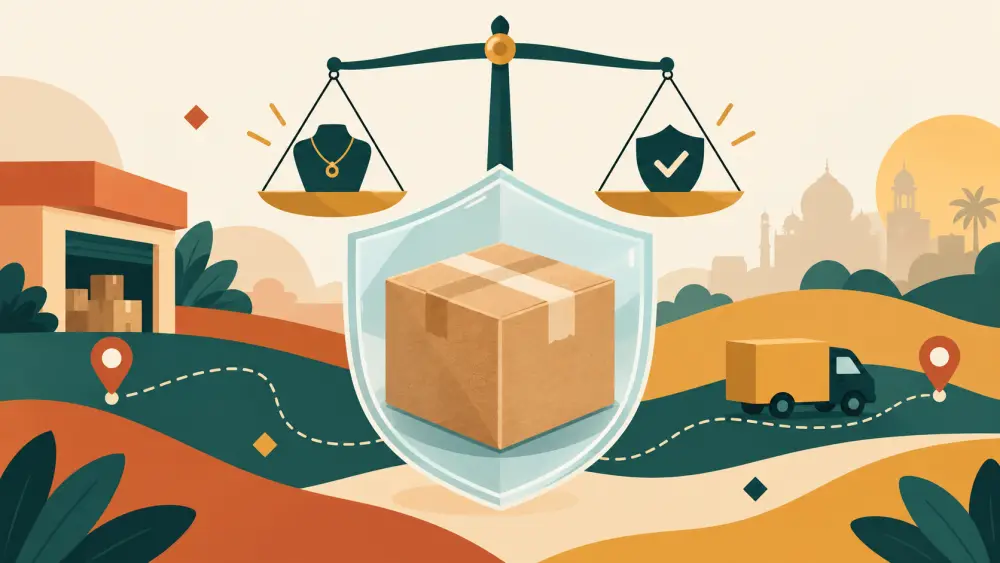
First, what are you protecting against
Parcel insurance, in general terms, is an extra layer of cover for loss or damage while your parcel is travelling. You pay something extra, and if the parcel is lost or damaged, you may recover some value. That is all this post says about how it works. I will not quote any premium, name any insurer or describe any specific cover, because terms differ and change. If you consider it, read the actual terms from whoever offers it.
The useful question for a small seller is not "is insurance good" but "does it make sense for this product at this value".
The simple weighing
Think about three numbers for each product.
- Item value. What you would lose if the parcel vanished, counting your cost, not the selling price.
- Chance of trouble. Not a statistic, only your own experience. Has this product been damaged or lost before? Is it fragile? Does it travel far?
- Cost of cover. The extra amount added per shipment.
If the item is cheap, a loss hurts but is affordable, and paying extra on every parcel may cost more over time than occasional losses. If the item is expensive, one loss can wipe out the profit of many sales, and cover starts to look sensible.
A worked example, with made-up numbers
Say a brass lamp costs you Rs 2,000 to buy and sells for Rs 3,200. If one parcel in a hundred were lost, you would lose Rs 2,000 on that one. If cover cost Rs 40 per parcel, you would pay Rs 4,000 across a hundred parcels to guard against a Rs 2,000 loss. Those numbers are invented only to show the arithmetic. Real figures will differ, and cover can pay differently from what you assume. Run the same sum with your own prices and your own history.
The reverse also holds. If a loss would cost Rs 20,000 on a high-value piece, a modest extra per parcel could be easier to accept.
Things worth checking before you buy cover
Read the terms for yourself and ask these questions.
- What exactly is covered, loss, damage or both?
- What proof is needed, and how is value decided?
- Are there excluded items or packing rules?
- How is a claim made, and who handles it?
Do not assume an item is covered because you paid extra. Ask in writing if something is not clear.
Cover does not replace good packing
Even with insurance, a claim is extra work, and compensation may not match your full loss. Strong packing, a packing video, a correct address and a good invoice remain your first defence. See evidence to keep for damaged or lost parcel claims and the packing guide for your category, such as packing brass lamps for courier safely.
Alternatives to insurance
- Price in a small allowance for occasional losses, so they do not surprise you.
- Ship high-value pieces with extra cushioning and a sturdier box.
- Ask the customer to pay a little more for protected shipping on very valuable items, only if you explain it clearly and fairly.
Decide with data
Keep a simple record of losses and damage per product. After some months you will know which items cause trouble. If a product repeatedly costs you more than cover would, consider it. The cost of a damaged-in-transit parcel can help you do the sum.