
What should a pickle or snack seller post on Instagram?
Food sells on trust and appetite. Recipe pairings, family-recipe stories, batch-making clips and packing reels do both without any unverified food claims.
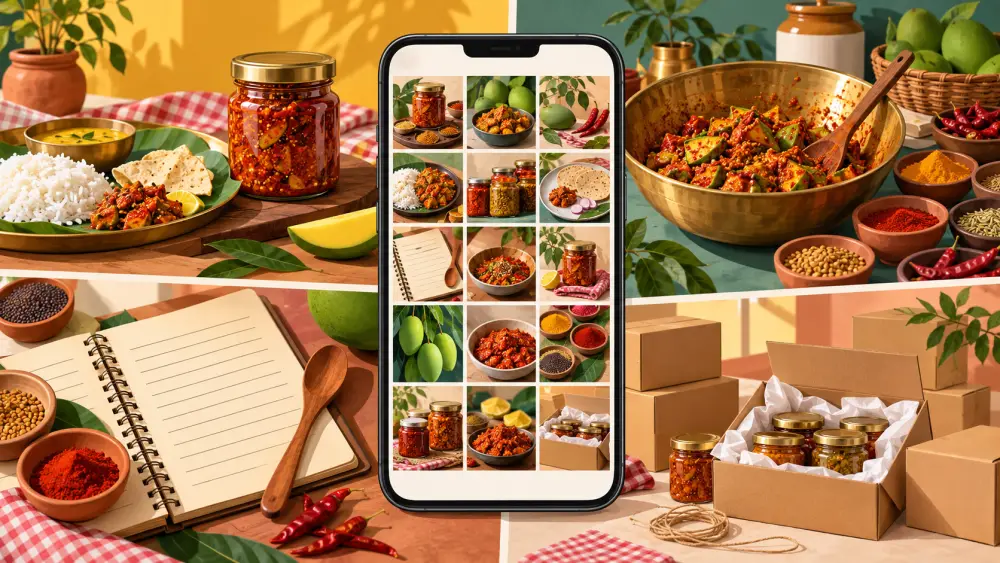
For homemade pickles and snacks, your biggest asset is that a real person makes the food. Your Instagram can show that person at work. It also needs to be careful, because food has rules and buyers worry about hygiene.
Recipe pairings
A pickle is rarely eaten alone. Show what it goes with: curd rice, hot parathas, plain dosa, dal-rice, a sandwich. A snack pairs with tea, with a long journey, with a school tiffin.
Film the food on a plate, close up, with a spoon taking a bite. Say in the first line what the pickle or snack is and what it was eaten with. Add one practical tip, such as how much to take, or how to keep the jar dry.
A pairing post gives people a reason to try your product on a regular day, not just on special occasions. It also makes your page feel useful, with ideas worth saving.
Family-recipe stories
If a recipe came from a grandmother, an aunt or a village, tell that story, but only what is true. Say who taught it, what changed when you scaled it up, and what you refused to change. Mention small, honest details such as the pot you use, the spice you grind yourself, or the day of the week you cook.
Do not invent heritage. Skip claims such as "100-year-old recipe" unless you can honestly say so. Avoid origin claims such as "authentic" or a named region unless you really have that connection. People can tell when a story has been written for marketing.
Batch-making clips
A batch-making clip shows how the food is made, start to finish. Film the raw ingredients, the cutting, the cooking or sun-drying, the cooling, and the filling of jars. It builds trust because buyers can see cleanliness, hair covers, clean hands, and clean containers.
Keep the kitchen tidy for the shoot, and show hygiene as it really is. Mention batch size, such as "this batch made 40 jars", and leave out any exact numbers you did not count.
Be careful with label statements. Avoid "preservative-free", "healthy", "no chemicals" or a stated shelf life unless you have verified them. Shelf life depends on ingredients, oil, moisture, packing and storage, and you should test your own product over time before saying anything. If you sell food on a regular basis, check the current food licensing requirements with an official source or a professional, since rules apply to food sellers.
Packing reels
A packing reel shows your pack being sealed, wiped, labelled and boxed. People want to know that a jar of oil will not leak in a courier box. Show your inner seal, a cling layer if you use one, the cushioning and the box. See packing traditional sweets for courier safely for packing ideas that also apply to dry snacks, and keep names and addresses out of the frame.
Make your photos look fresh
Good photos make food look as it does in your kitchen. How to photograph packaged snacks and pickles covers light and angles, and how to photograph food products so they look fresh helps with plated shots.
Link it to a store page
Every post should lead to a product page that lists ingredients, weight, packing date practice, and storage instructions. To get started, how to start selling pickles online in India and how to start selling snacks online in India lay out the first steps.
This week, film one pairing post and one batch clip. Cook as you normally do, keep the camera steady, and let the food do the selling.