
What should a fitness apparel brand post on Instagram?
Fitness wear has to be shown in motion. Workout clips, stretch tests and fit-by-body-type posts help buyers judge your gear without any performance promises.
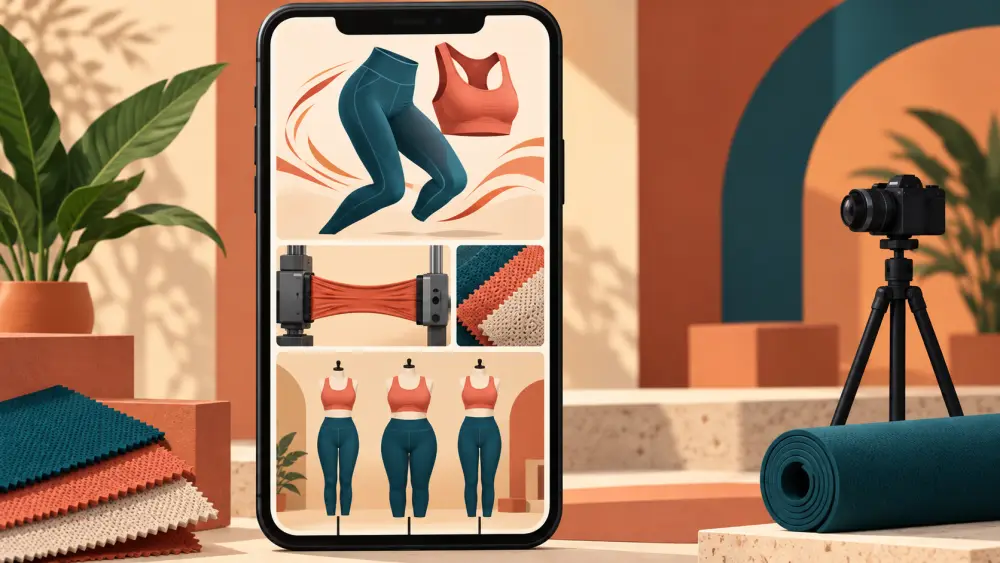
A pair of leggings looks the same on a hanger whether it works or not. What people want to know is how it behaves when someone squats, bends, runs or holds a long pose. That is where your content should live.
Workout-in-the-gear clips
The simplest idea is to film someone doing an ordinary workout in your product. It does not have to be a gym. A living room with a yoga mat works.
Make it useful with these choices:
- Pick movements that test the garment, such as a deep squat, a forward fold, a lunge, and an overhead reach.
- Film from front, side and back, because fit problems show up differently from each angle.
- Name the exact size and the height of the person wearing it, if they are comfortable sharing that.
- Keep the clip honest, with no heavy filters that change the colour.
If you do not have a model, do it yourself or ask a friend. If a customer sends a video, ask permission before you repost it.
Fabric stretch tests
A stretch test is a close-up of hands pulling the fabric. Hold it against light to show whether it turns see-through when stretched, which is a question many buyers have. Show the waistband stretching and returning, and the seams under pull.
Say what you saw, not what is guaranteed. For example, "in this light, with this colour, we could not see through it when stretched" is a fair observation. It is not a promise that every colour behaves the same. Colour matters a lot with thin fabrics, so test each shade you sell.
How to show fabric texture in photos has lighting tricks that make a stretch test clearer.
Fit-by-body-type posts
Fit varies, and so do bodies. A good post shows the same item on a few different people, with their height, their usual size and the size worn. Let each person say how it feels: is it high-waisted on them, is it long, is it snug at the thigh.
Do not label any person as an ideal body type. Do not claim a product suits everyone. Present it as information, and encourage buyers to compare their own measurements against your chart. If you need one, how to make a size chart for your clothing store will help.
What you should not claim
Fitness wear gets labelled with big words. Unless you have a lab report or supplier document, do not say that a fabric is:
- sweat-proof or sweat-wicking
- anti-odour or antibacterial
- performance-certified or medical-grade
- UV-protective, compressive or supportive
You can describe the composition printed on the label, and say how it felt in your own use, such as "felt light during a 30-minute home workout". That is a personal observation, and fair.
Packing and care content
Show how you fold and pack garments to keep them clean. Packing garments to keep them clean and dry has details. Add a care post too: wash inside out, avoid fabric softener if your supplier advises it, dry in shade. Use what the label says.
Link posts to a good listing
Every clip should lead to a page with sizes, measurements, fabric composition, colours and care. For setup help, see how to start selling fitness apparel online in India.
Try a single squat-and-stretch clip for your best seller this week. It answers the two biggest buyer doubts, and it needs nothing more than a phone and some floor space.