
Returns and complaints when selling incense and dhoop online and how to reduce them
Fragrance is subjective and sticks are fragile, so most disputes start with mismatched expectations. Set them clearly in the listing.
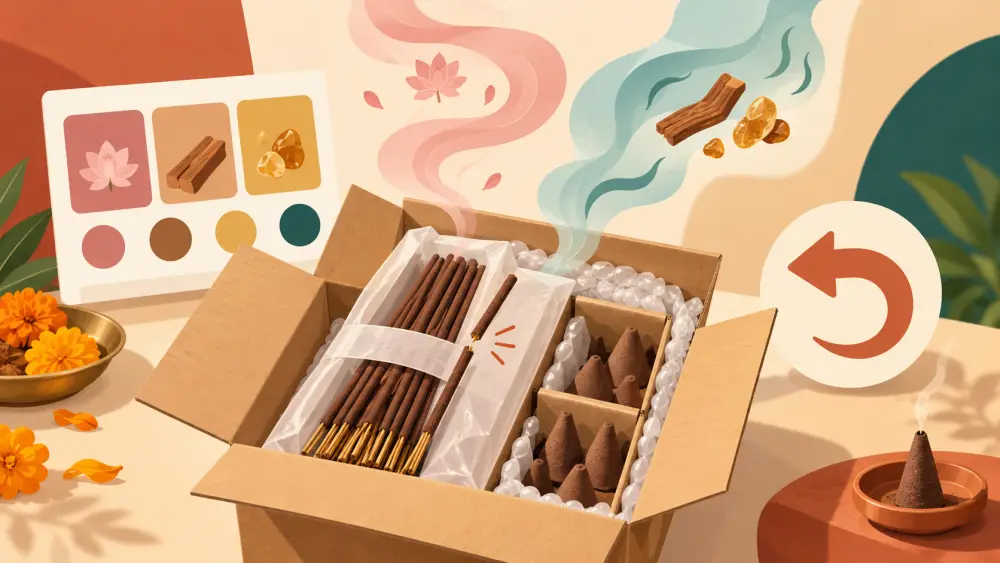
Customers cannot smell a product through a screen. That one fact explains why incense sellers get complaints that other sellers rarely see: "this is not what I expected", "the smell is too strong", "the sticks arrived broken". You cannot remove these completely, but you can reduce them by being clear before the order.
This post does not quote return rates or consumer-law rules. If you want to know what you are legally required to offer, check current rules with a professional or the official source.
The two common complaints
- The fragrance is not what I imagined. One person's "sandal" is another's "too sweet".
- The pack arrived damaged. Broken sticks, crushed cones or a leaked pack.
The first is about words, the second is about packing. Both are easier to prevent than to argue about afterwards.
Describe the fragrance in plain terms
Do not write only "premium fragrance". Describe what the smell is like and who it suits.
- Name the main scent: sandal, rose, jasmine, camphor, guggul.
- Say the strength: light, medium or strong, and say what that is compared to. "Strong enough to fill a small room within a few minutes of burning" is a statement you can test yourself.
- Say whether it is a single note or a blend.
- Say if the smoke is heavy or light, since some buyers dislike it.
- Mention that fragrance preference is personal and a sample pack exists if you offer one.
Write only what you have checked by burning it. If you have not tested a new batch, do not copy last month's description.
Give a sample option if you can
A small trial pack priced low lets a hesitant buyer test before committing to a full set. If you cannot offer one, say so in the listing so the buyer knows the tradeoff.
Show exactly what is in the pack
Disputes about weight and count are easy to avoid. State the number of sticks or cones, the length, and the net weight if printed on the pack. How to write a product weight and dimensions section shows how. Show a photo of the contents laid out, as described in how to photograph incense and dhoop.
Be clear about natural variation
If your incense is hand-rolled, sticks will differ slightly in length and colour. Say so. If the product is a natural blend, batches may smell slightly different. A single sentence, "colour and fragrance may vary slightly between batches", prevents surprise.
Say how burning works
Include burn time as a range you have tested, a note on ventilation, and a reminder to keep it away from children and pets. This is useful, honest information, and it lowers the chance of a customer feeling the product failed because they used it wrongly.
Prevent breakage with packing
Most damage complaints trace back to the pack. Follow how to pack incense and dhoop so they reach the customer safely, and photograph each parcel before dispatch.
Decide your policy and write it down
Decide in advance what you will do if a pack arrives broken: replace, refund or part-refund. Write it in your policy, and handle each case the same way. For how to deal with the practical side, see cancellations, refunds and restocking.
Keep a small log
Each time a complaint arrives, write the reason in a notebook. After a dozen, patterns appear: perhaps one fragrance is always called too strong, or one pack type always breaks. Fix the listing or the packing, not just the individual case.
Clear words in the listing do most of the work. If a customer can predict what arrives, there is much less to dispute.