
Should I include a free sample with each order?
A sample can introduce a new product to people who already trust you, but only if you cap the cost and check safety first; here is how to decide and how to pack it.
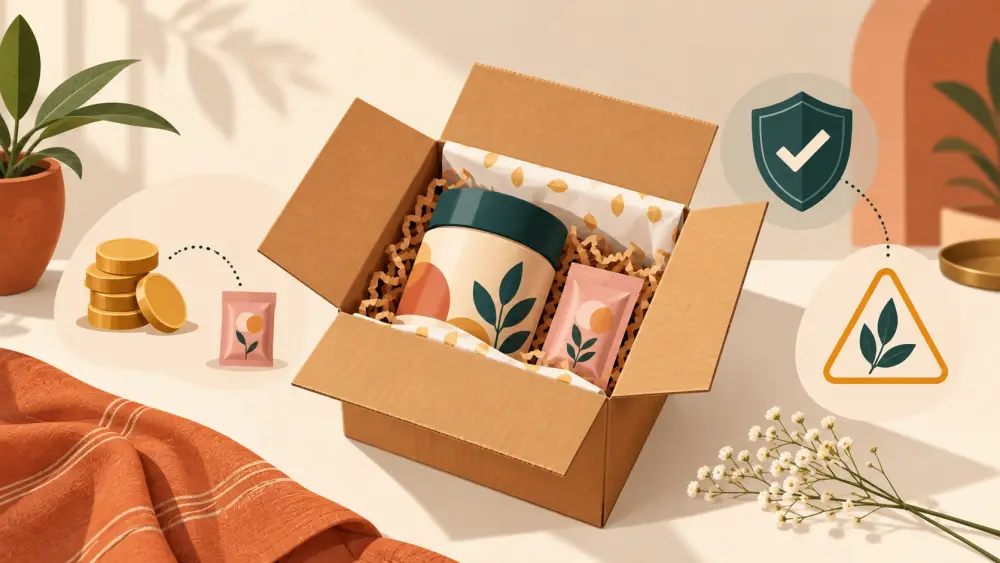
Start with the real question
Before you add a sample to a parcel, ask what it is for. There are two honest reasons. One is to let existing customers try a new product you are about to launch. The other is to say thank you. Both are fine. What does not work is adding random freebies with no plan, because you pay for them every time and learn nothing.
Pick the right customers
You do not have to put a sample in every order. A few ways to choose:
- Only orders above a value you set, so the cost is covered by a bigger basket
- Only customers who bought something related to the new product
- Only repeat customers, as a quiet thank you
- The first twenty orders after you announce the new item
Choosing by rule keeps the cost predictable and keeps you from guessing each day.
Work out the cost per sample
Say a mini pack of your new chutney costs Rs 18 to make and pack, and the sample label costs Rs 2. That is Rs 20 for every parcel that gets one. If you send it in thirty orders this month, the spend is Rs 600. Decide that number in advance and stop when you reach it. Compare it with what you would spend on an ad to reach the same thirty people; free gift versus discount goes through the same style of arithmetic.
Safety checks come first
A sample goes into a stranger's home, so treat it like the full product.
- Food: list ingredients and allergens clearly on the sample pack, and make sure it is sealed and fresh
- Skincare and cosmetics: include a patch test line and the ingredient list, and never send a sample that has been opened or decanted in an unclean way
- Anything for children: avoid small loose parts and check the age suitability yourself
Rules for labelling and selling food and cosmetics differ, so confirm what applies to your product with a professional or the relevant authority. If you cannot make a sample safely, skip the sample and offer a small discount code instead.
How to pack it
Put the sample in its own small bag so it cannot leak onto the main product. Add a slip that says what it is, how to use it, and where to buy the full size. Tell the customer on the slip, in one friendly line, that it is a gift and how you would love to hear what they think.
Ask for feedback, not a review
A plain message on WhatsApp a week later works better than a demand for a star rating: "Did you get a chance to try the sample? Tell me what you thought." Write down every answer. If three customers say the same thing, that is useful data for your launch. If a customer likes it, you can mention the full product and let her decide.
Do not promise that samples will lift sales. Treat them as a cost of learning, and measure only what you can see in your own orders.
Where to go from here
Once you have a feel for who responds, tie the sample to a small launch plan. What is a drop and why small brands love them shows one way to package a new product as an event. And if your parcels are already tight, check choosing packaging material for small sellers so the sample does not add shipping weight you did not plan for.