
How to choose packaging materials without overspending
A plain comparison of boxes, padded mailers and polybags by product type, so you pick the lightest packaging that still protects what you sell.
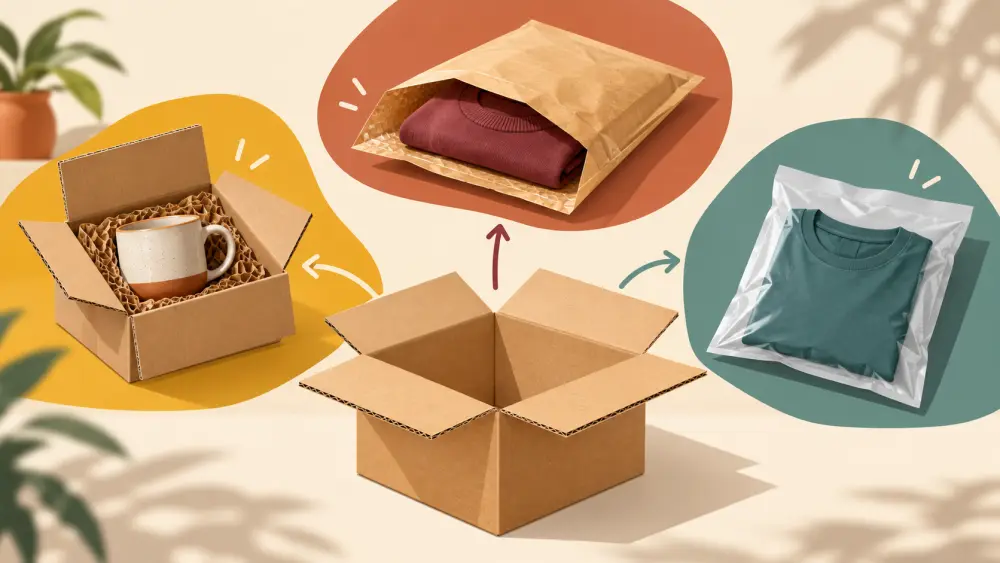
New sellers often make one of two mistakes. They buy fancy packaging for everything and lose their margin, or they use the cheapest cover for everything and pay for it in damaged parcels. The sensible path is to match the material to the product.
Start from what you sell
Ask three questions about each product.
- Can it be crushed, bent or broken?
- Is it affected by water, dust or light?
- Is it heavy or oddly shaped?
The answers decide which material you need. Do not decide first and force the product to fit.
Polybags
Polybags are the lightest and lowest cost option.
- Good for soft items that cannot break, such as t-shirts, scarves and fabric bags.
- Useful as an inner layer to keep moisture and dust away from other products.
- Not suitable alone for anything sharp, fragile or valuable, because they tear and give no cushioning.
Pick a bag that is a little larger than the product and seal it fully.
Padded mailers
Padded mailers have a soft lining and a sealed flap.
- Good for small, light, semi-fragile items such as jewellery in a box, cosmetics in sturdy tubes, books or accessories.
- They add a little cushioning but not enough for glass or ceramic on their own.
- They do not hold their shape, so a product inside can still be squeezed.
If you use a mailer for something delicate, put the product in a small box first.
Corrugated boxes
Boxes give structure.
- Best for fragile, heavy or oddly shaped products, such as candles in glass, jars, ceramics and footwear.
- They resist crushing better than any bag.
- They need filler inside, because the product can move in empty space.
Boxes also cost more to buy, to store and sometimes to ship if they are larger than needed. Keep a small range of sizes instead of one big one for everything.
Cushioning and fillers
You can mix and match.
- Bubble wrap or foam sheet for corners and glass.
- Crumpled paper or kraft shred for filling space cheaply.
- Cardboard pieces for flat items that must not bend.
Choose fillers by function, not appearance. Pretty filler is a bonus if the product is already safe.
Think about the whole parcel
A good rule is to check three things before you buy any material in bulk.
- Does it protect from knocks and pressure?
- Does it fit the product snugly without squeezing?
- Does it add weight or size that will raise your shipping cost?
Weight and size matter more than people expect. Read volumetric weight, a worked example to see why a large light box can cost more than a small heavy one.
Test with a sample
Order a few pieces of each material you are considering, pack a real product, and give it a gentle shake and press. If you can feel the product through the padding, or hear it move, change something. Try the same pack with a friend dropping it from waist height onto a floor, being careful not to risk anything you cannot afford to lose.
Track what it costs
Packaging should be a line in your cost sheet, not a surprise. The post on packaging cost per order, a breakdown helps you total it, and packaging cost as a percent of price shows how to see whether it is too high for the item you sell.
Start simple, keep two or three materials in stock, and add more only when a real product demands it.