
How to describe a new product that has no reviews yet
Without reviews to lean on, rely on specific details, helpful sizing guidance and honest limits, and never invent testimonials or ratings.
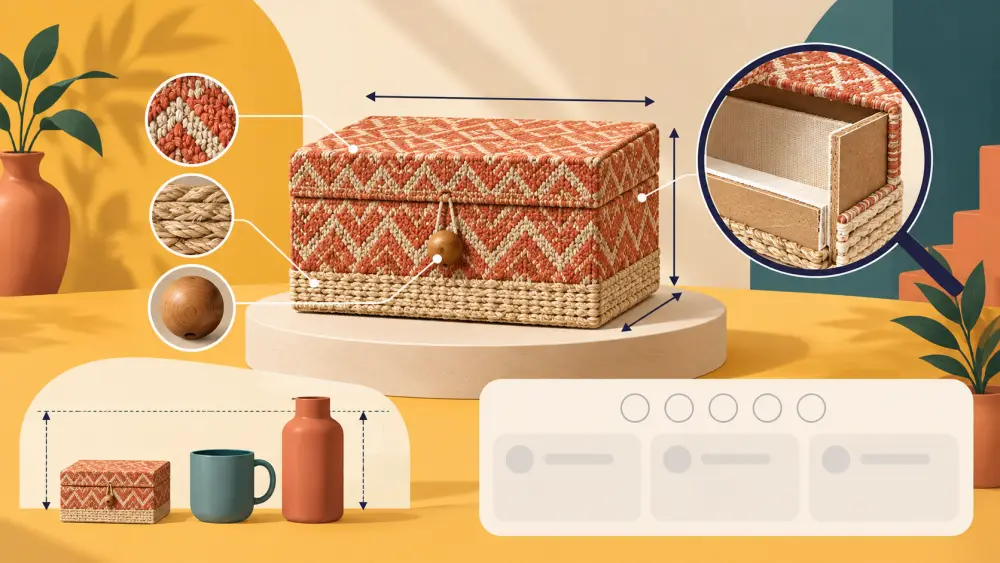
A brand new product has no reviews. A shopper looking at it has only your word to go on, and you cannot borrow credibility by making up praise. Inventing testimonials or star ratings is dishonest and risky, and customers can often tell. The better path is to replace social proof with the kind of detail that shows you know your product.
Lean on specifics
Where reviews would say "great quality", you can show it. Give measurements, the exact material, how it is made and what it feels like. A customer who reads "cotton, 38 inch length, hand block printed" learns more than from a generic five-star rating. See what details every product description should include.
Help people choose the right size or version
A wrong guess about size or fit is an easy way to lose a sale or earn a return. For a new item, take extra care with sizing guidance:
- Give actual measurements, not only S, M, L.
- State your own experience: "I am 5 ft 4 in and wear size M".
- Say if it runs small or large, only if you have checked.
On a Varchas store, sizes are S, M, L and XL, with stock tracked per colour, so the description is where you explain what those labels mean on this pattern. See setting up product variants properly.
Be honest about limits
Saying what the product is not for makes the rest believable. "Not machine washable." "Colour may vary slightly between batches." "Best for light everyday use." Honest limits do the work that star ratings do elsewhere: they show you are not hiding anything.
Show the real thing
Clear, honest photos from several angles, a close-up of the details and a shot of the product in use stand in for experience. If you can add a short video, even better. Refer to photographing products on a phone for simple ways to get good, consistent shots.
Offer your own story as context
You can say who made it, how long you tested it and why you made it. "I tested this candle for a month before listing it" is believable if it is true. Keep it brief and factual.
Use real feedback when you have it, not before
If friends or early customers have genuinely used the product, ask whether they are willing to share what they thought, and use their words only with permission and exactly as given. Do not write fake reviews, edit them to sound better or attribute quotes to people who never said them. Your store has a place for customer reviews; let real ones accumulate there over time.
Avoid filling the gap with hype
The temptation is to over-promise because there is no evidence yet. Resist it. Plain, specific language earns more trust than big claims, as covered in avoiding exaggerated claims.
Make the first orders easy
Be clear about dispatch time and how to reach you. A new product with a responsive seller behind it is a reasonable risk for many buyers. Over time, genuine reviews will take over the work that your careful description is doing now.